



Resource Recycling
  • The Latest
  • Podcast
  • Analysis
    • All
    • Certification Scorecard
    • Industry Announcements
    • Opinion
    IT asset disposition and electronics recycling: Now and then

    Data center moratoriums cast development shadow

    Recycling tracking data is already on your truck

    Recycling tracking data is already on your truck

    A five star ranking with one under a microscope

    Certification scorecard — week of Nov. 9

    Data centers and AI combine to create ITAD ‘growth engine’

    Component shortages drive demand for data center hardware

    Ingram Micro again files to take company public

    Ingram Micro sees lifecycle services rise 35%

    Inside the Circle: Will we lose our shirts over CA textile EPR?

    Inside the Circle: Will we lose our shirts over CA textile EPR?

  • Conferences
    • Resource Recycling Conference
    • Plastics Recycling Conference
    • E-Scrap: The Longevity Conference
    • Textiles Recovery Summit
  • Publications
    • E-Scrap News
    • Plastics Recycling Update
    • Policy Now
    • Resource Recycling
    • Other Topics
      • All Topics
      • Brand Owners
      • Critical Minerals
      • Glass
      • Grant Watch / RFPs
      • Markets
      • Organics
      • Packaging
      • Research
      • Technology
      • Textiles
Subscribe
No Result
View All Result
Resource Recycling
No Result
View All Result
Home Recycling

Wisconsin food waste amounts to 1,033 pounds per resident each year

Stefanie ValenticbyStefanie Valentic
January 28, 2026
in Recycling

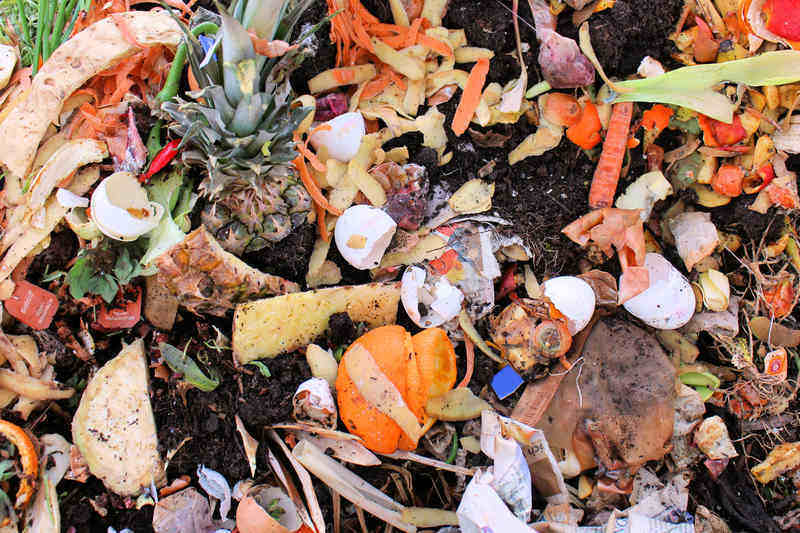
A new state evaluation examines how Wisconsin can divert more edible food from its landfills as food residuals become the largest category of waste. | Ulrich Mueller/shutterstock

Wisconsin’s nearly 6 million residents discard 1,033 pounds of food per person annually, creating the state’s largest waste stream and prompting officials to develop new strategies to rescue edible food before it reaches landfills, according to a new report.

The Food Waste Evaluation Report expands on the 2020-2021 Statewide Waste Characterization Study, which found that food residuals accounted for 20% of trash sent to Wisconsin’s landfills, equating to 854,000 tons annually. The majority, 75%, of the residuals were edible despite being thrown away, according to the state’s Department of Natural Resources (DNR).

More recent estimates included in the report showed that the number rose in 2023, with 3.05 million total tons of surplus food generated in Wisconsin, valued at $10.4 billion based on ReFED estimates.

State sets reduction target

As a result, the state’s 50% by 2030 goal aims to slice per-capita food waste in half compared to 2020 levels, the catalyst for the evaluation, targeting the entire lifecycle of food from production to disposal, encompassing “manufacturing processes, food sales and consumption and ultimately, recovery and disposal methods for food waste,” the DNR wrote in the report.

Kate Strom Hiorns, director of the DNR’s Waste and Materials Management Program, said that “Through the sustainable management of food, we can conserve resources, help businesses and consumers save money, reduce greenhouse gas emissions and provide access to food for those who do not have enough to eat.”

The latest analysis was funded by a US Environmental Protection Agency (EPA) Solid Waste Infrastructure for Recycling grant. Data from surveys and listening sessions with stakeholders, including food rescue organizations, local governments, food waste processors and waste haulers, was analyzed. The study also comprised a review of data from the DNR, the US EPA Excess Food Opportunities Map, the ReFED Insights Engine and other state-specific information, according to the DNR.

The report highlights food waste amounts, types and sources to identify prevention opportunities, along with existing food rescue and recycling infrastructure capacity, diversion capacity gaps and barriers, economic recommendations for waste diversion initiatives, policy guidance on reduction and recycling methods and investment, technical assistance and education needs.

Findings show that 88% of food residuals sent to state landfills are from residential and food services sources, with the largest share, 47%, collected from residents.

Infrastructure gaps pose challenges

The DNR indicated that the “Infrastructure for hauling food waste to destinations other than landfills (such as composting and anaerobic digestion facilities) will have to expand significantly to achieve the statewide food waste reduction goal.”

This could pose a logistical challenge, as only 30 of Wisconsin’s 286 composting facilities approved to accept food residuals are permitted to do so.

“Of the 122 anaerobic digestion facilities currently operating in Wisconsin, just 37 (30%) currently accept food waste,” the DNR stated. “To expand food donation, food rescue and food waste processing infrastructure, education, technical support and funding will be needed. Regulatory and policy reform may also be necessary.”
Tags: Legislation & EnforcementOrganics
TweetShare
Stefanie Valentic

Stefanie Valentic

Stefanie Valentic is an award-winning journalist who has covered the waste and recycling industry for more than five years. Throughout her career, she has led editorial teams and served as a keynote speaker, moderator and panelist at numerous trade shows and conferences.

Related Stories

Goodwill eyes EPR revenue, starting with waste audit

byStefanie Valentic
November 12, 2026

Goodwill sustainability leaders say the nonprofit’s donation network could serve packaging and textile EPR programs, but they first need hard...

IT asset disposition and electronics recycling: Now and then

Data center moratoriums cast development shadow

byDavid Daoud
November 12, 2026

Developers and decommissioning firms face uncertainty amid communities’ concerns over the impact centers create.

Produce packers face narrow exits under SB 54

byStefanie Valentic
November 11, 2026

Fiber, compostables, PCR and monomaterial films all come with tradeoffs for fresh produce, and no single swap will work across...

Textile EPR needs end markets, not just collection

Textile EPR needs end markets, not just collection

byStefanie Valentic
November 10, 2026

Reju CEO Patrik Frisk said textile EPR programs will fall short unless they also create demand for recycled material.

Rhode Island bill would make brands pay for recycling

Midterms put e-scrap legislation in focus

byDavid Daoud
November 6, 2026

New legislative majorities in Pennsylvania and Wisconsin could affect state electronics recycling programs, while federal initiatives face a divided government.

Europe’s recyclers miss most of the critical materials

Researchers look for participants in e-scrap study

byPaul Lane
November 6, 2026

Federal researchers are looking at how to bolster e-recycling rates in states without collection laws.

Load More
Next Post

Certification scorecard for week of Jan. 26, 2026

2026 Buyers’ Guide

Equipment, services and technology suppliers serving the recycling industry.

Browse the Guide

More Posts

NexPoint Materials to shutter Alabama plastics plant

NexPoint Materials to shutter Alabama plastics plant

November 4, 2026
PureCycle sees easing headwinds to R-PP adoption

PureCycle shifts focus, secures feedstock

November 5, 2026
Inside the Circle: Will we lose our shirts over CA textile EPR?

Inside the Circle: Will we lose our shirts over CA textile EPR?

November 9, 2026
Artificial intelligence is altering the marketplace for ITAD providers in numerous ways. | Shutterstock

AI alters ITAD economics

November 3, 2026
Textile EPR needs end markets, not just collection

Textile EPR needs end markets, not just collection

November 10, 2026
PET bottles for recycling

PET imports reshape US markets as demand grows

November 11, 2026
The missing link in e-plastic recycling

The missing link in e-plastic recycling

October 28, 2026
UC Riverside expands reusable takeout program

UC Riverside expands reusable takeout program

November 6, 2026
New CAA chief talks markets, industry support

New CAA chief talks markets, industry support

November 4, 2026

Produce packers face narrow exits under SB 54

November 11, 2026
Load More

About & Publications

About Us

Staff
Job Listings

Archive

Magazines

Work With Us

Advertise
Contact
Terms and Privacy

Newsletters

Get the latest recycling news and analysis delivered to your inbox every week. Stay ahead on industry trends, policy updates, and insights from programs, processors, and innovators.

Subscribe

Welcome Back!

Login to your account below

Forgotten Password?

Retrieve your password

Please enter your username or email address to reset your password.

Log In

Add New Playlist

No Result
View All Result
  • The Latest
  • Podcast
  • Analysis
  • Recycling
  • E-Scrap
  • Plastics
  • Policy Now
  • Conferences
    • E-Scrap Conference
    • Plastics Recycling Conference
    • Resource Recycling Conference
    • Textiles Recovery Summit
  • Magazines – Old
  • About Us
  • Advertise
  • Archive
  • Job Listings
  • Staff
Subscribe
This website uses cookies. By continuing to use this website you are giving consent to cookies being used. Visit our Privacy and Cookie Policy.