





Chemical recycling has potential but requires careful regulation, more transparency, and an eye to the overall effect on the planet, members of the environmental and recycling communities said in a recent webinar.
The Oct.18 webinar from Ocean Conservancy included Lynn Hoffman, co-president of Eureka Recycling, and Anja Brandon, associate director of U.S. plastics policy at Ocean Conservancy. Jessica Roff, the plastics and petrochemicals campaign manager for the U.S. and Canada at the Global Alliance for Incinerator Alternatives (GAIA) was slated to speak but unable to attend.
The webinar, aimed at journalists, laid out potentials and problems with chemical recycling amid an “industry charm campaign” in the lead-up to the next round of international plastic pollution negotiations, according to a press release.
Hoffman opened the discussion by noting that “anything really technically could be recycled if we invested enough money in resources and regulation,” but said the more important question is not if it can be recycled, but if it should be.
“This really gets to our priorities first about where we are spending our limited time and resources to address this really urgent issue of consumption and extraction and climate instability,” she said, adding that “as we’re looking at investments, policies, innovations and expansions of recycling, really the metric we should be looking for is not whether it’s possible or even economic but is it demonstrating improvements in labor standards and safety, in environmental outcomes and in human health impacts?”
Chemical recycling explainer
Brandon, who holds a doctorate in environmental engineering and science, gave an overview of several technologies that fall under the chemical recycling umbrella: purification, depolymerization and conversion.
“These terms are constantly changing,” she said. “It’s chemical recycling, advanced recycling, molecular recycling, renewal technologies. Different companies all use different terms and really these terms can be obscuring what they’re really doing and the technologies behind them.”
Purification uses solvents to dissolve the plastic and separate it out from additives. The plastic can be recovered without changing the basic molecular structure, but the process requires highly pure feed stocks and can only be used for a subset of all plastics.

Depolymerization “is a fairly broad category in and of itself,” Brandon said. It uses solvents, heat and catalysts to break the plastics into monomers, which also requires pure feed stocks and is also limited to very specific types of plastics called condensation polymers.
Two types of conversion technologies are popular right now, Brandon said, pyrolysis and gasification. Pyrolysis uses high heat and pressure to break apart chemical bonds in plastic to create an oil. Gasification uses heat and pressure to break chemical bonds to produce mainly synthetic natural gas.
“If the goal at the end of this, as Lynn often reminds me, is protecting human health and the planet, for recycling that really means we need to be displacing the use of that virgin feedstock and not causing more harm than the systems we already have,” Brandon said. “Looking across these processes there are really only a few that meet that criteria.”
Purification comes the closest, she said, but it is not close yet to a scale where it can truly operate.
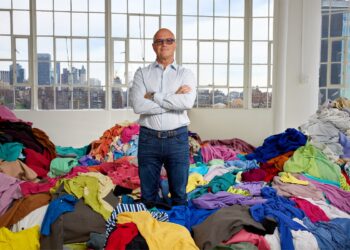
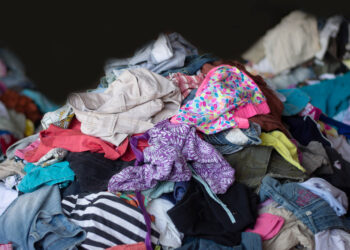
There’s also potential that chemical recycling could be well-suited for textile recycling, Hoffman and Brandon said.
“It is a place we need innovation,” Hoffman said. “There’s not existing technology or systems to handle the clothes that continue to be – more and more – made out of plastic and mixed materials. I don’t know yet if anything is to scale and I don’t know enough to speak to the inputs and outputs and those impacts, but I do know that textiles seems like an important arena to be focusing some of the innovation.”
Brandon added that clothes tend to be made out of polyesters that are the type of condensation polymer that work best for purification and depolymerization technologies. She added that for chemical recycling to be a true solution for textiles, more transparency is needed.
“They don’t tell you about yield outputs, other toxics, what they’re doing with solvents and really it puts communities and policy makers at a disadvantage,” she said, adding that “we need to be really open and transparent about the whole system.”
Policy implications
There are three big policy pushes happening concerning chemical recycling, Brandon said. The first is if some of the technologies that use high heat, such as pyrolysis, should be regulated as incineration under the Clean Air Act.
A recent EPA decision maintained the current regulation category as incineration.
The second policy area deals with wether facilities should be permitted and regulated as manufacturing or solid waste management.
“This has a lot of implications in terms of where they can be sited and the types of permits and emissions thresholds associated with the facilities,” Brandon said. “Twenty-five states so far have passed laws to reclassify chemical recycling facilities as manufacturing as opposed to solid waste management.”
The final policy push from the industry is to include chemical recycling as recycling in extended producer responsibility bills and other federal and international laws, including the United Nations global plastics agreement.
Brandon said that question is creating “a really heated debate and discussion about whether chemical recycling should be considered environmentally sound management” at international meetings.
“If that continues to be the case, which I imagine it will be – there’s really strong positions on both sides that are fighting for this – it could really hold up the entire treaty process and unfortunately we know that our ocean and the communities that depend on it really cannot afford to wait,” Brandon said.
She added that including chemical recycling in the global plastics treaty is a high priority for the fossil fuel industry because it will allow them to “keep doing what they’re already doing, which is making virgin fossil fuel-based plastics.”
“This is kind of life and death for their industry, which is why at the treaty probably their two biggest priorities are making sure there’s not any global binding reduction on plastics, which we know is absolutely critical to actually address this issue, and the second would be making sure that chemical recycling can count as recycling, especially if there is any reduction targets, so that they can keep using plastics as a lifeline for the fossil fuel industry,” she said.
Hoffman said it’s important for stakeholders to “stay clear about what to negotiate.”
“It’s challenging, because there are problems with plastics recycling, as it exists, to solve and a lot of what many of the chemical recycling proposed projects are promising … are really important,” she said, especially figuring out how to remove additives and toxic substances from recycled plastics.
She added that the “opportunity to remove some of those toxics is an important innovation to pursue,” but there needs to be transparency and a focus on solving bigger-picture problems, too.
Brandon noted that while plastic producers and plastic users are often considered the same group, in the last decade there’s been “an increasing wedge or divide between the plastic users and the plastic makers.”
The plastic users largely want more recycled content and alternative materials, Brandon said, but plastic makers have not responded to that pressure, so legislation is needed.
And to get good legislation passed, “we need everyone at the table weighing in and we need industry buy-in in that process.”
“No one’s going to get everything they want out of that process, but it’s much better to have them bought in and part of the legislative process,” Brandon said.