




Resource Recycling
  • The Latest
  • Analysis
    • All
    • Certification Scorecard
    • Industry Announcements
    • Opinion

    Certification Scorecard — Week of June 1, 2026

    IT asset disposition and electronics recycling: Now and then

    $60 billion in AI servers will create an ITAD challenge

    The independent ITAD at a crossroads

    DMD acquires ITAD firm Lifespan, outlines acquisition strategy

    Packaging policy is not one-size-fits-all

    Packaging policy is not one-size-fits-all

    Industry announcements for January 2026

    Industry announcements for June 2026

    Europe’s recyclers miss most of the critical materials

    Europe’s recyclers miss most of the critical materials

  • Conferences
    • Resource Recycling Conference
    • Plastics Recycling Conference
    • E-Scrap: The Longevity Conference
    • Textiles Recovery Summit
  • Publications
    • E-Scrap News
    • Plastics Recycling Update
    • Policy Now
    • Resource Recycling
    • Other Topics
      • All Topics
      • Brand Owners
      • Critical Minerals
      • Glass
      • Grant Watch / RFPs
      • Markets
      • Organics
      • Packaging
      • Research
      • Technology
      • Textiles
Subscribe
No Result
View All Result
Resource Recycling
  • The Latest
  • Analysis
    • All
    • Certification Scorecard
    • Industry Announcements
    • Opinion

    Certification Scorecard — Week of June 1, 2026

    IT asset disposition and electronics recycling: Now and then

    $60 billion in AI servers will create an ITAD challenge

    The independent ITAD at a crossroads

    DMD acquires ITAD firm Lifespan, outlines acquisition strategy

    Packaging policy is not one-size-fits-all

    Packaging policy is not one-size-fits-all

    Industry announcements for January 2026

    Industry announcements for June 2026

    Europe’s recyclers miss most of the critical materials

    Europe’s recyclers miss most of the critical materials

  • Conferences
    • Resource Recycling Conference
    • Plastics Recycling Conference
    • E-Scrap: The Longevity Conference
    • Textiles Recovery Summit
  • Publications
    • E-Scrap News
    • Plastics Recycling Update
    • Policy Now
    • Resource Recycling
    • Other Topics
      • All Topics
      • Brand Owners
      • Critical Minerals
      • Glass
      • Grant Watch / RFPs
      • Markets
      • Organics
      • Packaging
      • Research
      • Technology
      • Textiles
Subscribe
No Result
View All Result
Resource Recycling
No Result
View All Result
Home Plastics

Mild’ chemical recycling process for PLA developed

byJared Paben
May 31, 2018
in Plastics

PLA, a polymer that’s growing in popularity, is often marketed to brand owners for its biodegradability in commercial composting systems. Now, a plastics technology company has developed a chemical process for recycling the polymer.

Orangeburg, S.C.-headquartered Zeus Industrial Products announced it has developed a chemical recycling process to depolymerize PLA so the monomers can be reused in new plastic. Its process can be used to separate PLA from PET in mixed-polyester streams.

The process can be used on packaging and medical products. Zeus makes polymers that are based on PLA and are meant to be absorbed by the human body.

“Over the past 10 years, Zeus has expanded its interest into bioabsorbable polymer technologies,” Bruce Anneaux, corporate director of research and development for Zeus, stated in a press release. “We have introduced a process that makes this market even more attractive. Using novel technology to recover PLA from a mixed-waste stream, Zeus’ new process provides an economically advantageous and environmentally friendly solution.”

A growing polymer

Polylactic acid (PLA), a polyester made from plant starch (often corn), was one of the first commercially produced bio-derived plastics. It’s made by a number of companies. NatureWorks, for example, sells PLA under its Ingeo brand, marketing the plastic as compostable.

The plastic is growing in use. Zeus notes global production of PLA is expected to grow by 50 percent by the year 2022 to more than 250,000 metric tons. Most will go into packaging.

Despite its growth, sorting and mechanical processing infrastructure for PLA has lagged. Meanwhile, PLA can contaminate other plastics recycling streams. Because of its poor heat resistance compared to more commonly recycled plastics, it is susceptible to thermal degradation when mechanically recycled.

Plastics Recycling Update in late 2016 reported efforts were afoot to try to boost recycling of the plastic, but significant barriers remained.

Zeus’s approach

In its May 8 press release, Zeus first announced it developed a process to break down PLA into lactic acid or methyl lactate, monomers that make up PLA. The company published a white paper that describes the process in more detail.

To recover PLA from a mixed-plastics stream, the plastics are size-reduced before they’re separated via existing sorting technologies: electrostatic separation, near infrared (NIR) sorting or float-sink tanks. A float-sink tank will float the polyolefins and sink the nylons and polyesters, for example. That could leave PET and PLA in the same stream. To separate them, a solvent such a chloroform or tetrahydrofuran (THF) is used. It dissolves the PLA while leaving the other polymers intact.

“The process is not sensitive to other polymers present in the mixed waste stream, but successfully removes a problematic component of that waste stream,” according to the white paper.

The PLA solution is then introduced to the reactants methanol or water. The process can be sped up by increasing the temperature to just below the boiling point and using a catalyst, tin.

Separation of the solvent and reactant from the monomers is accomplished via distillation, taking a advantage of their different boiling temperatures. In each case, remaining solvents and reactants can be reused in the process.

Depending on the solvents and reactants used, the final products are either lactic acid or methyl lactate, both of which can be used to make new PLA. According to the white paper, new PLA can be made from the monomers using polycondensation, azeotropic dehydrative polycondensation, and a multistep route that leads to high-molecular-weight PLA.

‘Unusually mild’ conditions

Chemical recycling of PLA isn’t new. Zeus’s white paper notes a number of hydrolytic or alcoholytic depolymerization processes exist, but they tend to be high-temperature, energy-intensive processes. That mean higher capital and operating costs for processors.

Processes using temperatures as low as 80 degrees celsius have been developed, improving the economics, according to the white paper. Zeus, which is looking to license the technology to others, says it process involves lower temperatures and is “unusually mild.” Its paper said experiments were carried out at below 60 degrees Celsius.

Because the process occur at low temperatures and atmospheric pressures, a variety of reactors can be used, including common continuous stirred tank reactors or plug flow reactors.

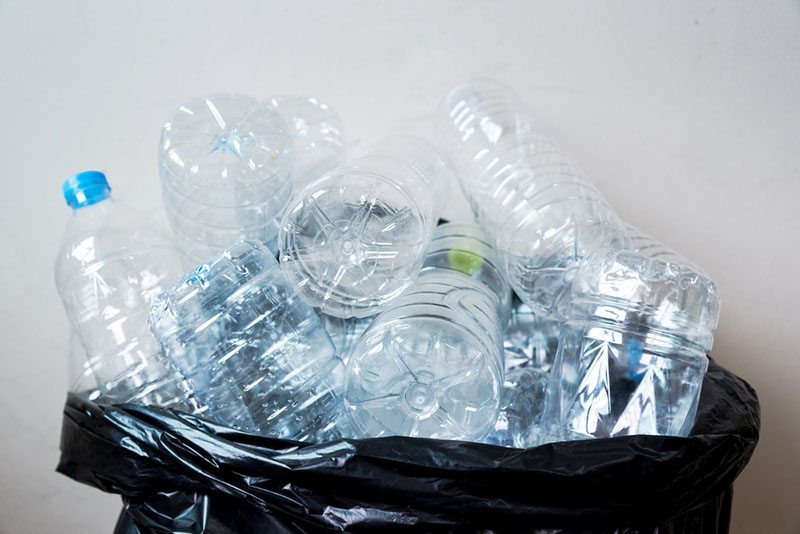
Photo credit: photokup/Shutterstock

To receive the latest news and analysis about plastics recycling technologies, sign up now for our free monthly Plastics Recycling Update: Technology Edition e-newsletter.

 

Sebright

Tags: Hard-to-Recycle MaterialsResearchTechnology
TweetShare
Jared Paben

Jared Paben

Related Posts

IT asset disposition and electronics recycling: Now and then

$60 billion in AI servers will create an ITAD challenge

byDavid Daoud
June 3, 2026

An AI growth boom suggests that a large number of devices will reach end-of-life around 2029-2031.

The independent ITAD at a crossroads

DMD acquires ITAD firm Lifespan, outlines acquisition strategy

byDavid Daoud
June 2, 2026

DMD Systems Recovery is expanding through acquisitions, starting with a business bought from Bluum Technology.

Emerging technology holds the key to rare earth recovery

Emerging technology holds the key to rare earth recovery

byDan Wang, Toyoshima Green Tech
June 1, 2026

Toyoshima has developed a process that recovers critical materials at high purity in an efficient way.

Chemical recycling roundup: New plant, partnerships

Polystyrene’s circular future is already taking shape

byJustin Riney, Polystyrene Recycling Alliance
May 29, 2026

Justin Riney of the Polystyrene Recycling Alliance explores a study conducted with the Resource Recycling Systems consultancy.

IBM logo on building

What IBM’s quantum foundry means for ITAD

byDavid Daoud
May 28, 2026

The company’s announcement reflects the continued diversification of computing infrastructure beyond conventional IT hardware categories.

CommanderAI launches searchable hauler database

Underwater data centers drive shift in ITAD models

byDavid Daoud
May 26, 2026

The new technology is grabbing headlines for saving energy, but are people looking at the complete lifecycle?

Load More
Next Post

Factors behind a painful year for plastics recycling

More Posts

Machinex

Longview mill tragedy raises broader questions for fiber, recycling sectors

May 29, 2026
Recycling industry addresses Beyond Plastics report

Recycling industry addresses Beyond Plastics report

May 26, 2026
What a report on Starbucks cups reveals about recycling

What a report on Starbucks cups reveals about recycling

May 26, 2026
Q1 containerboard exports drop by 19%

What SB 54 looks like from the packaging floor

June 1, 2026
War, not demand driving polymer pricing

War, not demand driving polymer pricing

June 2, 2026
California extends compostable labeling law

California bills crack down on false recycling, compostable claims

May 29, 2026
Fire at an EMR recycling facility in Camden, New Jersey May 29, 2026.

EMR faces shutdown calls after numerous fires

June 2, 2026
Bottle bill backers see opportunity for action

PET collapse exposes gaps in US recycling infrastructure

May 15, 2026
Emerging technology holds the key to rare earth recovery

Emerging technology holds the key to rare earth recovery

June 1, 2026
BASF, Encina expand circular feedstock partnership

BASF, Encina expand circular feedstock partnership

June 3, 2026
Load More

About & Publications

About Us

Staff

Archive

Magazine

Work With Us

Advertise
Jobs
Contact
Terms and Privacy

Newsletter

Get the latest recycling news and analysis delivered to your inbox every week. Stay ahead on industry trends, policy updates, and insights from programs, processors, and innovators.

Subscribe

Welcome Back!

Login to your account below

Forgotten Password?

Retrieve your password

Please enter your username or email address to reset your password.

Log In

Add New Playlist

No Result
View All Result
  • The Latest
  • Analysis
  • Recycling
  • E-Scrap
  • Plastics
  • Policy Now
  • Conferences
    • E-Scrap Conference
    • Plastics Recycling Conference
    • Resource Recycling Conference
    • Textiles Recovery Summit
  • Magazine
  • About Us
  • Advertise
  • Archive
  • Jobs
  • Staff
Subscribe
This website uses cookies. By continuing to use this website you are giving consent to cookies being used. Visit our Privacy and Cookie Policy.