

Resource Recycling
  • The Latest
  • Analysis
    • All
    • Certification Scorecard
    • Industry Announcements
    • Opinion

    Five trends shaping PCR packaging to 2031

    Intel sign on company building with blue sky and trees.

    Intel boosts margins by selling what it used to scrap

    Our top stories from April 2022

    Peters-Michaud named CEO, Houghton chair of Sage Sustainable Electronics

    Closeup of a printed circuitboard

    Can modular metals recovery challenge the smelter model?

    Intel sign outside of company building.

    What Intel’s blockbuster quarter means for ITAD

    Feds to develop repairable computer donation program

    The whitebox blind spot in PC recycling

    Analysis: circular design still elusive in laptops

    PC shipments grew in Q1, but questions remain

    The independent ITAD at a crossroads

    The independent ITAD at a crossroads

    Certification Scorecard — Week of April 20, 2026

  • Conferences
  • Publications

    Other Topics

    Textiles
    Organics
    Packaging
    Glass
    Brand Owners

    Metals
    Technology
    Research
    Markets
    Grant Watch

    All Topics

Subscribe
No Result
View All Result
Resource Recycling
  • The Latest
  • Analysis
    • All
    • Certification Scorecard
    • Industry Announcements
    • Opinion

    Five trends shaping PCR packaging to 2031

    Intel sign on company building with blue sky and trees.

    Intel boosts margins by selling what it used to scrap

    Our top stories from April 2022

    Peters-Michaud named CEO, Houghton chair of Sage Sustainable Electronics

    Closeup of a printed circuitboard

    Can modular metals recovery challenge the smelter model?

    Intel sign outside of company building.

    What Intel’s blockbuster quarter means for ITAD

    Feds to develop repairable computer donation program

    The whitebox blind spot in PC recycling

    Analysis: circular design still elusive in laptops

    PC shipments grew in Q1, but questions remain

    The independent ITAD at a crossroads

    The independent ITAD at a crossroads

    Certification Scorecard — Week of April 20, 2026

  • Conferences
  • Publications

    Other Topics

    Textiles
    Organics
    Packaging
    Glass
    Brand Owners

    Metals
    Technology
    Research
    Markets
    Grant Watch

    All Topics

Subscribe
No Result
View All Result
Resource Recycling
No Result
View All Result
Home Plastics

Project aims to save PS foams from incineration

byJared Paben
June 2, 2017
in Plastics
Project aims to save PS foams from incineration
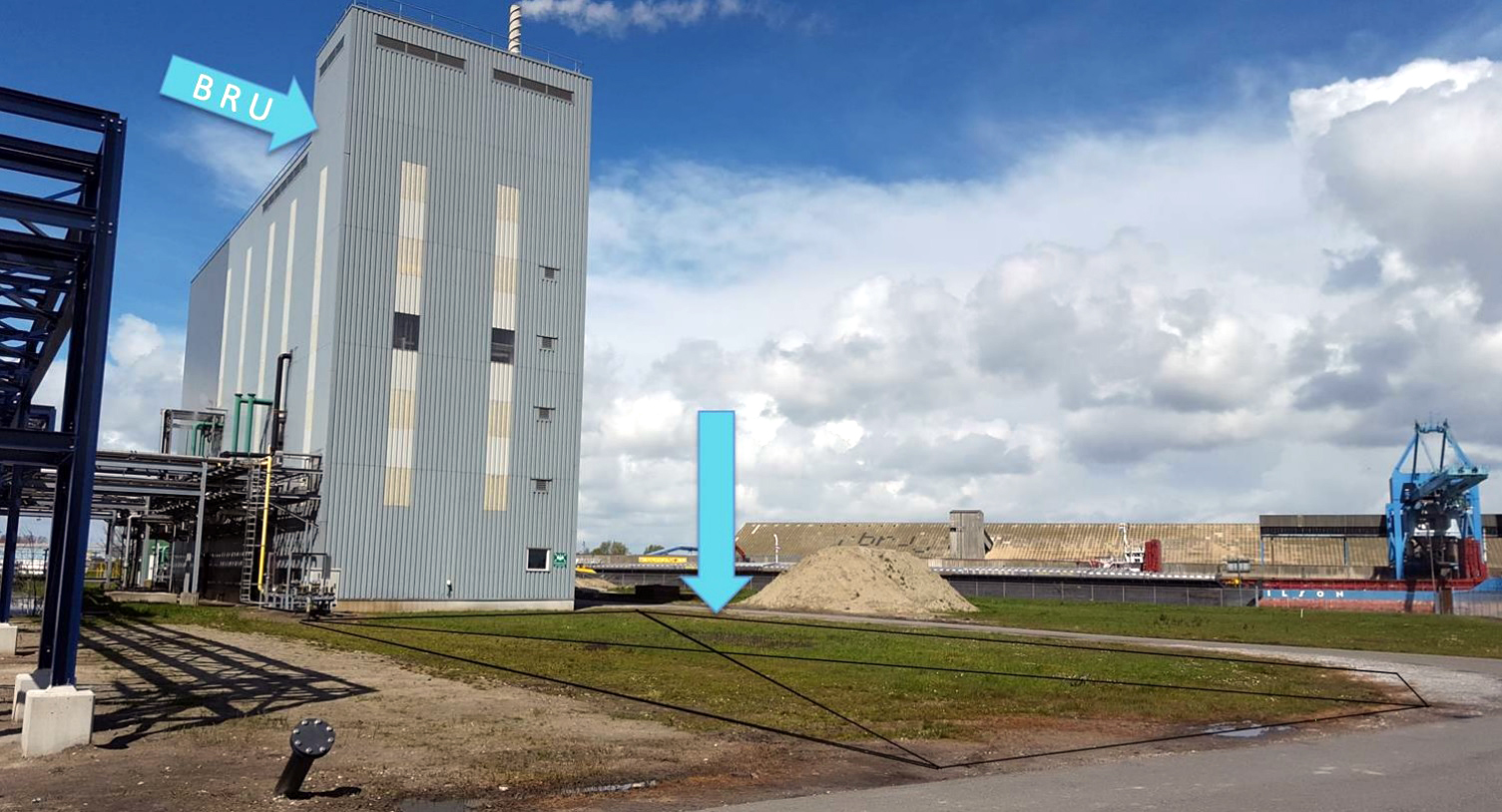
The location of the planned PS foam recycling facility adjacent to an existing bromine recovery unit in Terneuzen, Netherlands.

European groups are backing an initiative to recycle polystyrene materials containing a banned flame retardant. They recently reported key progress in their effort.

The Dutch nonprofit group PolyStyrene Loop is working to build a demonstration plant in the Dutch city of Terneuzen. The group, formed by companies representing the PS foam value chain, was recently awarded a European Union grant of 2.7 million euros (about $3 million), Recycling International reports.

The facility would use a recycling process called CreaSolv, which was developed and advanced by the Fraunhofer Institute for Process Engineering and Packaging IVV (Fraunhofer IVV) and a company called CreaCycle. The CreaSolv process plays a central role in another technology development recently covered by Plastics Recycling Update: Global consumer products brand Unilever is using it as a possible solution for multi-layer flexible packaging recycling.

The technology uses a solvent to selectively dissolve targeted plastics while maintaining the polymer chains. They are then separated from any other plastics, additives or contaminants. A precipitating agent re-forms the targeted plastic so it can be dried and recycled.

The solvent is vaporized so it can be reused in the process. Only small amounts of the solvent – less than 1 percent, by weight – are needed to dissolve the material.

Unilever announced that it plans to build a plant in Indonesia this year to test commercial-scale viability of the approach.

Fraunhofer IVV has also used the CreaSolv technology to tackle e-plastics, separating the polymers from flame retardants so they can be recycled.

Important approval

Formed in January 2016 after a meeting of industry representatives the previous fall, PolyStyrene Loop has been working toward building a plant to apply CreaSolv to expanded polystyrene (EPS) and extruded polystyrene (XPS) building-insulation products. Specifically, the organization wants to apply it to PS insulation containing a brominated flame retardant called hexabromocyclododecane (HBCDD). HBCDD is now restricted in the European Union because it’s listed as a persistent organic pollutant.

HBCDD-containing foams were used for about five decades as insulation in buildings. With a life expectancy of 40 to 60 years, they’re now beginning to enter the end-of-life stream, where they’re currently incinerated.

In May, the Basel Convention’s Conference of Parties approved the CreaSolv process as a valid pre-treatment technique for HBCDD-containing foam. The Basel Convention General Technical Guidelines now also list it as a best available treatment for destroying HBCDDs. The only other best available treatment is incineration, which destroys HBCDD but prevent recovery of the plastic or bromine used in the flame retardant.

“From now on it is no longer mandatory to incinerate all EPS construction waste because it contains approximately 1 percent HBCDD,” according to CreaCycle, which will supply the key solvent.

PolyStyrene Loop noted that the approval was important to helping secure project financing.

“This new framework ensures a global, long-term regulatory stability, an essential condition for the development of the Polystyrene Loop project,” according to the group.

Plant capabilities

The facility, expected to come on-line in 2018, will be financed by a cooperative representing different members of the EPS value chain. It is slated to be built at a manufacturing site owned by ICL-Industrial Products Terneuzen, which produces bromine used in flame retardants.

The CreaSolv process is capable of producing recycled PS suitable for processing into new foams. Fraunhofer IVV had earlier carried out a test using the CreaSolv process on EPS with up to 1.5 percent HBCDD. The process was able to yield PS beads with the flame retardant removed to below 100 parts per million, according to a PolyStyrene Loop press release.

Recycled materials containing more than 100 parts per million of HBCDD can’t be sold, Recycling International reported.

“It was demonstrated that the removal efficiency of HBCDD in the CreaSolv process was higher than 99.7 percent,” according to the release.

Those beads were later converted by a project partner into new thermal insulation panels.

In addition to recovering PS for recycling, the Netherlands plant will be able to recover bromine from the HBCDD. After the polymer is removed, the HBCDD will remain in the solvent. When the solvent is vaporized for re-use in the system, the HBCDD will be left as a sludge in the bottom. The HBCDD will then be sent to an existing hazardous waste incinerator at the ICL-Industrial Products facility. That incinerator is equipped with a unit for recovering the valuable bromine so it can be recycled into new flame retardants.

PolyStyrene Loop noted the CreaSolv process can be used to dissolve PS foams onsite for later processing at the Terneuzen plant. Doing so improves the freight economics.

The longer-term vision is to provide recycling of HBCDD-containing foam across Europe, as volumes entering the end-of-life stream increase.
 

Erema

Tags: EuropePSTechnology
TweetShare
Jared Paben

Jared Paben

Related Posts

Intel sign on company building with blue sky and trees.

Intel boosts margins by selling what it used to scrap

byDavid Daoud
April 29, 2026

As OEMs move further down the yield curve, the arbitrage that secondary markets have relied on contracts.

Intel sign outside of company building.

What Intel’s blockbuster quarter means for ITAD

byDavid Daoud
April 27, 2026

A stunning earnings comeback, $800 million in written-off fab equipment, a new domestic fab, and an AI-driven server surge —...

Feds to develop repairable computer donation program

The whitebox blind spot in PC recycling

byDavid Daoud
April 24, 2026

Small brand PCs can present unique challenges at end of life.

Circular Services opens $61m MRF in North Texas

byStefanie Valentic
April 23, 2026

The Dallas Metroplex has a new $61 million MRF. Circular Services launched operations at the 120,000-square-foot facility this week. Construction...

Analysis: circular design still elusive in laptops

PC shipments grew in Q1, but questions remain

byDavid Daoud
April 23, 2026

Memory price surge, Windows 10 end-of-support, and channel stockpiling are influencing the pipeline feeding ITAD and electronics recyclers.

Data erasure firm expands wearable device capabilities

Apple hits 30% recycled content, debuts new recovery tech

byStefanie Valentic
April 17, 2026

Apple hit a record 30% recycled content across all 2025 products while debuting two new recovery technologies it's now sharing...

Load More
Next Post
Particle additive yields plastics recycling benefits via ‘tumbling mixing blades’

Particle additive yields plastics recycling benefits via 'tumbling mixing blades'

More Posts

Birch Plastics gets FDA green-light for post-industrial PP

LyondellBasell upgrade to PreZero assets on hold

April 23, 2026

What Netflix’s ‘Plastic Detox’ gets wrong – and right

April 23, 2026
EPR fees are a market signal. Here’s what they’re telling you.

Oregon DEQ flags 250 producers for RMA noncompliance

April 21, 2026
The independent ITAD at a crossroads

The independent ITAD at a crossroads

April 22, 2026

Google pilots reuse kits to extend device life

April 21, 2026

PCA keeping focus on virgin fiber products

April 27, 2026
Dow touts US PE advantage amid Iran war

Dow touts US PE advantage amid Iran war

April 24, 2026
What is EPR and why it matters

What is EPR and why it matters

April 22, 2026
AT&T, Compudopt expand e-recycling program

AT&T, Compudopt expand e-recycling program

April 23, 2026
Prescription drug bottles

National Prescription Drug Take Back Day is Saturday

April 24, 2026
Load More

About & Publications

About Us

Staff

Archive

Magazine

Work With Us

Advertise
Jobs
Contact
Terms and Privacy

Newsletter

Get the latest recycling news and analysis delivered to your inbox every week. Stay ahead on industry trends, policy updates, and insights from programs, processors, and innovators.

Subscribe

Welcome Back!

Login to your account below

Forgotten Password?

Retrieve your password

Please enter your username or email address to reset your password.

Log In

Add New Playlist

No Result
View All Result
  • The Latest
  • Analysis
  • Recycling
  • E-Scrap
  • Plastics
  • Policy Now
  • Conferences
    • E-Scrap Conference
    • Plastics Recycling Conference
    • Resource Recycling Conference
    • Textiles Recovery Summit
  • Magazine
  • About Us
  • Advertise
  • Archive
  • Jobs
  • Staff
Subscribe
This website uses cookies. By continuing to use this website you are giving consent to cookies being used. Visit our Privacy and Cookie Policy.