Resource Recycling
  • The Latest
  • Analysis
    • All
    • Certification Scorecard
    • Industry Announcements
    • Opinion
    ESG

    Foreign equity is moving into North America’s e-scrap origination

    From claims to custody: PCR procurement grows up

    Certification Scorecard — Week of August 17, 2026

    Sorted: Country roads, take my recycling

    State program revamp proposal advances in Oregon

    Oregon EPR ruling looms: what legal experts think

    Triple-digit revenue gains propel ABTC’s expansion

    LFP batteries gain acceptance. Can they be recycled?

    May pricing bullish for most bales

    August pricing bearish for plastic bales

  • Conferences
    • Resource Recycling Conference
    • Plastics Recycling Conference
    • E-Scrap: The Longevity Conference
    • Textiles Recovery Summit
  • Publications
    • E-Scrap News
    • Plastics Recycling Update
    • Policy Now
    • Resource Recycling
    • Other Topics
      • All Topics
      • Brand Owners
      • Critical Minerals
      • Glass
      • Grant Watch / RFPs
      • Markets
      • Organics
      • Packaging
      • Research
      • Technology
      • Textiles
Subscribe
No Result
View All Result
Resource Recycling
  • The Latest
  • Analysis
    • All
    • Certification Scorecard
    • Industry Announcements
    • Opinion
    ESG

    Foreign equity is moving into North America’s e-scrap origination

    From claims to custody: PCR procurement grows up

    Certification Scorecard — Week of August 17, 2026

    Sorted: Country roads, take my recycling

    State program revamp proposal advances in Oregon

    Oregon EPR ruling looms: what legal experts think

    Triple-digit revenue gains propel ABTC’s expansion

    LFP batteries gain acceptance. Can they be recycled?

    May pricing bullish for most bales

    August pricing bearish for plastic bales

  • Conferences
    • Resource Recycling Conference
    • Plastics Recycling Conference
    • E-Scrap: The Longevity Conference
    • Textiles Recovery Summit
  • Publications
    • E-Scrap News
    • Plastics Recycling Update
    • Policy Now
    • Resource Recycling
    • Other Topics
      • All Topics
      • Brand Owners
      • Critical Minerals
      • Glass
      • Grant Watch / RFPs
      • Markets
      • Organics
      • Packaging
      • Research
      • Technology
      • Textiles
Subscribe
No Result
View All Result
Resource Recycling
No Result
View All Result
Home Resource Recycling Magazine

After the MRF: How batteries can come back to life

byRaghav Mecheri
October 18, 2023
in Resource Recycling Magazine

This article appeared in the September 2023 issue of Resource Recycling. Subscribe today for access to all print content.

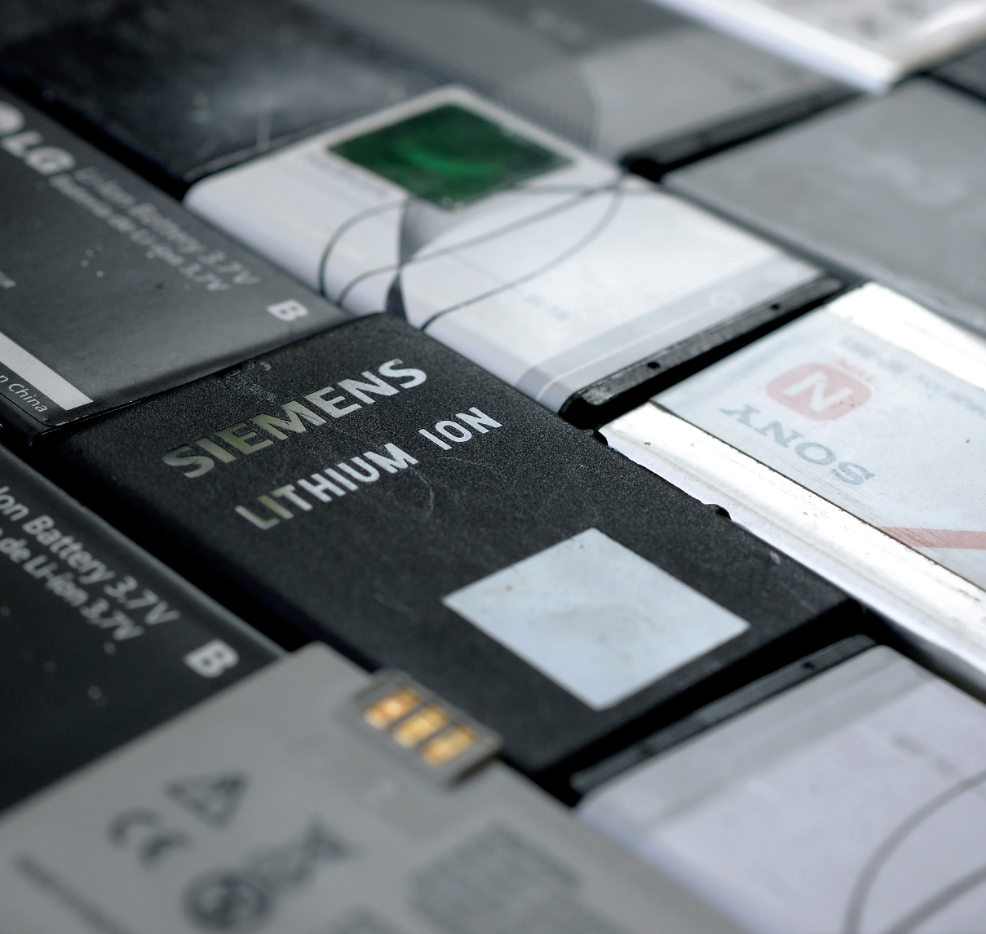
As record-high numbers of batteries enter the solid waste stream, they have increasingly become associated with facility fires, safety issues and danger to workers. Last year saw more than 2,000 fire incidents in the recycled materials industry in the U.S. and Canada alone. With global demand for lithium-ion batteries projected to increase 500% by 2030, our industry has moved rapidly to head off the growing crisis.

Battery retrieval

Because detecting and removing batteries has been impractical given their size and the burden depth of incoming material, we have until now dealt with battery fires by using flame-suppression systems. New AI-powered systems such as BinIt Hazard are changing that by using automated monitoring of feed lines to enable the preventative removal of batteries and other hazards from our waste streams. BinIt uses X-ray imaging to identify common battery types as well as other dangers such as gas tanks with almost 100% consistency.
The transition from a reactive approach to the new proactive, extraction-based model offers a new opportunity and presents the industry with a new question: “What do we do with all the batteries we’re removing from waste streams?” For at least two reasons, the answer lies in recycling. First, batteries are difficult to dispose of safely. And second, we need the raw materials.

Lithium already plays a crucial role in the battle against climate change thanks to its capacity for powering electric vehicles, but less than 5% of all batteries are ever recycled. The rapidly emerging battery recycling industry aims to move the needle on that statistic. Its first challenge is procuring feedstock in large enough volumes to generate short-term scale as we work toward establishing longer-term battery pipelines.

Where are all the batteries?

Most batteries end up in everyday household waste streams. That means consumer education is a top priority, and the good news is that Congress has allocated $10 million toward battery recycling best practices and $15 million for battery labeling guidelines, both to be enacted through the EPA.

In the meantime, a parallel course of action will focus on better detection and removal. Early field data from BinIt Hazard suggests that between 15 and 30 lithium-ion batteries are passing undetected through each recycling facility on a daily basis. Common lithium-ion batteries can weigh anywhere from 10 to 50 pounds, but conservatively, we estimate that at least 150,000 pounds of lithium-ion batteries are moving through North America’s 1,000 or so materials recycling facilities every 24 hours. Even at the modest buyback rate of 25 cents per pound, that’s a staggering $15 million revenue opportunity.

The EPA is currently in the second year of the Solid Waste Infrastructure for Recycling grant program, which allocates $55 million annually to improve recycling processes across the country. Our low-end estimate for revenue from recaptured lithium is equivalent to more than a quarter (27%) of that annual grant from the EPA – and unlike government grant funding, battery retrieval revenue will increase exponentially as EV adoption increases.

What next?

Right now, we can reliably identify and remove batteries from waste streams, and we have a rough sense of the size of the potential market for recovered materials. The next steps will bring new challenges, from understanding the demand for this newly precious commodity to devising a method to safely pack and transport batteries from our facilities to the appropriate recyclers.
One thing is certain, however. As materials like lithium, cobalt, and nickel become increasingly important to global supply chains, including them in the circular economy is becoming exponentially more valuable in both ecological and economic terms. The White House has declared that securing a made-in-America supply chain for critical minerals is a matter of national security. And while community education will remain a vital priority, it is essential that we also have reliable workflows to handle the 68% of material that is not correctly recycled.

Today, building technology that empowers recyclers to detect and remove materials such as lithium-ion batteries is predominantly a safety issue. Over the coming decade, however, it may well become a foundational responsibility for our industry – one demanding that we rise to the occasion with innovative new technologies, strong industrial processes and bold visions for the future.

Raghav Mecheri is the CEO of BinIt, a company that builds AI-powered recycling infrastructure. He can be contacted at raghav@binit.ai.

This article appeared in the September 2023 issue of Resource Recycling. Subscribe today for access to all print content.
TweetShare
Raghav Mecheri

Raghav Mecheri

Related Posts

The Tarheel State launches outreach effort

EPS transport packaging removed from USPP list

byPaul Lane
August 21, 2026

The proven improved recyclability of EPS packaging prompted the decision, with more reviews forthcoming.

Lawsuits hover days after SB 54 approval

NAW-backed coalition seeks SB 54 injunction

byStefanie Valentic
August 21, 2026

NAW says SB 54's 2032 recyclability mandate leans on the same standard a federal judge already froze in the SB...

earnings report

Recycling fuels record revenue for ABTC

byPaul Lane
August 20, 2026

Company buoyed by strong performance at its Nevada facility, as well as the reinstatement of a federal grant for mining...

The Maine state capitol building.

No bidders respond to Maine’s EPR RFP

byStefanie Valentic
August 20, 2026

Following CAA's announcement that it would not submit a bid for Maine's EPR program, the state's DEP announced that no...

Company debuts battery-containing device shredder

New battery shredding system debuts stateside

byPaul Lane
August 20, 2026

Gloyd Recycling’s BIDS system is operational in a US facility after successful premiere in Australia.

The Maine state capitol in Augusta.

Circular Action Alliance won’t bid on Maine’s PRO contract

byStefanie Valentic
August 19, 2026

Circular Action Alliance announced it will not submit an RFP to implement Maine's EPR packaging program.

Load More
Next Post

Data Corner: US fiber, plastic exports decrease

2026 Buyers’ Guide

Equipment, services and technology suppliers serving the recycling industry.

Browse the Guide

More Posts

The Maine state capitol in Augusta.

Circular Action Alliance won’t bid on Maine’s PRO contract

August 19, 2026
The Maine state capitol building.

No bidders respond to Maine’s EPR RFP

August 20, 2026
Company debuts battery-containing device shredder

New battery shredding system debuts stateside

August 20, 2026
State program revamp proposal advances in Oregon

Oregon EPR ruling looms: what legal experts think

August 17, 2026
PureCycle sees easing headwinds to R-PP adoption

PureCycle says H2 outlook already playing out 

August 13, 2026
ESG

Foreign equity is moving into North America’s e-scrap origination

August 19, 2026
Google explores how to capture 4.5 billion tons of plastic

Bale pricing diverges for August

August 18, 2026
End markets, policy key to RPET viability

PET in focus: Is help on the way?

August 17, 2026
Triple-digit revenue gains propel ABTC’s expansion

LFP batteries gain acceptance. Can they be recycled?

August 17, 2026
May pricing bullish for most bales

August pricing bearish for plastic bales

August 17, 2026
Load More

About & Publications

About Us

Staff

Archive

Magazine

Work With Us

Advertise
Jobs
Contact
Terms and Privacy

Newsletter

Get the latest recycling news and analysis delivered to your inbox every week. Stay ahead on industry trends, policy updates, and insights from programs, processors, and innovators.

Subscribe

Welcome Back!

Login to your account below

Forgotten Password?

Retrieve your password

Please enter your username or email address to reset your password.

Log In

Add New Playlist

No Result
View All Result
  • The Latest
  • Analysis
  • Recycling
  • E-Scrap
  • Plastics
  • Policy Now
  • Conferences
    • E-Scrap Conference
    • Plastics Recycling Conference
    • Resource Recycling Conference
    • Textiles Recovery Summit
  • Magazine
  • About Us
  • Advertise
  • Archive
  • Jobs
  • Staff
Subscribe
This website uses cookies. By continuing to use this website you are giving consent to cookies being used. Visit our Privacy and Cookie Policy.