





Resource Recycling
  • The Latest
  • Analysis
    • All
    • Certification Scorecard
    • Industry Announcements
    • Opinion
    Colorado regulators suggest mid-range EPR scenario

    Why collaboration on plastic waste still matters

    Battery processors lay out latest moves

    Battery recycler Ascend Elements files for bankruptcy

    EPR fees are a market signal. Here’s what they’re telling you.

    EPR fees are a market signal. Here’s what they’re telling you.

    Wolframite ore, the primary ore of tungsten from Altai, Russia

    Tungsten scrap export controls draw industry attention

    Certification Scorecard — Week of April 6, 2026

    Closed Loop Partners acquires Sutter Metals, connecting electronics disposition to metals recovery

    Certification Scorecard — Week of March 30, 2026

    Industry announcements for January 2026

    Industry announcements for April 2026

    Certification scorecard – Week of March 23, 2026

  • Conferences
  • Publications

    Other Topics

    Textiles
    Organics
    Packaging
    Glass
    Brand Owners

    Metals
    Technology
    Research
    Markets
    Grant Watch

    All Topics

Subscribe
No Result
View All Result
Resource Recycling
  • The Latest
  • Analysis
    • All
    • Certification Scorecard
    • Industry Announcements
    • Opinion
    Colorado regulators suggest mid-range EPR scenario

    Why collaboration on plastic waste still matters

    Battery processors lay out latest moves

    Battery recycler Ascend Elements files for bankruptcy

    EPR fees are a market signal. Here’s what they’re telling you.

    EPR fees are a market signal. Here’s what they’re telling you.

    Wolframite ore, the primary ore of tungsten from Altai, Russia

    Tungsten scrap export controls draw industry attention

    Certification Scorecard — Week of April 6, 2026

    Closed Loop Partners acquires Sutter Metals, connecting electronics disposition to metals recovery

    Certification Scorecard — Week of March 30, 2026

    Industry announcements for January 2026

    Industry announcements for April 2026

    Certification scorecard – Week of March 23, 2026

  • Conferences
  • Publications

    Other Topics

    Textiles
    Organics
    Packaging
    Glass
    Brand Owners

    Metals
    Technology
    Research
    Markets
    Grant Watch

    All Topics

Subscribe
No Result
View All Result
Resource Recycling
No Result
View All Result
Home Recycling

Comments on plastics strategy urge source reduction, EPR

Marissa HeffernanbyMarissa Heffernan
August 7, 2023
in Recycling
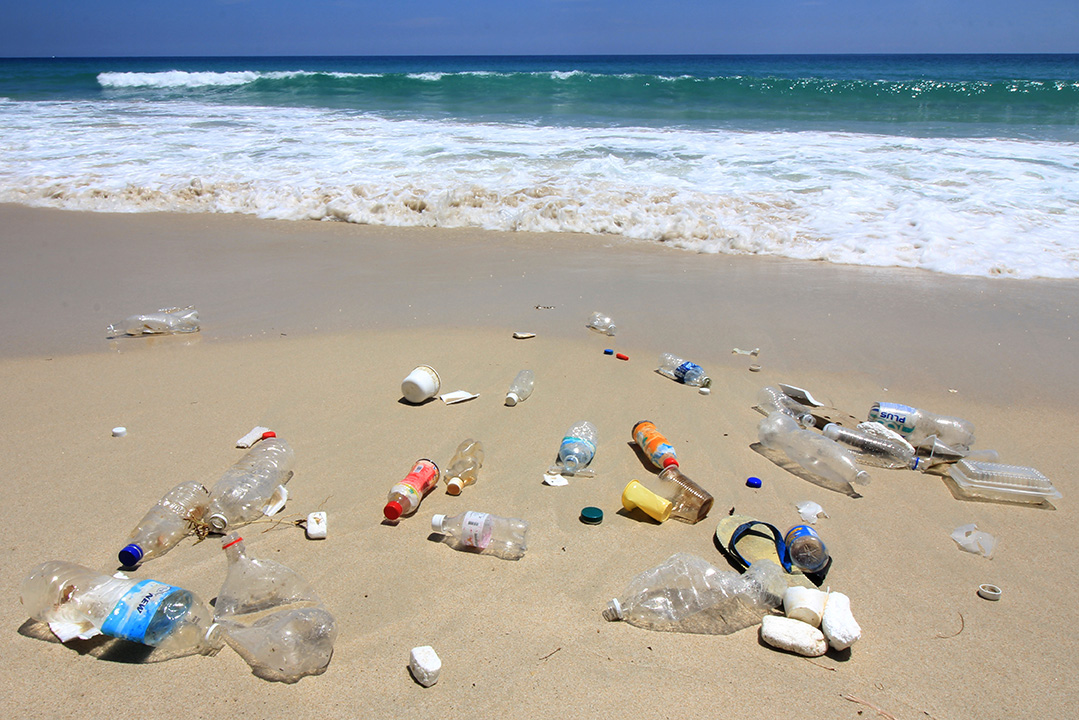
Many responses from environmental groups focused on the need for the U.S. EPA’s National Strategy to Prevent Plastic Pollution to rein in the generation of new plastics. | Rich Carey/Shutterstock

The U.S. EPA asked for input on its draft National Strategy to Prevent Plastic Pollution, and recycling industry stakeholders have answered. 

Many of the nearly 92,000 comments on the draft strategy called for federal deposit return systems and extended producer responsibility (EPR) programs. Industry voices also pushed for a greater focus on marine pollution and for the EPA to enforce plastic reduction targets.

The stated objectives of the EPA’s strategy, first released in early May, are to reduce the pollution created by the plastic production process, to improve post-use materials management, to remove escaped materials from the environment and to prevent micro- and nano-plastics from entering waterways.

Considering source reduction

In its comment, environmental group Beyond Plastics called plastic recycling “an abysmal failure” and said the “single most important priority of a federal policy on plastics must be to promote policies and practices that reduce the generation of plastics.”

Beyond Plastics also recommended creating standard legal definitions, regulating reduction targets for packaging producers with clear timelines, removing toxic chemicals from packaging and instituting national enforcement and compliance initiatives to “prohibit false solutions, particularly ‘chemical recycling.'”

Upstream, a waste reduction nonprofit, urged the EPA “to place a greater emphasis on waste prevention and reuse throughout the strategy, rather than downstream waste management and recycling.” 

“We also urge the EPA to expand the scope of this strategy beyond plastics,” Upstream’s comment noted, to focus on reducing all instances of single-use items. 

The Plastics Industry Association expressed its disappointment with the draft document’s focus on reduction and limits. It recommended recognizing that plastics “serve a critical and sustainable role in modern life” and that the draft be revised to “hold all materials to the same standard and recognize that plastics often outperform other materials environmentally.” 

Improved infrastructure, increased recycling rates and circularity should be the focus, the Plastics Industry Association’s comment added.

National standards and definitions

The Green Restaurant Association suggested requiring a high post-consumer material minimum for all disposable products, a national deposit return system and a national disposables fee charged for each disposable product used, with the funds allocated to restaurants that use 100% reusables for in-house and a reusable take-out service.

Meanwhile, on the brands side, the American Beverage Association asked for a definition of “single-use,” support for “proven” EPR and DRS frameworks, studies of reuse and refill options and funding for not only collection but cleanup. 

The Consumer Brands Association called for a harmonized nationwide recycling standard and a review of the chasing arrows symbol. It also recommended integrating chemical recycling into the plan, as did the American Chemistry Council. 

The Institute of Scrap Recycling Industries (ISRI) called for more policies that improve markets for plastics or that encourage design for recyclability and PCR use. ISRI also suggested excluding “processes that convert materials to fuels, fuel ingredients or energy from being considered as a recycling practice.”

A comment from the Association of Plastic Recyclers (APR) urged the EPA to take the lead in developing and implementing stronger procurement guidelines. The industry group also suggested collecting data on a national level. (APR owns Resource Recycling, Inc.)

The United States Department of the Interior suggested expanding the scope of the strategy to include sea-based sources of marine plastic pollution, such as fishing and shipping vessels, “given the substantial contribution of sea-based sources and the significant and increasing contributions of the United States to marine plastic pollution globally.”

Ocean-cleaning organization LoveBlue echoed the desire to include sea-based material and added it wanted to see more consumer education on the principles and responsibilities of ownership.

Standardizing EPR

A common refrain from respondents was the need to harmonize EPR programs from state to state. One such comment came from the Product Stewardship Institute (PSI), which called for federal EPR for packaging and other products. 

“EPR for packaging addresses most of the concerns and questions in the Draft National Strategy to Prevent Plastic Pollution, yet it is only referenced as a solution once,” PSI’s comment read.

Kerrin O’Brien, executive director of the Michigan Recycling Coalition, also emphasized the lack of attention paid to standardized EPR regulations. “Products produced in one community but consumed in many will require coordinated effort at a higher level,” she said.

“It would be great to see EPA prioritize exploring options with producers regarding the impacts of their plastic products and packaging because if it happens like it happened in recycling, it will cost producers much, much more to cover the disparate system of EPR developing now,” O’Brien added. 

“There is an enormity of issues, options and opportunities that can and will be undertaken to address these issues,” she continued. “A draft strategy that goes beyond voluntary efforts that can be undertaken in the U.S. and brings some focus to what EPA’s role and goals are in this realm would provide needed leadership, but [these] are missing from this strategy.”


Tags: Industry GroupsPlasticsPolicy Now
TweetShare
Marissa Heffernan

Marissa Heffernan

Marissa Heffernan worked at Resource Recycling from January 2022 through June 2025, first as staff reporter and then as associate editor. Marissa Heffernan started working for Resource Recycling in January 2022 after spending several years as a reporter at a daily newspaper in Southwest Washington. After developing a special focus on recycling policy, they were also the editor of the monthly newsletter Policy Now.

Related Posts

Reverse Logistics Network launches to support industry

byPaul Lane
April 14, 2026

The reverse logistics community has a new organization to give companies in that sector a place to connect.

Colorado regulators suggest mid-range EPR scenario

Why collaboration on plastic waste still matters

byCrystal Bayliss
April 13, 2026

Six years ago, the U.S. Plastics Pact launched at a moment of rising concern about plastic waste and growing momentum...

Industrial sources drive rise in PVC recycling

byAntoinette Smith
April 13, 2026

Volumes of post-industrial PVC recycled in 2024 rose by 10% from 2019 levels, while post-consumer sources fell and missed a...

Oregon’s battery EPR bill officially charged for implementation

byStefanie Valentic
April 10, 2026

Oregon Governor Tina Kotek signed HB 4144 into law on April 7, setting into motion the mechanics for an extended...

AF&PA states disappointment over Oregon EPR decision

byStefanie Valentic
April 8, 2026

The American Forest & Paper Association is responding after a federal judge blocked the trade group's bid to intervene in...

End markets, policy key to RPET viability

End markets, policy key to RPET viability

byAntoinette Smith
April 8, 2026

Longer-term actions support domestic RPET markets and can help prevent the loss of public trust in recycling systems, industry experts...

Load More
Next Post

New England state imposes food scraps disposal ban

More Posts

EPR fees are a market signal. Here’s what they’re telling you.

EPR fees are a market signal. Here’s what they’re telling you.

April 10, 2026
Wolframite ore, the primary ore of tungsten from Altai, Russia

Tungsten scrap export controls draw industry attention

April 9, 2026

Trafigura signs $1.1b deal for recycled battery metals

April 8, 2026

WM opens new $60m MRF in Indy

April 10, 2026
Battery processors lay out latest moves

Battery recycler Ascend Elements files for bankruptcy

April 13, 2026

GFL acquires SECURE Waste for $6.4bn

April 13, 2026
End markets, policy key to RPET viability

End markets, policy key to RPET viability

April 8, 2026
Colorado regulators suggest mid-range EPR scenario

Why collaboration on plastic waste still matters

April 13, 2026
Bill to update New Jersey e-scrap program heads to governor

New Jersey recyclers talk EPR

April 9, 2026
Solarcycle starts up Georgia recycling plant

S3399 signals a shift in how states are tackling solar panel waste

April 6, 2026
Load More

About & Publications

About Us

Staff

Archive

Magazine

Work With Us

Advertise
Jobs
Contact
Terms and Privacy

Newsletter

Get the latest recycling news and analysis delivered to your inbox every week. Stay ahead on industry trends, policy updates, and insights from programs, processors, and innovators.

Subscribe

Welcome Back!

Login to your account below

Forgotten Password?

Retrieve your password

Please enter your username or email address to reset your password.

Log In

Add New Playlist

No Result
View All Result
  • The Latest
  • Analysis
  • Recycling
  • E-Scrap
  • Plastics
  • Policy Now
  • Conferences
    • E-Scrap Conference
    • Plastics Recycling Conference
    • Resource Recycling Conference
    • Textiles Recovery Summit
  • Magazine
  • About Us
  • Advertise
  • Archive
  • Jobs
  • Staff
Subscribe
This website uses cookies. By continuing to use this website you are giving consent to cookies being used. Visit our Privacy and Cookie Policy.