




This story has been corrected.
Chemical recyclers are forging partnerships, eyeing underutilized material streams and getting creative to secure enough supply to feed their ambitious plans, according to leaders in the sector.
Those insights came from the “Supply Realities in Chemical Recycling” session at the 2023 Plastics Recycling Conference, held in National Harbor, Md. from March 6-8.
Panelists at the session represented an array of plastics reclaimers and chemical companies, and all offered their insider perspectives on how to achieve sufficient inputs for chemical recycling goals.
Big players in chemical recycling
Brightmark uses pyrolysis to convert plastics into oils and is engaged in the process of bringing a facility on-line in Ashley, Ind.
Pyrolysis falls under the umbrella of “chemical recycling” or “advanced recycling,” terms which generally refer to a wide array of processes that use heat, pressure and/or solvents to break down the molecular chains of polymers into liquids or gasses that can then be processed into fuels, oils, waxes, new plastics or other chemical products.
The new facility will have the capacity to process 200 million pounds of plastic of all different resin types, said panelist Candace Rutherford, a feedstock manager for the company.
“Some materials come in and it might be foamed, might be rigid and might be strapping and mixed materials, mixed resins,” Rutherford said. “That’s what we put all back into the same soup to harvest the hydrocarbons.”
Holli Alexander, strategic initiatives manager for sustainability at Eastman, said her company is focused on two different technologies: carbon renewal technology, which employs a form of gasification, and polyester renewal technology, which employs methanolysis, a process that uses methanol to break down the polymers.
Both are in use at Eastman’s Kingsport, Tenn. facility. The output from the methanolysis can be used in specialty applications, more traditional PET bottles and some durable or reusable goods, Alexander said.
She added that Eastman is also looking to build chemical recycling facilities in France and at a second, undisclosed, location in the United States.
Rachel Dial, director of sustainability at PureCycle, said her company uses a chemical solvent to dissolve polypropylene without a chemical reaction.
The North American advanced recycling commercial manager for ExxonMobil, Natalie Martinez, noted that her company’s Exxtend technology is currently operational at several facilities, including a 40,000 ton per year capacity facility in Baytown, Texas that started producing commercial quantities of material at the end of last year.
“ExxonMobil has ambitions to get to 500 KTA capacity by the end of 2026,” she added. “These are units that we’ll be able to expand at multiple different facilities across the U.S., Canada, Europe and Asia Pacific.”
Securing feedstock
Alexander said Eastman already has feedstock sources secured for 75% of its annual polyester needs. The company uses a “buy, partner, create” model. That means first, the company sees what feedstock is available to buy. Then, it sees what other companies are investing in the space and whether they can work together.
“We are focused on streams that do not have good options or good homes within mechanical recycling,” she added. “Eastman is very focused on ensuring that what we do is complementary to the mechanical recycling stream because we want to expand the pie.”
If “buy” and “partner” don’t pan out, the company moves on to the “create” phase, Alexander said, which is applied “where streams don’t yet exist.”
One example of a “create” effort is Eastman’s auto shredder residue stream, developed in partnership with the United States Automotive Materials Partnership, automotive recycler PADNOS and automotive interior supplier Yanfeng.
Below is video of the full “Supply Realities in Chemical Recycling” session (story continues below video). Visit our Vimeo page to see more from the 2023 Plastics Recycling Conference.
Editors note: This story was corrected to reflect that Brightmark’s Ashley, Indiana facility has the capacity to process up to 200 million pounds per year. Dial said PureCycle’s supply strategy has four pillars: looking at sorting polypropylene out of curbside materials, taking post-consumer non-curbside materials, building event or industry sources and, finally, advocating for policy that will support supply chains.
“All of these emerging technologies are wonderful and we’re all going out and we’re deploying new programs to increase the streams that we can tap into,” she said.
At Exxon, Martinez said she keeps in mind that “the amount of plastic out there that is not being recovered, it’s more than enough to support what we’re looking for.”
“It’s less about what’s actually available right now and more of how do we grow and recover what’s not being recovered today,” she said. “And that’s – to me – the fundamental challenge.”
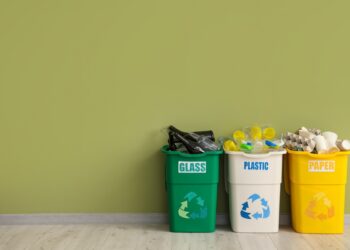
She pointed to the on-site materials recovery system at the conference itself as one example of the type of collaborative strategy that could bring more plastics into the recycling system. The four-bin collection network was coordinated by iSustain, a company that works with ExxonMobil, PureCycle and others to source material.
“How can we collect more and different types of plastics at events such as this that otherwise would have gone, unfortunately, into landfill?” Martinez said.
Working to improve
Martinez added that in 2020, Exxon teamed up with Agilyx to create Cyclyx, a joint venture focused on aggregating and collecting plastics for chemical recycling. The venture also works to chemically characterize plastics to improve the processes.
“That’s something that’s not typically done now,” Martinez said of the chemical characterization. “It is a little bit different and a little bit new and they’re doing that for the industry as a whole.”
Exxon is also establishing take-back programs, such as the Houston Recycling Collaboration, to improve supply by strengthening infrastructure and capacity, and supporting policy efforts “that recognize the value of many different technologies,” Martinez said.
Rutherford and Alexander both said a vital part of improving supply chains is incentivizing suppliers by paying a price that values that work.
“We’re really committed to trying to make sure that we’re building up these supply chains and creating demand so that we can continue to procure these materials and recycle them in the future,” Alexander said.
Dial noted that PureCycle is looking at investing in new streams that are traditionally landfilled, which could spare those potential suppliers disposal fees. That creates a win-win, she said.
Policy and partnerships
Alexander and Dial also said that strong relationships with MRFs are very helpful to building up supply chains. A large part of locating PureCycle’s flagship facility in Ironton, Ohio was a strong relationship with Rumpke, the regional MRF operator, Dial said. That allowed them to collaborate on increasing polypropylene collection.
Alexander said MRFs are “a hugely important space for collaboration, for partnerships and also for looking at innovations and investments in sortation.”
All four panelists said extended producer responsibility (EPR) programs for packaging can be helpful to the supply stream, but had differing levels of support.
Rutherford said there are many levers industry and government can pull other than EPR, and Martinez noted that EPR programs can vary, so Exxon supports well-constructed EPR that “recognizes the value that different technologies can bring.”
Dial added that EPR has great potential to drive investment into critical collection and sortation infrastructure and create markets for recycled resins.
Eastman “is absolutely supportive of extended producer responsibility for packaging,” Alexander said, adding that “we see it as a critical mechanism that really helps to drive increased collection.”
“Now with that said, it’s also very important that we’re looking at EPR that is going to be smart EPR, that’s going to have strong input and influence from a producer organization that’s made up of industry,” she noted, and that chemical recycling technologies be classified as recycling.
A version of this story appeared in Plastics Recycling Update on May 9.