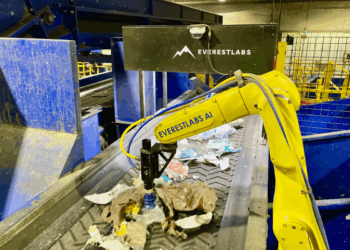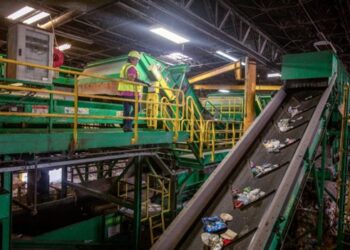







Recycling collection and processing has been deemed essential by states that have issued stay-at-home orders, meaning industry entities are not subject to forced shutdowns.
As states over the past week prepared to enact strict stay-at-home orders to help stem the spread of the novel coronavirus, the “essential” designation became a key talking point across many business sectors.
The Institute of Scrap Recycling Industries (ISRI) on March 18 penned a letter to Vice President Mike Pence, urging the federal government to consider the industry “essential.” Similar efforts came from the National Waste & Recycling Association (NWRA), Solid Waste Association of North America (SWANA) and others.
On March 19, the Cybersecurity & Infrastructure Security Agency (CISA), which is part of the Department of Homeland Security, published a list of essential infrastructure sectors, a designation that includes those providing “support to ensure the effective removal, storage, and disposal of residential and commercial solid waste and hazardous waste,” as well as “truck drivers who haul hazardous and waste materials to support critical infrastructure, capabilities, functions, and services.”
Meanwhile, numerous states have enacted stay-at-home orders over the past week. Although structured differently, all so far allow for the continued operation of recycling services.
- California included language from the federal guidance indicating the recycling sector is considered essential and will remain operational.
- Connecticut specifically describes “trash and recycling collection, hauling, and processing” as “essential services.”
- Delaware included waste collection, treatment and disposal as operations that can remain open.
-
Hawaii generally followed the federal guidelines and included “waste pickup and disposal” as an essential service.
- In Illinois, the order includes “solid waste and recycling collection and removal” as an essential infrastructure service. Manufacturers whose products support the collection and disposal industry were also deemed “essential businesses.”
- Indiana followed the federal guidance.
- Louisiana followed the federal guidance.
-
Maine followed the federal guidance.
-
Maryland followed the federal guidance.
- Massachusetts followed the federal guidance.
- Michigan followed the federal guidance.
-
Nevada specified that “recycling services” as well as “solid waste collection and removal” are essential infrastructure operations.
- New Mexico included “trash and recycling collection, processing and disposal” as essential services.
- In New York, a list published by the state specifically listed for-profit and nonprofit “trash and recycling collection, processing and disposal” as essential services.
- Ohio lists “solid waste and recycling collection and removal” as essential infrastructure.
- Oregon does not specifically mention waste management and recycling, but the executive order does not prohibit those industries from operating.
- Pennsylvania ordered “non-life-sustaining” businesses to cease physical operations for the time being. The state published a list designating which business can remain open. Waste collection, treatment, disposal, remediation and “other waste management services” were allowed to continue operating.
-
Vermont noted “trash collection and disposal, recycling” as essential operations.
- Washington followed the federal guidance.
- West Virginia identifies “solid waste and recycling collection and removal” as a component of essential infrastructure.
-
Wisconsin included “solid waste and recycling collection and removal” in its essential businesses list.
End users highlight recycling importance
Advocates are pointing to the role recycling plays in the supply chain, in addition to its waste management and sanitation function.
ISRI described recycling as “essential to supplying U.S. manufacturing with the materials necessary to produce steel, aluminum, paper, plastics, rubber and many other materials.”
In Michigan, where numerous drop-off programs and some curbside services have been scaled back, manufacturers pointed to the vital role recycling collection plays in their ability to produce high-demand products.
Tori Beckett of Great Lakes Tissue cited the importance of recycling programs to the company’s operations.
“We use 100% recycled raw material to the tune of over 2,100 tons per month, with over half of that being directly from post-consumer recycling operations across the U.S. and Canada,” Beckett said in a statement. “With all of the toilet paper shortages across the country, our operations are still at maximum capacity production and need all of the raw material we can get our hands on.”
She added that the company keeps enough supply to last a couple weeks, and that “if the collections stop we do fear we will not be able to keep a sustainable operation running.”
Doug Rahaim of Dearborn, Mich.-based Glass Recyclers Inc. said his business provides cullet to the container manufacturing industry.
“Our business is essential and critical, as in some cases [it is] the sole supplier to the world’s largest glass container manufacturers that have plants in the United States,” he said in a statement.
Without the cullet his firm provides, glass furnaces would not be able to operate.
“This would force a shut down and very likely cause terminal failure in the glass furnaces in the plants that we supply,” Rahaim stated.
The federal guidance from CISA identifies “critical manufacturing” to include producers of materials and products needed for “supply chains associated with transportation, energy, communications, food and agriculture, chemical manufacturing” and other sectors.
More specific to packaging, the federal definition denotes as “essential” manufacturers of “single-use plastics, and packaging that prevents the contamination or supports the continued manufacture of food, water, medicine, and other essential products, including glass container manufacturing.”
In Pennsylvania, other businesses approved to continue operating were end users of recovered materials. Those end users include pulp and paper mills and paper converters, plastic product manufacturers and resin producers, and aluminum producers. “Glass and glass product manufacturing” sector was initially not approved to continue operating, but under a revised list published March 24, glass manufacturing is considered an essential business.
The Pennsylvania list also approved electronics repair firms to continue operating as vital businesses.
In Oregon, the pulp and paper industry pushed to be deemed “essential” because it produces toilet paper and cardboard boxes for e-commerce. The paper industry, and manufacturing in general, was not prohibited in the Oregon governor’s executive order.
The West Virginia order did not touch any manufacturing industries, allowing all to continue operating.
This article was updated following a regulatory change approving glass manufacturing as an essential business in Pennsylvania. Further updates include details on additional states that have passed stay-at-home orders.