





Resource Recycling
  • The Latest
  • Analysis
    • All
    • Certification Scorecard
    • Industry Announcements
    • Opinion
    Closeup of a printed circuitboard

    Can modular metals recovery challenge the smelter model?

    Intel sign outside of company building.

    What Intel’s blockbuster quarter means for ITAD

    Feds to develop repairable computer donation program

    The whitebox blind spot in PC recycling

    Analysis: circular design still elusive in laptops

    PC shipments grew in Q1, but questions remain

    The independent ITAD at a crossroads

    The independent ITAD at a crossroads

    Certification Scorecard — Week of April 20, 2026

    Apple Watch on product box.

    Wearables are coming and ITAD isn’t ready

    Certification Scorecard — Week of April 13, 2026

    EV Battery Pack - Sergii Chernov-Shutterstock

    Redwood, Rivian deal fuels US infrastructure plans

  • Conferences
  • Publications

    Other Topics

    Textiles
    Organics
    Packaging
    Glass
    Brand Owners

    Metals
    Technology
    Research
    Markets
    Grant Watch

    All Topics

Subscribe
No Result
View All Result
Resource Recycling
  • The Latest
  • Analysis
    • All
    • Certification Scorecard
    • Industry Announcements
    • Opinion
    Closeup of a printed circuitboard

    Can modular metals recovery challenge the smelter model?

    Intel sign outside of company building.

    What Intel’s blockbuster quarter means for ITAD

    Feds to develop repairable computer donation program

    The whitebox blind spot in PC recycling

    Analysis: circular design still elusive in laptops

    PC shipments grew in Q1, but questions remain

    The independent ITAD at a crossroads

    The independent ITAD at a crossroads

    Certification Scorecard — Week of April 20, 2026

    Apple Watch on product box.

    Wearables are coming and ITAD isn’t ready

    Certification Scorecard — Week of April 13, 2026

    EV Battery Pack - Sergii Chernov-Shutterstock

    Redwood, Rivian deal fuels US infrastructure plans

  • Conferences
  • Publications

    Other Topics

    Textiles
    Organics
    Packaging
    Glass
    Brand Owners

    Metals
    Technology
    Research
    Markets
    Grant Watch

    All Topics

Subscribe
No Result
View All Result
Resource Recycling
No Result
View All Result
Home Resource Recycling Magazine

First-person perspective: Zooming in on consumer impact

byJennifer Bogs
January 10, 2025
in Resource Recycling Magazine
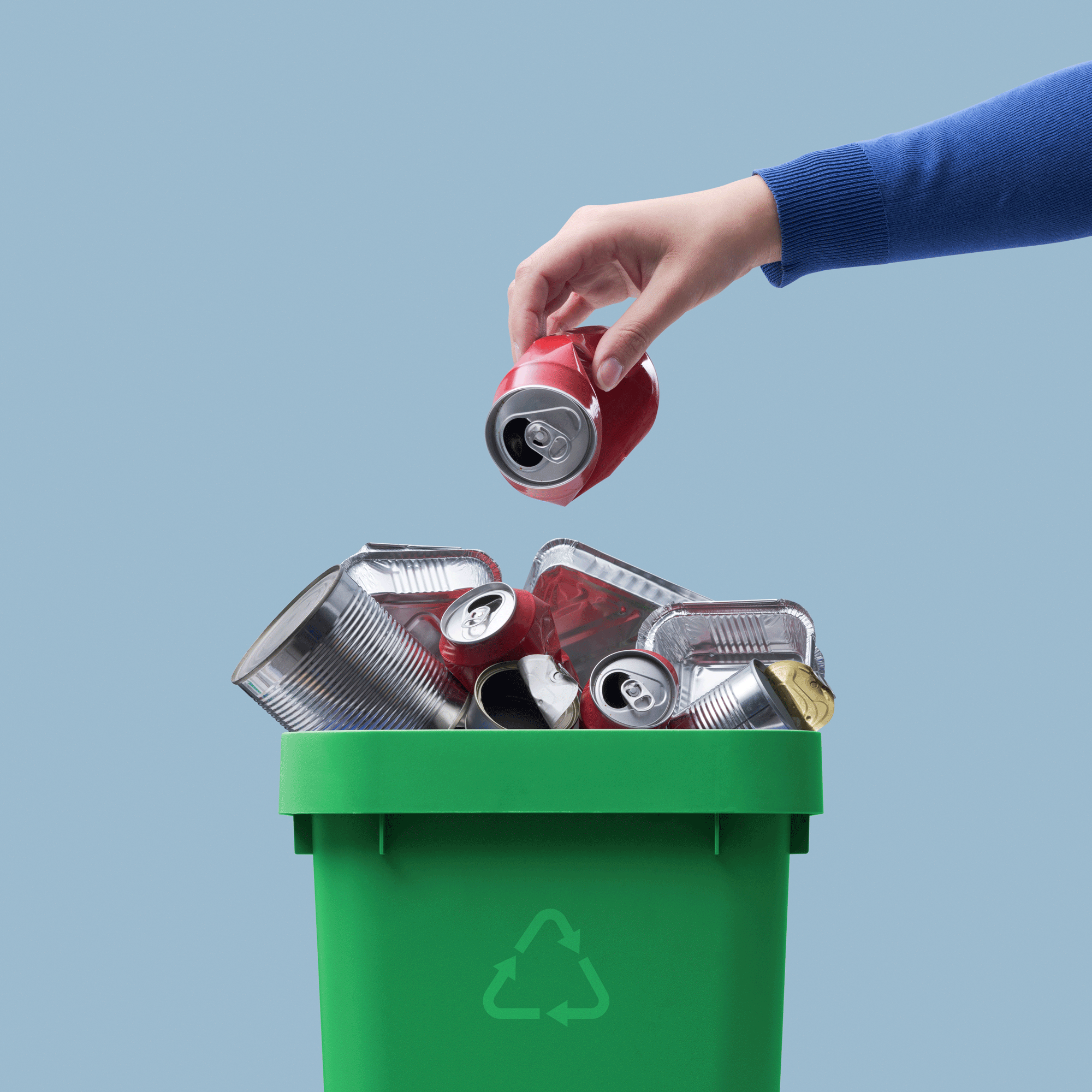
Stokkete/Shutterstock

This article appeared in the January 2025 issue of Resource Recycling. Subscribe today for access to all print content.

Across all consumer goods categories, the U.S. is striving to limit packaging waste and to slow the flow of landfill contributions. Regulators and environmentalists know that time is running out to combat climate change and that moving from a linear to circular model is one of the most effective strategies for preserving materials, reducing resource consumption and decreasing production-related emissions. Yet recycling rates in the U.S. continue to fall short of their potential — largely due to a lack of access and understanding for consumers. This raises the question: If we could simply improve consumer recycling habits of consumers for even one type of packaging, how much could we shift future recycling rates and landfill volumes?

Aluminum as a clear avenue

The beverage can serves as a package with unique opportunity for moving the needle, given its market-ready path toward a greater circular economy. While most modern consumers know that the beverage can is a recyclable item, many do not understand just how impactful that recyclability is in terms of the bigger picture. Used beverage cans are able to be recycled from an empty can to a new can on the shelf in as few as 60 days — a remarkable turnaround that not only saves precious materials from landfill but also saves more than 90% of the energy required in production using virgin materials.

Aluminum cans are also one of the highest-valued formats in the recycling stream given the fact that they can be recycled an infinite number of times without loss of properties like strength and durability. In fact, the Can Manufacturers Institute says that the profit from aluminum beverage cans effectively enables the entire recycling system to operate — typically accounting for more than 33% of the revenue at an average MRF, more than any other single material commodity.

Unfortunately, the majority of consumers are unaware of the importance of UBCs for recycling systems and are not always committed to making responsible choices for material disposal, leaving a tremendous opportunity gap for greater collection.

Creating care and commitment within consumers

While there are numerous ways to make beverage can recycling easier for consumers, there is no action without buy-in. Consumers must feel connected to the products they are using as well as
personally responsible for their choices in order to develop new, more productive habits.

With this in mind, driving consumer education about the damaging effects of landfill waste and resource consumption on the future of our planet, as well as the benefits of properly disposing of key packaging formats like the beverage can, helps to drive more mindful behavior and long-term stewardship.
When a consumer knows that the way they interact with just one beverage can plays a tangible role in a potential environmental outcome, they are more apt to do their part.

Often this education can be done in tandem with localized events where can collection is active and accessible. Some examples include:

  • Sponsoring contests at sporting events: Various minor league teams around the U.S. have received sponsorship support from manufacturers and beverage brands to hold a collection contest of all used beverage packaging in stadium and arena stands, incentivizing responsible disposal and recycling on-site while providing longer-term education and reminders to all attendees along the way.
  • Hosting competitions at schools: CMI has led a One Million Can Challenge with elementary schools in key regions of the U.S. to drive awareness of the importance of UBC collection not only with families and communities but with the younger generation, who can develop impactful habits early on.
  • Creating greater accessibility in high-consumption areas: Metal packaging industry initiatives like Every Can Counts continue to meet consumers where they are, placing recycling ambassadors at local festivals, community parks, academic institutions and other high-traffic areas where passersby can be taught to be more thoughtful about recycling in relation to their daily activities and lifestyles.

Strength in numbers

Ultimately, when it comes to increasing national recycling rates, it is imperative we remember that small actions can create significant impact. Focusing on one substrate, and partnering with one school or one neighborhood to drive more awareness, can be part of a much larger patchwork of efforts happening across the U.S. With the mindset that no one initiative is too minor, we stand a chance to advance the circular economy and foster a much healthier environment long-term.

Jennifer Bogs is a global director of sustainability at Crown overseeing the strategy and implementation of the company’s sustainability program at approximately 400 locations in 40 countries while leading a global team of sustainability professionals. She has 20-plus years’ experience in the environmental field and 9-plus years of experience in sustainability.

The views and opinions expressed are those of the author and do not imply endorsement by Resource Recycling, Inc. If you have a subject you wish to cover in an op-ed, please send a short proposal to [email protected] for consideration.

TweetShare
Jennifer Bogs

Jennifer Bogs

Related Posts

California extends compostable labeling law

Report finds path forward for compostable packaging

byKeith Loria
April 28, 2026

A new report by Closed Loop Partners’ Composting Consortium examined five years of research, field testing and cross-industry collaboration and...

Closeup of a printed circuitboard

Can modular metals recovery challenge the smelter model?

byDavid Daoud
April 28, 2026

UK-based startup DEScycle is testing a new approach to extracting metals from electronic scrap.

Women in Circularity: Connie Lilley

Women in Circularity: Connie Lilley

byMaryEllen Etienne
April 28, 2026

In this series, we spotlight women moving us toward a circular economy. Today, we meet Connie Lilley of We ReUse.

Waste Connections sees Q1 recycled commodity rise

byStefanie Valentic
April 27, 2026

Waste Connections reported Q1 2026 revenue of $2.371 billion, up 6.4% year over year, with recycled commodity revenue posting its...

PCA keeping focus on virgin fiber products

byAntoinette Smith
April 27, 2026

Despite recent recycled paper acquisitions, Packaging Corporation of America will still lean on strength and flexibility of its virgin paper...

Intel sign outside of company building.

What Intel’s blockbuster quarter means for ITAD

byDavid Daoud
April 27, 2026

A stunning earnings comeback, $800 million in written-off fab equipment, a new domestic fab, and an AI-driven server surge —...

Load More
Next Post

News from GFL Environmental, Glass Packaging Institute and more

More Posts

Birch Plastics gets FDA green-light for post-industrial PP

LyondellBasell upgrade to PreZero assets on hold

April 23, 2026
The independent ITAD at a crossroads

The independent ITAD at a crossroads

April 22, 2026
EPR fees are a market signal. Here’s what they’re telling you.

Oregon DEQ flags 250 producers for RMA noncompliance

April 21, 2026

What Netflix’s ‘Plastic Detox’ gets wrong – and right

April 23, 2026

Google pilots reuse kits to extend device life

April 21, 2026
What is EPR and why it matters

What is EPR and why it matters

April 22, 2026
Earth Day

Happy Earth Day. Here’s how to celebrate

April 22, 2026
Growth challenges drive M&A for packaging

Growth challenges drive M&A for packaging

April 20, 2026
EPR fees are a market signal. Here’s what they’re telling you.

EPR fees are a market signal. Here’s what they’re telling you.

April 10, 2026
Prescription drug bottles

National Prescription Drug Take Back Day is Saturday

April 24, 2026
Load More

About & Publications

About Us

Staff

Archive

Magazine

Work With Us

Advertise
Jobs
Contact
Terms and Privacy

Newsletter

Get the latest recycling news and analysis delivered to your inbox every week. Stay ahead on industry trends, policy updates, and insights from programs, processors, and innovators.

Subscribe

Welcome Back!

Login to your account below

Forgotten Password?

Retrieve your password

Please enter your username or email address to reset your password.

Log In

Add New Playlist

No Result
View All Result
  • The Latest
  • Analysis
  • Recycling
  • E-Scrap
  • Plastics
  • Policy Now
  • Conferences
    • E-Scrap Conference
    • Plastics Recycling Conference
    • Resource Recycling Conference
    • Textiles Recovery Summit
  • Magazine
  • About Us
  • Advertise
  • Archive
  • Jobs
  • Staff
Subscribe
This website uses cookies. By continuing to use this website you are giving consent to cookies being used. Visit our Privacy and Cookie Policy.