












This article appeared in the June 2020 issue of Resource Recycling. Subscribe today for access to all print content.
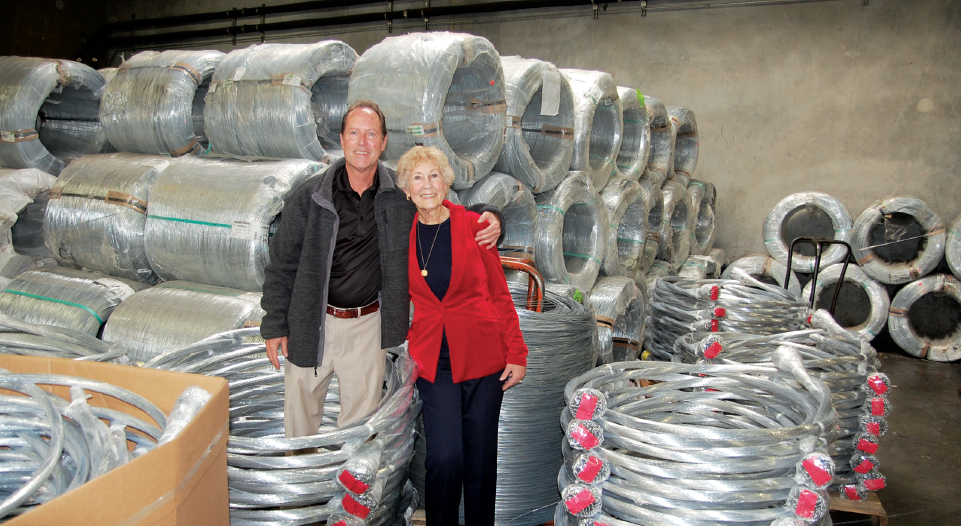
Today, Vulcan Wire is a $10 million-a-year company supplying baler wire to customers in California and beyond. But the story of its start includes surprising – and sometimes sordid – details: check fraud and lying on a loan application, among other things.
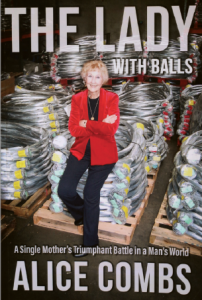
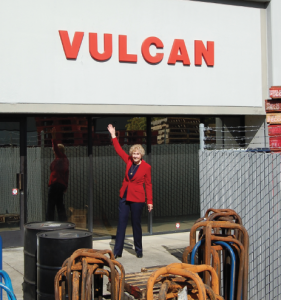
Vulcan Wire’s founder, Alice Combs, lays bare her path to building the baler-wire business in her book “The Lady with Balls: A Single Mom’s Triumphant Battle in a Man’s World.” Now 78, semi-retired and living near the beach on the Northern California coast, Combs remains a board member (vice president of stock) for Hayward, Calif.-based Vulcan Wire.
Her book, which was published by Cypress House last year, provides important lessons for anyone looking to start and build their business. But in many ways, it’s less a how-to guide and more of a memoir exploring her experiences in recycling and related fields, particularly in the 1970s and ’80s. It reveals confidence-crushing defeats, painfully long work hours, rampant sexism and more.
In an interview with Resource Recycling, Combs described how she got her memorable nickname and talked about her journey.
Resource Recycling: Could you talk a little bit about how you obtained your startup money, how it involved “check kiting” and lying on your bank application? It’s a pretty wild story.
Alice Combs: First, the reason I kited was I didn’t have enough money to pay for the very first wire I purchased. For anyone who doesn’t know what kiting means, it means making a check for which you don’t have adequate funds in the bank. In my case, I was very naive. The company I sold my first wire to – Owens-Illinois in Union City, which made sheets for making boxes – they needed the wire. I thought they would pay me upon delivery, and I was horrified when they didn’t, because I had written a check for which I had no funds. And so I had to wait just under an hour for the individual who was in charge of purchasing this wire from me to call the corporation headquarters. He had to get permission to have someone write a check to pay me. He was very disgusted and told me never again, that in the future he expected 30 days credit, and it might even take over 30 days until I got my money and I needed to be prepared for that. So I did get his check and I did get it in the bank in time and it never bounced. That was very fortunate for me.
Then, I realized that I had no startup funds. I had just gotten off of food stamps … and had recently been fired from a job I thought would be a career job. So I certainly couldn’t show a very good income statement, because I had only been a part-time waitress putting myself through college. So how in the world am I going to get my startup money? Well, I ended up applying for a second mortgage on my home. I knew I wouldn’t have income qualification unless they believed I made a hell of a lot more money than I made. W2s were easy to get in those days – this was 1975, we didn’t have all that computer electronic stuff. So I got a W2 and I wrote on it that I made about $40,000 a year, which is just short of a couple hundred thousand dollars a year in today’s money. That was very good income, especially for a woman. They called up my supposed employer – a pretty nefarious boyfriend – and he told them what a great employee I was.
I did get enough money so I could supply wire to this customer, and I was very pleased. But I was very terrified that if my business folded my illegal act would be discovered and I could end up in jail. So I could not afford to fail.
In the book, you describe Karl, your contact at Owens-Illinois. He stayed with you even when the first product you sold him ended up breaking in their baler.
He was like my wonderful uncle. He would get angry, but in the end he was quite congenial. He would just get angry if the wire was late. And even when his first wire broke – he called it crap and some things you don’t want to write down, but he put up with it and suggested I get samples. … I did get the sample and I did get the right quality wire, and from then on I was very excited because he told me he would recommend me to quite a few other similar plants, like Weyerhaeuser and Georgia-Pacific, those kind of companies, and bango, I was off and running.
Were there some other early breaks you got that allowed you to ultimately be successful in the recycling supply business?
My book starts off with my demanding a $5,000 overdue payment, and instead of the [recycling] company president giving it to me, because of the humiliation of my having interrupted his board meeting, he saw to it that was I physically taken out of the room, and he picked me up himself and either accidentally or on purpose dropped me down the stairs. Even though I went boom, boom, boom down the stairs, I was not physically injured. I got up and tried to slam the door and said, “See you in court!” However, I thought I had ruined my business and I would be considered the bitch of the industry.
Well, my big break was this man was unpopular, unliked, known for not paying on time, intimidating people who were not as strong as he was, whether it was physical or monetarily.
At the time, garbage men were some of my biggest customers. Well, it got back to a garbage man in Modesto who hobnobbed with many other garbage men. He called me up and after he verified that I wasn’t hurt, he said that a lot of his friends really respected me and they were so happy to see that I stood up to this very unpopular man, and they were calling me “the lady with balls.” After that, it was maybe only 1 to 2 percent of men who wouldn’t take me seriously. Well, I can handle 1 to 2 percent, right?
The name of the book and the subhead, “A single mother’s triumphant battle in a man’s world,” make it clear up front that gender is going to play a big role in your story.
In the very beginning, before I started asking people what they need that they can’t get, I was trying to sell consulting services. And I was terrified. I’d already lost confidence because I was fired by a department store. I was fired from a job I thought would lead to a great career as a clothes buyer. So I didn’t have any self-esteem, which didn’t help.
Also, I absolutely didn’t dress like a business woman, so when I walked into companies trying to sell consulting services for this nefarious boyfriend of mine, in some cases I was shooed out the door. They thought I was like an Avon lady. One man insisted he didn’t want to buy any Avon products and didn’t want to hear a word I said. I was not taken seriously. And a lot of it was due to lack of confidence.
Well finally, someone was nice enough to let me say my spiel, even though I never sold a thing to him, and that helped my confidence. I finally got to talk. And the more I did it, I got more and more determined, and in steps I got more and more confidence as a woman. I started dressing like a female executive, which I was, because I had incorporated [my business] by then, thanks to those wonderful garbage men, who didn’t think I was a bitch but wanted to buy from me.
After that, it was maybe only 1% to 2% of men who wouldn’t take me seriously. Well, I can handle 1% to 2%, right?
I was shocked by a couple of scenes in the book – when the president of the Royal Order of California Can Carriers got drunk at a club meeting and kissed you, and also when a recycling company employee kissed you next to the baler, where it smelled like trash. You didn’t seem enraged by those incidents, which seemed surprising.
Well, it was so different then, so very different. I laugh about both cases. It didn’t ruin my life. Maybe some women would have had nightmares, but I didn’t. And I thought they were funny. I realize now that if someone got kissed by a stumbling, stinking drunk in front of a bunch of men, another man wouldn’t say, “Oh, you should be proud, he’s the president of blah, blah, blah.” No man would say that [now]. We are in a very different age. When this happened, this was in 1978 when the sloppy drunk tried to kiss me. And I believe it was more like 1985 that the other person kissed me behind the baler. And I thought it was hysterically funny the more I thought about it later. But nobody got further than a kiss or a tongue in my mouth, which I wasn’t quick enough to pucker my lips to keep that tongue from coming in. Now, do I feel that these people should have lost their jobs? I don’t know. It was such a different era.
What do you see as some of the biggest challenges that the recycling industry is facing right now?
Where do we start with the recycling industry? They really have been harmed because there’s less demand, unfortunately. In fact, with Vulcan, we’re big enough where we’d better have a budget for bad debts … and disproportionately those bad debts are from recyclers. They are really hurting. I’d like to see a lot more products made from recycled goods in this country. In fact, I’m proud to say that my book, my latest print edition of 1,000 copies, is 100% on [post-consumer] recycled paper.
The talk of the day is the coronavirus. What’s that doing to Vulcan and its operations and sales?
Vulcan has never been busier in its whole history, since 1975. You know all the people are buying toilet paper. Toilet paper is put into boxes. Then those boxes become used. Then, they have to be recycled. So Vulcan has not been closed down because we are very necessary for the supermarkets to keep them from being so full of used boxes that they don’t have room for the toilet paper and the foods and everything else they sell.
However, I see a future of possibly less sales overall, for the reason that so many other businesses that aren’t life-and-death businesses have been forced to close. They purchase boxes and put things in boxes, which eventually need to be baled and recycled. So I think this toilet paper run and general foods run is somewhat temporary and that by the end of our fiscal year – the end of November – I wouldn’t be a bit surprised to see a decrease in sales.
What would be some of the key pieces of advice you’d offer for people today trying to start a business?
The first piece of advice is find a need and fill it. … You have to be very, very careful and cautious about what your product is, and then you’d better understand it far better than I understood my product. Heck, I knew nothing about wire when I sold my first wire. I was told 12 gauge so I thought any 12 gauge wire would work. How stupid is that? I was just lucky that I was given a second chance, and believe me I learned a hell of a lot about wire before I sold that second batch of wire. Don’t count on a second chance.
And then another piece of advice: Watch your budget. Be very, very good with your money. That’s another reason a lot of people go belly up. They just don’t understand that they’re either not making a profit, or if they see the profit, they think, “Oh, I can spend it.” Well, I can tell you that my business grew so quickly that I nearly imploded because I had so much business for which I wasn’t able, without additional money, to buy the necessary wire. [The wire] had to be purchased more than 30 days before I would sell it, and then [I waited] 30 days to get paid for it. So I owed money for everything that I sold before I would ever get paid. And I started selling so much that it nearly destroyed me.
For folks reading your book, what would you hope are some of the main takeaways?
Well, it’s multifaceted. First of all, I think some of the takeaways are learning the nuts and bolts of how a business is built up. A lot of that has changed because now there are computers to start out with, but there are a lot of other lessons that I don’t didactically explain, because it’s not a “how to” book. But if someone reads all this, I think it’s better than reading a “how to” book because if they feel that they’re vicariously experiencing what I experienced, they will be less apt to make some of the stupid mistakes that I made.
And as far as women, they may realize that you can start off with low self-confidence … but with every step where you have achieved a small victory, every little sale, your confidence rises and rises and rises. So I think that will give hope to a lot of women, and hope to a lot of men who may have low confidence.
It’s in the book – I had one boyfriend say, “Alice, I used to think you were really, really, really smart. But now I know you’re not that smart. You just work hard.” And I said, “You’re right, Bart. The harder I work, the smarter I seem.” You don’t have to be all that smart. You just have to be diligent. Persevere. Persevere.
Jared Paben is associate editor of Resource Recycling and can be contacted at [email protected].