





This story originally appeared in the March 2017 issue of Resource Recycling.
Subscribe today for access to all print content.
Building on years of experience in materials recovery, a broad group of plastics recycling proponents in 2014 arrived at a new way to talk about plastics recycling with each other and with the public.
Their goal was ambitious: encouraging communities and commodities market participants in North America to use a common plastics recycling vocabulary in order to increase the quantity and quality of plastics collected for recycling. The parameters were outlined in a document called Plastics Recycling Terms & Tools.
Slowly but steadily, the linguistic recommendations appear to be catching on. And with growing support from the U.S. Environmental Protection Agency and communities and groups around the country, more widespread adoption can’t be far behind.
Stifled by lack of consistency
Generally speaking, plastics recycling has grown over the decades. Communities are collecting more and more plastics, and the amount recycled is rising year after year.
But because there are numerous types of plastics – and new plastic packaging and products emerge every year – many residents struggle to keep track of what plastics go in the recycling bin. And from one community to the next, the words used to explain which plastics are collected for recycling can be inconsistent and even contradictory.
This confusion results in collection of unwanted materials, and it stifles efforts to increase collection of valuable materials. This problem is amplified through the entire recycling chain, resulting in reduced value for collected materials and more contamination at recycling facilities.
In addition, the buying and selling of collected plastics – commodities – also can be confusing. At times, it’s unclear which plastics are being bought and sold because buyers and sellers are not using the same words to describe the same resins, a fact that can affect the perceived value of these commodities. This is unfortunate because there is significant demand for high-value recycled plastics. Reducing this confusion within market transactions should result in more efficient trade of recycled plastic – and more robust plastics recovery.
The language inconsistencies in regards to commodity types also make it tricky to measure plastics recycling in great detail. Because communities across the country use different terms when tracking plastics collected for recycling, it’s difficult for states – and subsequently the federal government and the plastics industry – to measure which plastics are being recycled.
Creating common terms
To address this language barrier and combat confusion, the Plastics Division of the American Chemistry Council (ACC) tapped More Recycling (formerly Moore Recycling Associates) to help create a common set of terms to help plastics recycling professionals better communicate with community residents, each other and everyone in the plastics recycling value chain.
A wide-ranging advisory group representing the plastics recycling system was established to help make sure that the terms could be adopted universally. This group included the Association of Plastic Recyclers (APR) and other trade associations, plastics reclaimers, materials recovery facilities (MRFs), a recycler, an exporter, plastics makers, recycling coordinators and a nonprofit curbside recycling organization.
In addition to tapping the advisory group’s expertise in plastics recycling, More Recycling collaborated with Re-TRAC Connect, a widely used online resource for solid waste data measurement, reporting and knowledge sharing. Finally, hundreds of recycling professionals were surveyed for their input on the strategy.
The outcome? After careful review, the Plastics Recycling Terms & Tools initiative was launched in September 2014. The effort created a common set of plastics recycling outreach terms to help streamline communications for community recycling programs throughout the U.S. and Canada.
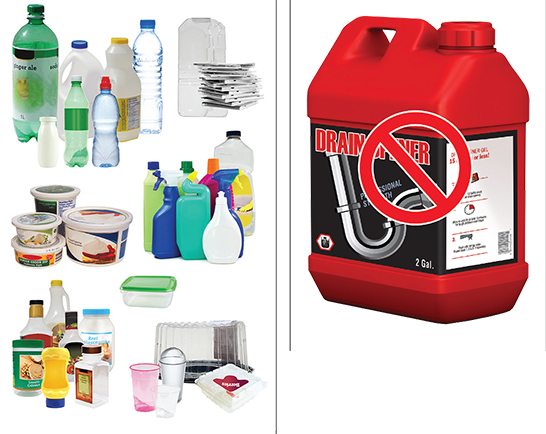
It also includes a simple online tool to ease the process of matching the plastics collected in a recycling program with the new terms – this relies in part on royalty-free images to use in recycling educational materials. There also is a tool to create a customizable flier for residents. The Terms & Tools aim to use communication elements that are simple and intuitive, and the resources are available free of charge.
In addition to the outreach terms and items, the Terms & Tools project developed a separate set of plastics recycling commodity terms designed to create greater reliability and efficiencies in the buying and selling of used plastics and to improve tracking of plastics recycling at the local, state and national level.
To spread the word, members of the advisory group have introduced the Terms & Tools to recycling professionals through various means, including a video that tells the story, articles in trade publications, presentations at conferences, webinars with the U.S. EPA and more.
Early feedback from communities
Although it took some time to educate stakeholders, there is now steady growth in both awareness and adoption of the Terms & Tools among municipal recycling programs. While it’s difficult to quantify the overall growth of use of the outreach terms and images in communities at this early stage, communities incorporating these resources have indicated that:
- Education materials are clearer.
- It’s easier to modify outreach materials by adding new material types and images.
- Feedback from residents has been positive.
- Unwanted materials (contamination) can be reduced.
The City of Greensboro, N.C. (population 270,000) is an example. An initial survey of residents found tremendous confusion over what plastics are and are not recyclable in the city. Many write-in survey responses expressed concern over resin codes, echoing a common refrain: “I continue to have problems deciding what plastic items are recyclable.”
The city recently abandoned its communication strategy based on resin codes and moved to clearer terms and images available in new educational recycling materials. The city already has noted anecdotally that the amount of unwanted plastics in the recycling stream (residue) has decreased.
Another example can be seen in Outagamie County, Wisc. (population 180,000). The community decided to switch to the new terms after surveying several university groups who toured an area MRF. Wisconsin’s plastics recycling education has historically focused on identifying materials through resin codes. But the survey found these students, most of whom grew up in areas with mandatory recycling, either didn’t know which resin codes were allowed in Wisconsin programs or didn’t know resin codes existed at all.
“When I talk to people [now], I only need to explain to them that we accept all plastic bottles and containers,” said Chris Miller, Outagamie County’s recycling coordinator. “People like not having to remember so many rules.” Miller also said it’s easy to add more recyclables to the program by simply including images and adjusting the terms to reflect the new materials.
And communities are getting additional help in these efforts. Organizations such as Keep America Beautiful and The Recycling Partnership, a national nonprofit group that helps communities expand and improve curbside recycling, are adopting standardized outreach terms in their own community programs and outreach tools.
For instance, when Columbia, S.C. recently received grant money from The Recycling Partnership to purchase carts for its single-stream recycling program, the community realized that its existing outreach efforts would not control anticipated contamination issues. So the city took The Recycling Partnership’s advice and updated its outreach materials.
 “[The terms] have made me a better teacher,” said Samantha Yager, Columbia’s recycling coordinator. “When I give presentations to groups, I am more likely to use descriptive terms.” Since the last waste study in 2015, the community MRF reported that “quality is steady, and quantity [of plastics materials] is steadily growing.”
Moving away from market inefficiencies
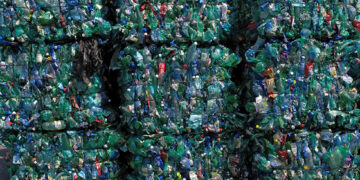
In the plastics recycling commodities market, confusion has led to inefficiencies and lost opportunities. Because the terms used to describe bale materials have not been uniform, sellers and buyers of used plastics sometimes have had different expectations, leading to disruption and inefficiencies.
To reduce this market discord, the set of plastics recycling commodity terms were created in line with APR’s model bale specifications for used plastics. These uniform specs and common terminology help make buying and selling used plastics more reliable, reducing the uncertainty caused by unpredictable and confusing terms. The buyers and sellers can more confidently rely on the type and quality of plastics being sold, improving efficiencies in the market.
To further solidify the broad use of the commodity terms, the U.S. EPA has adopted the terms in its U.S. Data State Measurement Program that tracks the types and volumes of plastics recycled in states. Re-TRAC Connect, which helped create the new plastics recycling terms, administers this program. As of late 2016, 30 states plus the District of Columbia were using this reporting system. These jurisdictions represent more than 70 percent of the U.S. population.
The use of the commodity terms in state reporting to EPA also builds on the agency’s adoption of sustainable materials management (SMM), a systemic approach to using and reusing materials more productively over entire product life cycles.
Among many other inputs, SMM measures the contribution of recycling to sustainability. In the past, states reported to EPA the tonnages of plastics recycled but not the types of plastics recycled. Unfortunately, volume figures are of limited utility when determining recycling’s contributions to sustainability. The new reporting system using the commodity terms will allow EPA to more accurately measure plastics recycling and determine its contribution to sustainability.
Higher quality, better data
Today, it appears that most in the plastics recycling value chain have coalesced around the new recycling terminology. While these advances are encouraging, there remain great opportunities to expand the use of the Plastics Recycling Terms & Tools, particularly use of the outreach terms.
A recent survey from ACC and the Sustainable Packaging Coalition found that the vast majority of communities – nearly 90 percent – continue to use outdated approaches, such as the resin identification code and other unfamiliar concepts, when educating residents about which plastics to recycle.
Adoption of the outreach terms by more and more communities will dramatically increase the quality and quantity of plastics collected for recycling. And with adoption of the commodity terms by communities, states, the EPA and commodities markets, tracking that success will be much more accurate.
Craig Cookson is senior director of recycling and energy recovery at the Plastics Division of the American Chemistry Council. For more information on the Terms & Tools effort, visit recycleyourplastics.org/terms-tools and check out the animated video at bit.ly/2jx7yvN.