





Editor’s note: This is the conclusion of a two-part series exploring how to ensure the longevity of RPET markets. Part one, published April 2, examines short-term remedies.
- EPR for packaging aims to increase collection, processing
- Subsidizing for the common good
- Packagers in the crosshairs
- Consistency is key to demand – and relationships
Extended producer responsibility (EPR) programs for packaging have gained momentum in recent years, but the benefits they seem to promise are still years away.
And while buyer commitments are among the quick wins the industry needs first, policy-driven solutions are required to provide long-term support, Kate Bailey, chief policy officer at the Association of Plastic Recyclers (APR), said during a recent webinar from The Recycling Partnership (TRP). APR owns Resource Recycling, Inc., publisher of Plastics Recycling Update.
EPR schemes are intended primarily to improve packaging collection and program funding, and can provide indirect support in the form of incentives and tracking data but do not address end-user demand, Bailey said.
That gap between collection/processing and demand ultimately damages consumers’ faith in recycling systems, Brent Bell, vice president of recycling at WM, said during the TRP webinar.
In addition, reclaimers will not continue to invest in processing capacity amid inconsistent buying, he said. “Now is the time where we should hopefully be seeing more investments, because as EPR comes on board, we’re inherently going to have way more recycled materials developed in the US.
“The last thing we want to do is have more distrust in a recycling system as we’re gaining all this momentum” from EPR, Bell said. “This is a bad sign for us if we can’t get this one fixed, because PET is probably one of the most widely recognizable items in a recycling bin. And to tell a municipality we can’t find homes for it is not a great conversation to have.”
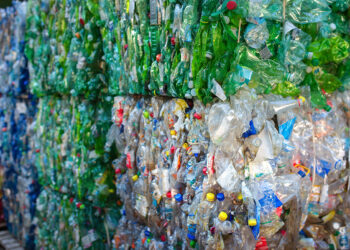
In fact, audience members at a commodity markets panel discussion during the 2026 RAM/SWANA Conference in Minnesota in early April expressed concern about this very scenario. For example, some indicated that PET bales were piling up at municipal MRFs, despite pricing at or even below zero. And in some states, including Minnesota, landfilling recyclables is prohibited by law, leaving municipalities few options.
Still, the scope and effect of even the most carefully crafted EPR laws will have limits, leaving gaps in the medium to long term for the struggling recycling industry. But participants are not standing idly by, waiting for their fortunes to improve.
Subsidizing for the common good
“The industry cannot exist in a sustainable fashion without some sort of subsidization,” said Paul Bahou, president of Global Plastic Recycling in Perris, California. “And I know that’s a dirty word to people in government, but it’s what it is.”
Bahou is part of a lobbying group called the California Washline Alliance, which is working to get a bill introduced during this year’s state legislative session to extend the Plastic Market Development Payment (PMDP) program, at $300/ton.
The program was created in 2006 and had regularly been renewed by state lawmakers. It was most recently renewed through SB 1013, passed in 2022, and was set to run until 2025.
In 2024, the program was modified to further incentivize PET container recycling by using a three-tiered structure to pay up to $150/ton to PET reclaimers, depending on the grade being processed.
“MRFs are very well subsidized, but everyone else downstream isn’t,” Bahou said.
He likened recycling to other common-good sectors, such as education, that receive public funding. “If recycling is something we as a society deem as necessary, then we need to make sure it exists.”
Bahou also noted during a panel at the 2026 Plastics Recycling Conference that heavy support for collection has led California to have some of the highest national beverage container recycling rates. “We need that same level of support for the next step. Because collection is not recycling.”
“I don’t want to make virgin resin more expensive so it’s as expensive as PCR,” Bahou said at the time. “I want to make PCR cheaper than virgin. I want procurement departments at different brands to be able to say the more economic path forward is the PCR.”
Packagers in the crosshairs
During the TRP webinar, Bailey pointed out that packaging companies have the most immediate potential impact on the existential crisis facing RPET.
Likewise, Sally Houghton, executive director of the PET Recycling Corporation of California (PRCC), puts the blame for the lack of consistent demand squarely at the feet of packaging companies, though she acknowledges that brand owners also reduced their PCR purchasing.
“The packaging guys are the ones that pulled out completely in California – completely. So yes, I’m going to throw them under the bus,” she told Plastics Recycling News.
And while packagers operate with much tighter financial margins than brand owners, she said, the efforts to preserve profits in the short term could have longer-term consequences.
Consistency is key to demand – and relationships
In the tight-knit recycling industry, where procurement decisions rely heavily on relationships and mutual trust forged over many years, a more consistent buyer often can beat out the highest bidder for bales even during periods of short supply.
“That’s where PRCC, to be honest, have an advantage [over newer market participants] because we’ve been around so long,” she said.
“We oftentimes are not the highest price, but we’re consistent and we pay on time,” Houghton said. “Those are two things that suppliers would rather have than that extra penny [per pound], and that keeps our suppliers selling to us.”
PRCC was formed in 1987 as part of the California Beverage Container Recycling and Litter Reduction Act, which implemented the state’s deposit return scheme. The private nonprofit purchases PET bottle bales, then resells them to reclaimers in the US as well as overseas.
As bale demand increases, packagers may struggle to compete with bottlers who did not stop buying altogether, Houghton said. “The brands get a hard time, but they have continued to buy PCR.”
Chris Wirth, chief market innovation officer at TRP, told Plastics Recycling Update that in addition to committing to buying PCR, packagers could leverage existing RPET certification and chain‑of‑custody systems to help ensure that domestic recyclers are being prioritized. One example of such third-party verification is APR’s PCR certification program.
“Packaging producers can start now by asking the right questions,” he said.
Thermoformers as saviors?
One segment of the PET landscape is frequently touted as an easy area for increasing PCR use: thermoforms.
“I think if packaging is the answer, thermoform might be step one,” said Adam Gendell, director of material systems at TRP, during the webinar.
He pointed out that thermoforming applications are more forgiving than for blow-molded bottles. So manufacturers of clamshell food containers, for example, can use RPET flake, which requires less processing than pellet.
However, Bahou countered that economics still dominate procurement decisions. So while thermoforming may in theory be a more forgiving process, players in the thermoform space prefer the higher-quality bottle-grade flake, he said.
And while Houghton at PRCC agrees that thermoforms are among the best routes to grow RPET demand, she believes current policy and mandates are too weak to make this happen at scale.
Even so, “It’s hard not to look at the thermoforming community as somebody who could be doing more,” Gendell said.