





Resource Recycling
  • The Latest
  • Analysis
    • All
    • Certification Scorecard
    • Industry Announcements
    • Opinion
    The electronics recycling industry is undergoing a transformation from labor-intensive manual operations to highly automated, AI-driven facilities that use advanced robotics, cleaner chemistry and digital tracking systems to extract critical materials.

    The cyber-physical MRF: AI and robotics reshape e-waste recovery

    Certification scorecard for the week of Feb. 9, 2026

    Meta-Corning deal signals IT hardware retirement wave

    Meta-Corning deal signals IT hardware retirement wave

    Malaysia clamps down on illegal e-waste imports amid probes

    Malaysia clamps down on illegal e-waste imports amid probes

    URT builds alliance to remake electronics plastics at scale

    ICYMI: Top 5 e-scrap stories from January 2026

    The electronics recycling industry is undergoing a transformation from labor-intensive manual operations to highly automated, AI-driven facilities that use advanced robotics, cleaner chemistry and digital tracking systems to extract critical materials.

    Certification scorecard for the week of Feb. 2, 2026

    Auditors warn EU may fall short on critical metals

    Auditors warn EU may fall short on critical metals

    Industry announcements for January 2026

    Industry announcements for February 2026

    ICYMI: Top 5 recycling stories from January 2026

  • Conferences
  • Publications

    Other Topics

    Textiles
    Organics
    Packaging
    Glass
    Brand Owners

    Metals
    Technology
    Research
    Markets
    Grant Watch

    All Topics

Subscribe
No Result
View All Result
Resource Recycling
  • The Latest
  • Analysis
    • All
    • Certification Scorecard
    • Industry Announcements
    • Opinion
    The electronics recycling industry is undergoing a transformation from labor-intensive manual operations to highly automated, AI-driven facilities that use advanced robotics, cleaner chemistry and digital tracking systems to extract critical materials.

    The cyber-physical MRF: AI and robotics reshape e-waste recovery

    Certification scorecard for the week of Feb. 9, 2026

    Meta-Corning deal signals IT hardware retirement wave

    Meta-Corning deal signals IT hardware retirement wave

    Malaysia clamps down on illegal e-waste imports amid probes

    Malaysia clamps down on illegal e-waste imports amid probes

    URT builds alliance to remake electronics plastics at scale

    ICYMI: Top 5 e-scrap stories from January 2026

    The electronics recycling industry is undergoing a transformation from labor-intensive manual operations to highly automated, AI-driven facilities that use advanced robotics, cleaner chemistry and digital tracking systems to extract critical materials.

    Certification scorecard for the week of Feb. 2, 2026

    Auditors warn EU may fall short on critical metals

    Auditors warn EU may fall short on critical metals

    Industry announcements for January 2026

    Industry announcements for February 2026

    ICYMI: Top 5 recycling stories from January 2026

  • Conferences
  • Publications

    Other Topics

    Textiles
    Organics
    Packaging
    Glass
    Brand Owners

    Metals
    Technology
    Research
    Markets
    Grant Watch

    All Topics

Subscribe
No Result
View All Result
Resource Recycling
No Result
View All Result
Home Recycling

Report details how to make CA textile recycling work

byPaul Lane
February 16, 2026
in Recycling
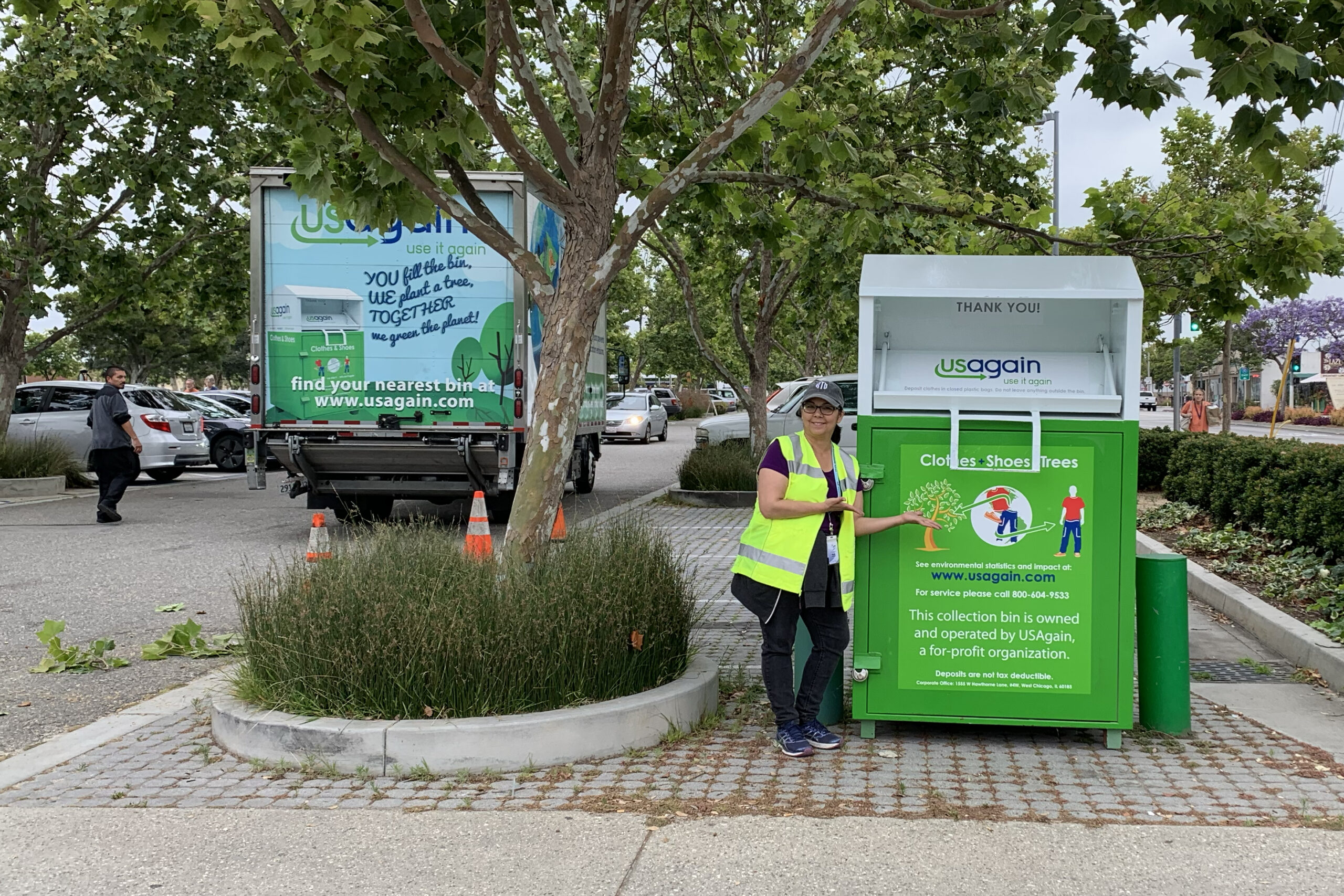
Textile clothing bins

Courtesy USAgain

Editor’s Note: Textile recovery implementation — along with a presentation of this report — will be featured in sessions at the 2026 Textile Recovery Summit, Feb. 23-25 in San Diego, California. Register now!

A new report confirms the sentiment that led to a new textile recovery law in California, detailing just how much clothing-related material ends up in the waste stream and how it could be removed from the waste stream.

The report, California Textiles EPR Study, released by USAgain and researched and written by Cascadia Consulting Group, found nearly 1.2 million tons of textiles were sent to landfills across California, costing residents nearly $99 million per year in disposal-related costs. USAgain is a nonprofit that works to put clothes back into the reuse cycle rather than have them disposed of; it operates textile collection programs in 15 states, including California.

The organizations collaborated on the report to help implement California’s Responsible Recovery Act (SB 707), which will require clothing and other textile companies to fund and operate a statewide recovery and recycling system. USAgain has no official role in the law’s implementation but wanted to offer guidance on how to do so.

“We are living in a world facing a mounting crisis of textile overproduction and waste driven by fast fashion,” said Mattian Wallander, USAgain CEO. “We undertook this study to better understand how collection systems can scale in the real world and to generate the evidence needed to support policymakers and partners in implementing SB 707 effectively.”

 The organizations used quantitative scenario modeling and on-the-ground research to conduct the study. Among its findings was the fact that diverting 24% of textiles from landfills could create 2,500 jobs and save up to 1.7 million metric tons of carbon dioxide emissions. Getting more textiles back into reuse would be a big help toward that, but the report also found an existing infrastructure that might not be able to accommodate such a push:

●  Municipal zoning laws might hamper the collection density needed to meet SB 707’s requirements, especially in areas with few collection options. These laws may limit the use of collection bins, which the study found to be the easiest, most scalable collection method.

●  Convenience standards set forth in the law include a minimum number of collection sites per county. But these sites must be balanced with the fact that clothes should be reused rather than recycled, whenever possible, to maximize circularity and not overstrain recycling sites.

●  Per-producer fee levels required by the law haven’t been specified, which could strain the system’s finances,

The law could also serve as a model elsewhere. The most recent figures from the U.S. Environmental Protection Agency indicate about 17 million tons of textiles were made in 2018 nationally and the textile recycling rate was 14.7% (2.5 million tons). The 11.3 million tons of textile sent to landfills in 2018 represented 7.7% of all material landfilled. But according to estimates from the New York Department of Environmental Conservation, about 95% of textiles can be recycled or reused.

“This matters to Californians and to all Americans because it affects landfill capacity, climate pollution and green job growth,” Wallander said. “It also determines whether residents can actually do the right thing with unwanted textiles.”

The report finds citizens, among other groups, have a role to play in the law’s success. Residents can use collection sites as much as possible and encourage municipal leaders to update their ordinances to expand access. City planners can be receptive to these pleas and make sure their rules don’t hamper the law’s intended effects. Producers can quickly make the investments they need to, hire experienced partners and help normalize donation.

“California has a strong foundation to build on,” said Julie Cerenzia, Cascadia’s director. “The biggest win will be designing a system that works in the real world … With the right implementation, SB 707 can become a landmark circular economy success.”

Adds Wallander: “We would consider the report successful if it helps SB 707 translate policy ambition into measurable, real-world change. That means informing the design and implementation of the extended producer responsibility (EPR) framework.”

Wallander said the study’s findings can be used in the other 12 states in which USAgain works to guide EPR efforts nationally.
Tags: EPRLegislationTextiles
TweetShare
Paul Lane

Paul Lane

Related Posts

Wisconsin proposes E-Cycle target revisions

Wisconsin proposes E-Cycle target revisions

byScott Snowden
February 17, 2026

Wisconsin regulators have released a draft rule that would revise how manufacturer recycling targets are calculated, establish clearer standards for...

Bipartisan reps introduce bill on recycling claims

Bipartisan reps introduce bill on recycling claims

byAntoinette Smith
February 12, 2026

Legislators introduced the Recycled Materials Attribution Act in the US House, drawing support from a new industry group and scrutiny...

Oregon’s Recycling Modernization Act faces injunction

Court partially blocks Oregon EPR law, dismisses bulk of lawsuit

byStefanie Valentic
February 10, 2026

An Oregon federal court issued a limited injunction halting the state's EPR law for members of NAW, but rejected the...

Member states select new chair for global plastics treaty

Member states select new chair for global plastics treaty

byAntoinette Smith
February 10, 2026

During a short session, the Intergovernmental Negotiating Committee elected Chilean diplomat Julio Cordano to continue efforts toward an internationally binding...

Dual WM MRF launch strengthens Ontario recycling infrastructure

Dual WM MRF launch strengthens Ontario recycling infrastructure

byStefanie Valentic
February 9, 2026

WM has opened two new facilities in Ontario capable of processing 30% of the province's total volumes under new EPR...

REUSE Act heads to US House for consideration

byAntoinette Smith
February 9, 2026

The bill would require the US EPA to collect data on reuse and refill systems across industries including consumer packaging,...

Load More
Next Post
UN trade data, tools aim to shape plastics treaty talks

UN trade data, tools aim to shape plastics treaty talks

More Posts

Chinese processing group details goals for US visit

AMP lays out vision of next-generation, AI-driven MRFs

July 24, 2024
Oregon’s Recycling Modernization Act faces injunction

Court partially blocks Oregon EPR law, dismisses bulk of lawsuit

February 10, 2026
Malaysia clamps down on illegal e-waste imports amid probes

Malaysia clamps down on illegal e-waste imports amid probes

February 6, 2026

APR, industry create proactive guidance for PET caps

February 12, 2026

REUSE Act heads to US House for consideration

February 9, 2026
Bipartisan reps introduce bill on recycling claims

Bipartisan reps introduce bill on recycling claims

February 12, 2026

Alpek talks PET overcapacity, soft demand

February 11, 2026
Texas sues over dumped wind turbine blades

Texas sues over dumped wind turbine blades

February 10, 2026
The electronics recycling industry is undergoing a transformation from labor-intensive manual operations to highly automated, AI-driven facilities that use advanced robotics, cleaner chemistry and digital tracking systems to extract critical materials.

The cyber-physical MRF: AI and robotics reshape e-waste recovery

February 12, 2026
Meta-Corning deal signals IT hardware retirement wave

Meta-Corning deal signals IT hardware retirement wave

February 9, 2026
Load More

About & Publications

About Us

Staff

Archive

Magazine

Work With Us

Advertise
Jobs
Contact
Terms and Privacy

Newsletter

Get the latest recycling news and analysis delivered to your inbox every week. Stay ahead on industry trends, policy updates, and insights from programs, processors, and innovators.

Subscribe

Welcome Back!

Login to your account below

Forgotten Password?

Retrieve your password

Please enter your username or email address to reset your password.

Log In

Add New Playlist

No Result
View All Result
  • The Latest
  • Analysis
  • Recycling
  • E-Scrap
  • Plastics
  • Policy Now
  • Conferences
    • E-Scrap Conference
    • Plastics Recycling Conference
    • Resource Recycling Conference
    • Textiles Recovery Summit
  • Magazine
  • About Us
  • Advertise
  • Archive
  • Jobs
  • Staff
Subscribe
This website uses cookies. By continuing to use this website you are giving consent to cookies being used. Visit our Privacy and Cookie Policy.