



This article appeared in the June 2025 issue of Resource Recycling. Subscribe today for access to all print content.
Far-flung, sparsely populated areas in multiple states are tackling the recycling collection challenge using hub-and-spoke and milk-run models.
Lack of infrastructure and funding has left rural America far behind urban centers when it comes to recycling. But in some states, a hub-and-spoke model is giving small towns access to transportation and recycling infrastructure even through market fluctuations.
Colorado’s Circular Economy Development Center in Colorado was established through a 2022 bill to create and grow end markets for materials and develop infrastructure and systems for a circular economy in the state. One of its first projects is the Circular Transportation Network, which aims to bridge the gap in recycling for rural communities and made its first pickup in January. Since then the network has 26 different entities signed up to use the service in the future.
“Transportation can be so expensive and cost-prohibitive in certain areas, and so we really wanted to see where there’s a gap, and then how we might be able to just help that,” said Susan Renaud, director of special projects for CEDC.
Adding stops one by one
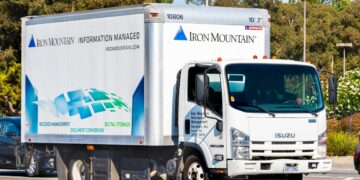
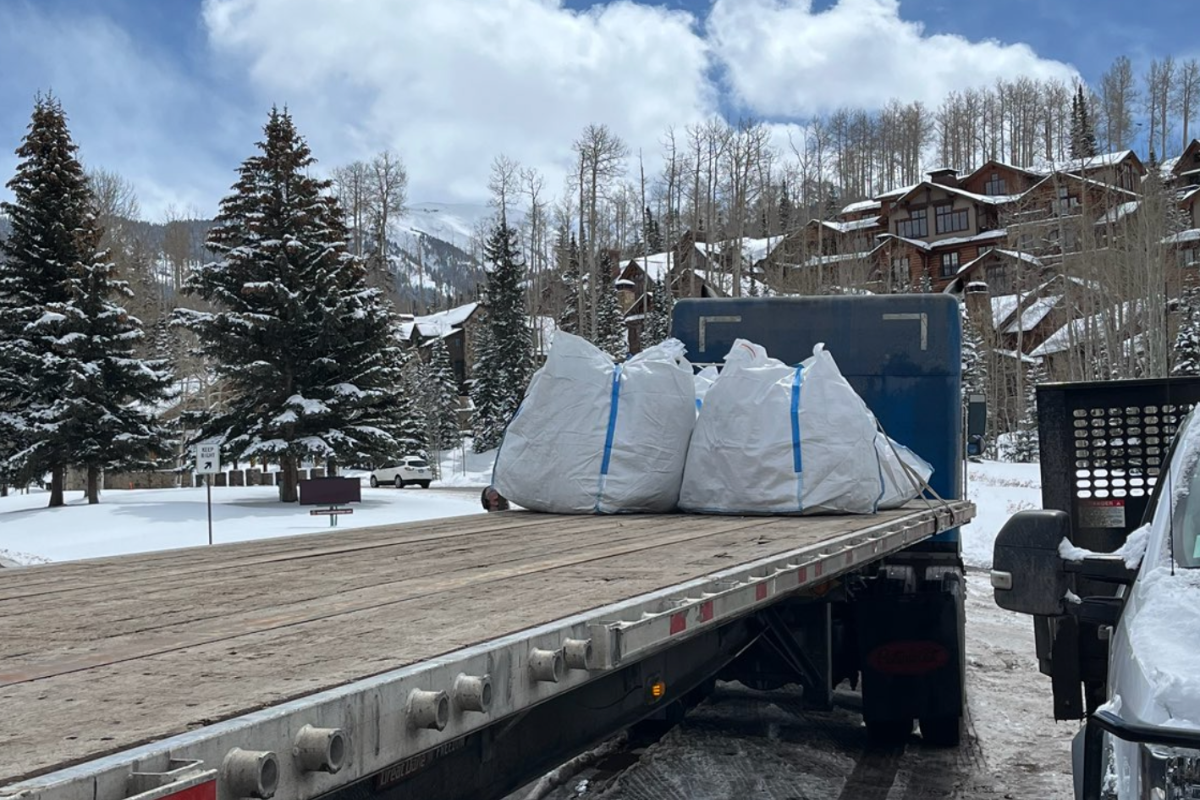
Since January, Renaud said that five pickups to eight organizations have been made to small towns around Colorado to pick up materials, with more locations and pickups coming soon. These pickups are in partnership with B. Kirkland Trucking, a trucking company with a transload site in Pueblo, Colorado. All CTN pickups are free for the communities served.
Many communities around Colorado already have recycling built into their landfills, transfer stations and other waste management organizations. However, these entities generally only recycle materials with which they can make a profit — or at least break even.
“We always want to be really clear that we’re definitely not trying to compete with haulers. It’s really just in opportunities where people don’t have access and they wouldn’t be able to recycle otherwise. That’s where we’re able to help,” said Renaud.
PET and HDPE, cardboard and aluminum recycling is common even in the most remote areas of the state because they are often profitable, usually through a drop-off program. However, film plastics are still incredibly hard to recycle — in most places the only way to do so is through drop-offs at big-box stores. That’s where Renaud said the CTN is able to pick up the slack.
Since the CTN is still new, most of the trips to pick up materials so far have consisted of a single backhaul stop. Moving forward, the CTN will function as more of a milk-run model, with trucks making multiple stops along their drive back to Pueblo.
CEDC has a goal to serve the rural areas of Colorado, so they have established satellite offices around the state in Grand Junction, Cortez and Colorado Springs. They have plans to establish an office in the Eastern Plains next.
Marianne Mate is the satellite office coordinator in Cortez, the far southwest corner of the state. The community of Cortez is closer to Albuquerque, Phoenix, and Salt Lake City than it is to Denver, which is about a seven-hour drive over multiple mountain passes.
Mate is reaching out to groups in Southwest Colorado to see how CEDC can help fill in the gaps to help them recycle. One potential partnership she is excited about is with school districts, to bring recycling infrastructure and education straight to the next generation.
“They take it home to their parents and start bugging their parents, ‘Hey, Mom, don’t throw that plastic bag away,’” Mate said. She’s currently working with the Durango School District to start collecting their recycling and hopes to expand to the Montezuma-Cortez School District in the future.
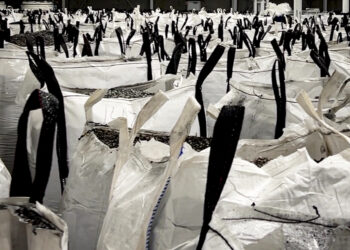
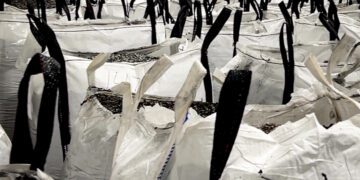
The organizations, whether they are a nonprofit, district, business or municipality, need to collect a minimum of six super sacks, bales or Gaylord boxes of materials. The biggest challenge so far has been finding space for collection during drop-offs and storage until enough material is accumulated.
Telluride, population 2,500, became the first municipality in the state to ban plastic bags in 2011. In July 2024, a ban on all single-use plastics went into effect. However, businesses still have film plastics that can’t be recycled locally. So CEDC is partnering with a local nonprofit, EcoAction Partners, to set up an aggregation point and work with local businesses to recycle film plastics through the network.
“It’s really hard to find anywhere to store the materials, because you can’t just leave them out in the open, the plastic film specifically,” said Mate, noting plastic film needs to be clean and dry.
EcoAction Partners in Telluride had been collecting plastic film and storing it in a shed, but it was a temporary solution. Previously, Tyler Simmons, EcoAction Partners’ zero waste coordinator, had been hauling the plastic film to the Montrose City Market, an hour and half away. But a few years ago, City Market said they wouldn’t take the thousands of pounds of plastic film left over after a construction project, so Simmons stored it in the shed until the CTN partnership came along.
Simmons said that working with CEDC and the CTN has been a really great partnership.
“They’re the ones bridging that gap,” he said. “Plastic bags in my opinion are just the start. I’d love to see other things like construction waste.”
Mate is working with EcoAction Partners and Telluride to establish a permanent regional collection point where community members can drop off plastic film that will be hauled away through the CTN.
“There are other towns where they want to recycle, but they just don’t have the infrastructure in place to do it. So we’ve been trying to get creative and kind of thinking of different opportunities,” said Renaud.
Another of those creative solutions for storage is happening at Steamboat Springs Ski Resort, another CTN member. The resort is using a shipping container that was already on the property to aggregate material until they have enough to use the CTN backhaul system. Local businesses will have access to the container through a combo lock to drop off film plastic.
In a ski town, businesses including the resort get most of their retail ski gear wrapped in flexible plastic film, a huge amount of waste if it’s all being thrown away, said Benjamin Cavarra, sustainability coordinator for the resort. Without the CTN, “there’s just not quite enough volume produced here in the region to make (film) a profitable or a viable thing to collect”.
Before working with the CTN, Steamboat Springs Ski Resort was paying for hauling for their film plastics and it was going all the way to Indiana. Cavarra said that recycling those materials in-state was another great benefit of the CTN program, along with reduced cost and ease of logistics.
“The ability to offer this to rural communities is just a huge benefit,” said Cavarra. “It’s beneficial in a lot of ways to be able to backhaul some of this material in trucks that are already going back empty.”
Now Steamboat Springs Resort is able to become a hub for other businesses and wants to expand to other common but hard-to-recycle materials, like polystyrene and nitrile gloves.
Colorado doesn’t have many end markets for recycled materials — many of the materials need to be taken out of state. However, Driven Plastics in Pueblo is the destination for these film plastics. The company turns film plastics into an asphalt additive.
A common approach
Other states have been using a similar hub-and-spoke model for years, with varied success. In New Mexico, a hub-and-spoke program began in 2010 with funding from the American Recovery and Reinvestment Act, bringing recycling to many rural counties around the state that otherwise would not have access.
Sarah Pierpont, executive director of New Mexico Recycling Coalition, said that they brought on at least 40 new collection sites across the state and increased access to recycling by 115%.
However, over the past decade, the market for recyclables has fluctuated. Cities such as Albuquerque and Santa Fe are able to weather those fluctuations better, eating some of the loss in profits. Small towns don’t have those margins.
Silver City, New Mexico, was once a model of small-town recycling, with curbside single-stream pickup. That ended in 2019 after China enacted its National Sword policy, changing the face of recycling worldwide. Suddenly, the small town had no recycling at all.
Pierpont said that their hubs that are source-separated have weathered the changes in the markets much better than single-stream towns.
“A lot of them stopped their programs altogether, but the hubs that we worked with that had source-separated they were able to keep their recycling program going,” she said.
Silver City now has a few organizations filling in the gap left in 2019, such as the nonprofit Silver City Recycles, which hosts bi-monthly drop off collection days, and T2T.Green, which offers curbside pickup.
Today, more than half of the New Mexico hubs that are part of New Mexico Recycling Coalition no longer recycle plastic, and many no longer recycle mixed paper. But because they were always source-separated, the hubs are still able to continue recycling what they can, with the hope of adding materials in the future.
Hubs and spokes have also provided greater access to recycling in western Nebraska. Western Resource Group is a nonprofit with a hub in Ogallala, where they aggregate materials from 48 small towns around the region. Their program consists of a route driver dropping off roll-off containers at each community and picking them up when full.
In 2021, the facility processed 800 tons of material, with cardboard sales largely funding the program.
“The hub and spoke really allows us to be able to help the smaller communities not send all of their waste to the landfill,” said Jenn Kugler, public education director for the nonprofit. “With recycling, it’s being put back into the economy.”