




Recycling and reuse infrastructure has attracted the attention – and grant money – of the U.S. EPA, and communities across the U.S. are taking the opportunity to shape the funding to their specific visions.
In early September, the EPA announced the first recipients of the Solid Waste Infrastructure for Recycling (SWIFR) grant. About $73 million will be allocated to 25 communities and another $32 million will go to states and territories to improve solid waste management planning, implementation and data collection. The community grant amounts range from $500,000 to $4 million and the state and territory grants range from $360,000 to $750,000
This round is the EPA’s largest recycling investment in 30 years, a press release noted. The grant program was created under the 2021 bipartisan infrastructure bill. The agency also recently launched the Community, Equity and Resiliency initiative, to help historically disadvantaged communities access grant funding opportunities.
Resource Recycling talked to two of the first-round SWIFR grant recipients to learn how the funds will affect their communities.
Big boosts to current initiatives
Hilo, Hawaii, received a $1.5 million grant to design and implement a city-scale reusable food ware and refillable bottle system. The grant will fund reuse collection bins, transport vehicles, crates, a dishwashing machine, Quick Response code scanners and a technology platform to support asset tracking and management.
The project is expected to reduce the discard of disposable food ware by 500 tons annually.
Jennifer Navarra, program director for the nonprofit group Zero Waste Hawai’i Island, said the grant means that Hilo and their partner, Perpetual, can move forward without spending time looking for investors.
“We were super stoked and excited about going after this grant,” Navarra said. “The EPA had all these informational webinars ahead of the applications and there were a ton of people on these calls – not just Hawaii, but island communities that are part of the U.S. As islands we really are lacking in infrastructure and need it to address our waste problems.”
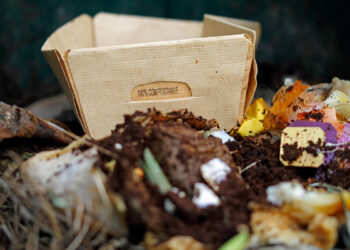
Iowa City, Iowa was awarded a $4 million grant to help expand its composting operations. With the funds, the city will begin providing organics diversion for sectors beyond residential curbside customers. In a parallel effort targeting organics, the state of Iowa also received an EPA grant to develop a statewide food waste minimization and management study.
Jane Wilch, recycling coordinator at the city of Iowa City and president of the Iowa Recycling Association, told Resource Recycling the money will allow the city to expand a compost facility that’s at capacity. The additional capacity will allow for programmatic changes that divert more organics from landfill over the next several years.
“I feel very honored to work in this community that does have a sincere community interest in environmental protection, and because of that, we’ve had food waste and composting as a top priority for many years,” she said.
Navarra also noted that initially, it was not clear if the SWIFR grant would be extended to reuse projects, but a strong letter-writing and comment campaign from the U.S. zero-waste community encouraged the EPA to allow reuse projects under the scope of the grant.
Ellie Moss, executive director of Perpetual, said recycling and reuse are “super complementary and I hope that the grant program continues to emphasize that.”
“We don’t want to create a grant context where they’re competing with each other,” she said. “The goal is to create a holistic system.”
Reuse in Hilo
Navarra with Zero Waste Hawai’i Island said her group started working with Perpetual late last year as part of Perpetual’s larger plan to help cities around the country develop and implement reusable foodware systems.
“Usually it’s something the customer opts into as opposed to it being the standard, so what we’re trying to do is make reuse the standard – the default – and available enough that it can help provide some of the convenience you would want and the changes in behavioral cues you need for consumers to participate,” Navarra said.
The eventual scope of the project is to have reusable infrastructure anywhere food is put into containers on site. That includes restaurants, school cafeterias, programs such as Meals on Wheels, other meal programs, events or music venues.
“Not that we will necessarily start off and do all of that, but that’s the overall scope of where we’re going,” Navarra said.
“What we’re trying to do is make reuse the standard – the default – and available enough that it can help provide some of the convenience you would want and the changes in behavioral cues you need for consumers to participate.” – Jennifer Navarra of Zero Waste Hawai’i Island.
The benefit to working with Perpetual is that the Hilo system will be able to launch at a relatively large scale, Navarra added, which will give the system a better chance of success and lower the cost to businesses.
Perpetual is currently working with four cities in the U.S.: Hilo, Hawaii; Galveston, Texas; Ann Arbor, Mich.; and Savannah, Ga. Navarra noted that Perpetual “really brings the technical experience and the manpower to execute something like this for a small community.”
Moss, with Perpetual, said the company’s vision is that “reuse is for everyone, so we want to be really thoughtful of where we create demonstration models of reuse to make sure many kinds of people see themselves in the systems.”
The work that goes into the demonstration models is also made to be shared, Moss said, to provide roadmaps and resources for other cities of all sizes that are interested in reuse systems.
“A big part of why we’re doing this is to provide that pathway,” she said.
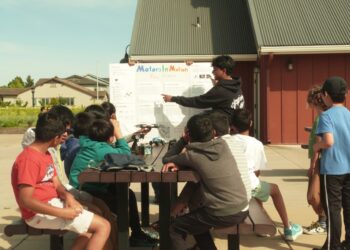
All four cities are at different stages in the process, Navarra said. Hilo is in the community engagement phase, and will hold a series of community informational workshops to gather information “to make sure we’re designing a system that works for the people of Hilo,” she said.
That includes what type of return incentives would encourage people to return containers, some of the barriers that might be present and the best locations to put return containers around town.
That data will allow Navarra and Perpetual to draft a design document and move forward.
One of the challenges is the overall lack of infrastructure “of any kind” in Hawaii, Navarra said.
“We have a lot of different ways of doing things in Hawai’i County that can make it a challenge,” she said, adding that refilling cleaning products, bottles and foodware is “where I think it can really work.”
The Hilo project’s overall scope is island-wide due to the contained geography, Moss said, but planning will start with the city.
More composting capacity in Iowa City
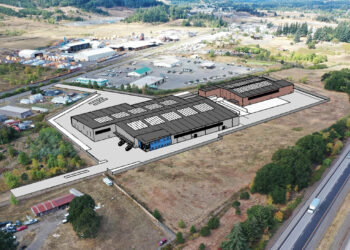
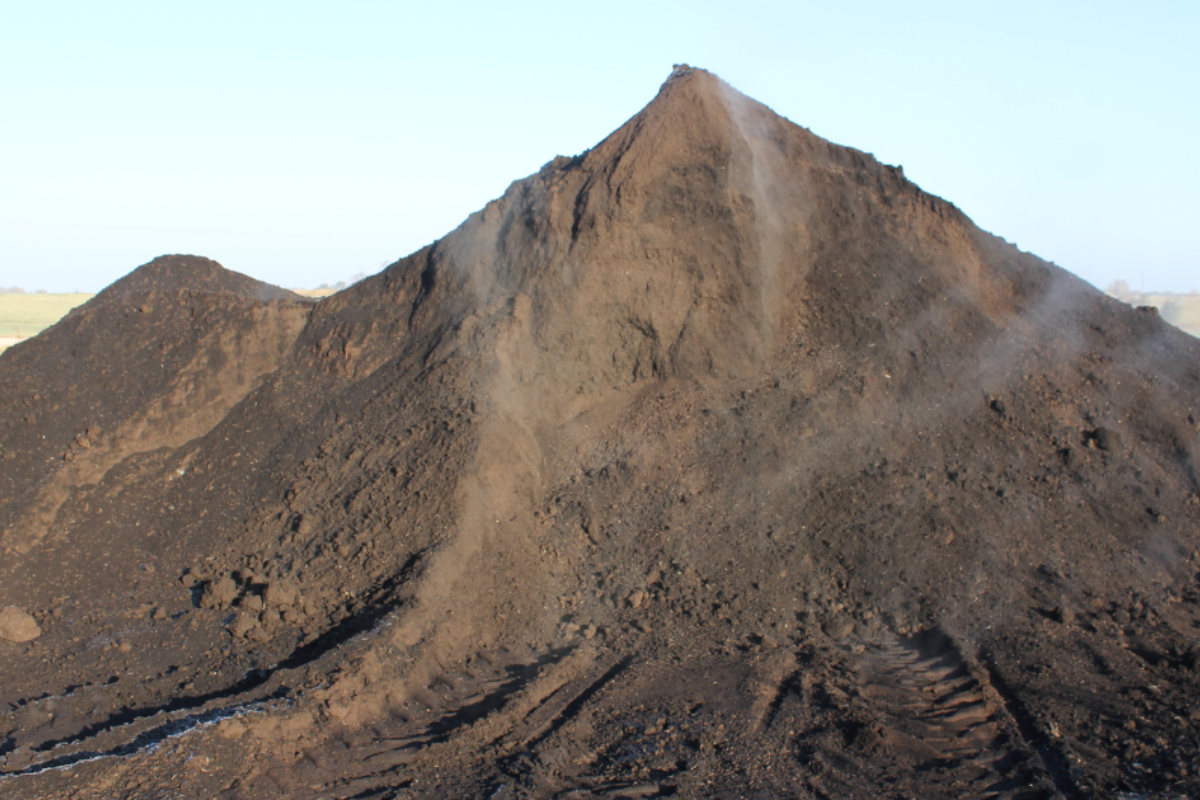
Iowa City operates a five-acre composting facility at the landfill that serves Iowa City, all of Johnson County and a few other communities. The composting facility has long accepted yard debris. In 2009 and 2014, Iowa City was involved in pilot programs that dipped the city’s toes into allowing food scraps in the organics receptacles at the University of Iowa and in curbside containers, Wilch said.
In 2017, the city permanently added food scraps to the curbside organics program, through which city workers collect from over 16,500 households, Wilch said. At the beginning, residents were instructed to put their organics in paper yard waste bags or in their own containers of between 25 and 30 gallons.
In 2018, the city began buying and providing 25-gallon or 95-gallon organics carts free of charge to residents who requested them.
“We did see a big jump in participation and tonnage coming in after we introduced the cart option for our customers,” she said.
That created another problem: Incoming volumes maxed out the city’s five-acre composting facility. Working with regulators, the city was recently able to increase the permitted capacity from 11,500 tons to 15,000 tons of incoming material per year, but city officials expect to hit that new limit within the next two years.
“Yes, we were able to increase that permitted capacity, but we really are bursting at the seams right now,” Wilch said.
State Department of Natural Resources records show that, between July 1, 2021, and June 30, 2022, the facility accepted 14,344 tons, which was 25% over its permitted capacity at the time. The permitted capacity was exceeded the year before, too.
The EPA funds will help pay for a 2-acre expansion at the facility, as well as funding repair and resurfacing to the existing paved pad. The money will also buy a turner, which speeds up the decomposition period with reduced equipment use and staff time – right now, staff are forced to use a loader to turn over the windrows each month. The project, which will begin in spring 2025 and finish in fall 2025, will increase incoming feedstock capacity to 20,000 tons annually, Wilch said.
“Once the construction is done for the expanded compost facility, we do have a growth plan in place for several years, starting in 2026, where we have different growth goals to increase the incoming amount of organic material.” – Jane Wilch of Iowa City
In the last few years, the city has been focused on food waste reduction, which is the No. 1 priority. But the reality is some organic materials are destined for disposal, not consumption. Now, the increased composting capacity will free up Iowa City to extend food scrap diversion service to additional generators, including non-curbside sources and commercial entities, Wilch said.
“Once the construction is done for the expanded compost facility, we do have a growth plan in place for several years, starting in 2026, where we have different growth goals to increase the incoming amount of organic material by certain growth milestones,” she said.
There’s ample untapped potential. About 50% of households in the city, which is home to the University of Iowa, are non-curbside customers, Wilch noted. The city has already conducted a pilot food scraps drop-off program serving households and food-focused nonprofit organizations that have some amount of unavoidable waste, such as food pantries and store food donation delivery services.
Another big opportunity is in outreach to grocery stores and restaurants about diverting their food scraps from landfill. “It could be significant organic material diversion that we just weren’t able to handle with an at-capacity compost facility,” she said.