





Resource Recycling
  • The Latest
  • Analysis
    • All
    • Certification Scorecard
    • Industry Announcements
    • Opinion
    IBM logo on building

    What IBM’s quantum foundry means for ITAD

    Certification Scorecard — Week of May 25, 2026

    CommanderAI launches searchable hauler database

    Underwater data centers drive shift in ITAD models

    EU recyclers make case for solvent-based methods

    The electronics recycling industry has a plastics problem

    What a report on Starbucks cups reveals about recycling

    What a report on Starbucks cups reveals about recycling

    Recycling industry addresses Beyond Plastics report

    Recycling industry addresses Beyond Plastics report

  • Conferences
    • Resource Recycling Conference
    • Plastics Recycling Conference
    • E-Scrap: The Longevity Conference
    • Textiles Recovery Summit
  • Publications
    • E-Scrap News
    • Plastics Recycling Update
    • Policy Now
    • Resource Recycling
    • Other Topics
      • All Topics
      • Brand Owners
      • Critical Minerals
      • Glass
      • Grant Watch
      • Markets
      • Organics
      • Packaging
      • Research
      • Technology
      • Textiles
Subscribe
No Result
View All Result
Resource Recycling
  • The Latest
  • Analysis
    • All
    • Certification Scorecard
    • Industry Announcements
    • Opinion
    IBM logo on building

    What IBM’s quantum foundry means for ITAD

    Certification Scorecard — Week of May 25, 2026

    CommanderAI launches searchable hauler database

    Underwater data centers drive shift in ITAD models

    EU recyclers make case for solvent-based methods

    The electronics recycling industry has a plastics problem

    What a report on Starbucks cups reveals about recycling

    What a report on Starbucks cups reveals about recycling

    Recycling industry addresses Beyond Plastics report

    Recycling industry addresses Beyond Plastics report

  • Conferences
    • Resource Recycling Conference
    • Plastics Recycling Conference
    • E-Scrap: The Longevity Conference
    • Textiles Recovery Summit
  • Publications
    • E-Scrap News
    • Plastics Recycling Update
    • Policy Now
    • Resource Recycling
    • Other Topics
      • All Topics
      • Brand Owners
      • Critical Minerals
      • Glass
      • Grant Watch
      • Markets
      • Organics
      • Packaging
      • Research
      • Technology
      • Textiles
Subscribe
No Result
View All Result
Resource Recycling
No Result
View All Result
Home Recycling

How much do bottle bills erode MRF revenues?

Marissa HeffernanbyMarissa Heffernan
February 15, 2022
in Recycling
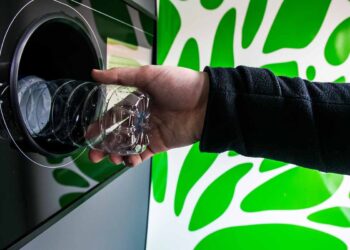
Research compared a variety of deposit systems and recycling rates increased in all scenarios, with the highest rates for an all-beverage deposit of 10 cents. | Rokas Tenys/Shutterstock

This story has been corrected.

Though container deposit systems typically help lift recovery rates for covered materials, the programs also usually reduce tonnages of high-quality PET and aluminum going to sorting facilities. A new study helps to quantify those potential impacts.

The National Waste & Recycling Association (NWRA) released the study evaluating the effect of beverage container deposit systems on MRF costs and revenues, as well as the effects on municipalities.

Prepared by Resource Recycling Systems (RRS), the research modeled six deposit scenarios with variations based on beverage type and deposit value. Each scenario is based on an average-sized MRF with 93,600 tons per year throughput serving a community of approximately 1.25 million people in 473,000 households.

Overall, the findings were that container deposits lead to higher costs and lower revenues because high-value materials move to the deposit system and out of the MRF. The fixed cost per ton is higher as the cost to run the same equipment is spread across fewer tons, the report said.

The research estimates that municipalities could see an annual MRF cost increase of $2.50 to $5 per household.

Resa Dimino, RRS managing principal, said in a press release the study provided useful data and “shows a need for balance between system and policy.”

“We need to ensure that municipalities and MRFs are kept whole as higher quality materials are collected and removed from our waste streams and waterways,” Dimino said.

The scenarios included three different beverage combinations at a 5-cent deposit and a 10-cent deposit. The combinations were beer and carbonated soft drinks; beer, carbonated soft drinks and water; and all beverages, excluding milk.

The modeling assumed that aluminum, glass and PET beverage containers are included and that a 5-cent deposit yields a 65% redemption rate while a 10-cent deposit yields a 85% redemption rate.

Recycling rates increased in all scenarios, with the highest rates for an all-beverage deposit of 10 cents (77% for PET, 83% for glass and 89% for aluminum, up from a baseline of 29%, 25% and 50%, respectively).

Overall, more glass and aluminum than PET would leave the MRF system under all scenarios, and the study suggested that between 10,770 and 17,630 tons per year would no longer make its way to MRF sort lines. That would result in a revenue loss for a typical MRF of between $11.90 and $23.50 per ton marketed, depending on which deposit scenario was in place.

However, communities could see disposal cost savings from bottle bills, the study said, as well as a reduction in litter and marine debris and related cleanup costs. Higher-value materials are also more likely to be circular, it noted.

The report said further study is needed to understand the effect on recycling collection costs and throughput due to changes in the density of the recyclables mix.

To help offset the negative effects of bottle bills on MRFs, the study suggested policies like that in California, where MRFs are able to redeem containers in bulk and collect the deposits.

“Policy can be structured to capture the benefits of beverage container deposits – high recycling rates for target materials and materials more suited for closed loop applications – while ensuring that municipal recycling programs are not harmed,” the report said.

An earlier version of this story mistakenly noted that the report found deposit systems decreased the value of a blended ton at a typical MRF by 58%. That percentage was determined by a misreading of the data. In fact, the report shows potential revenue decreases would be far lower than that. 

 

Tags: Container DepositsMRFsResearch
TweetShare
Marissa Heffernan

Marissa Heffernan

Marissa Heffernan worked at Resource Recycling from January 2022 through June 2025, first as staff reporter and then as associate editor. Marissa Heffernan started working for Resource Recycling in January 2022 after spending several years as a reporter at a daily newspaper in Southwest Washington. After developing a special focus on recycling policy, they were also the editor of the monthly newsletter Policy Now.

Related Posts

WM, Circular Materials announce new Canadian facility

byStefanie Valentic
May 21, 2026

Hauler WM will open a new preconditioning recycling facility (PCF) in Edmonton in early 2027, bringing advanced optical sorting to...

What Netflix’s ‘Plastic Detox’ gets wrong – and right

byKeith Loria
April 23, 2026

Advocates are excited about the attention brought on plastics by the documentary, but scientists say more nuance is needed.

Hawaii trials asphalt made with plastic debris and nets

Hawaii trials asphalt made with plastic debris and nets

byScott Snowden
April 20, 2026

Researchers at Hawaii Pacific University test asphalt made with fishing nets and plastic debris, with early results showing no increase...

Amazon, DOE partner on critical materials recovery

byScott Snowden
April 13, 2026

DOE and Amazon will study recovery of graphite from textiles and gallium from IT hardware, aiming to strengthen US supply...

WM opens new $60m MRF in Indy

byAntoinette Smith
April 10, 2026

The newest recycling facility has annual capacity of 200,000 tons and will send all mixed paper to Pratt Industries for...

Rice researchers use lemon juice to boost battery recycling

byScott Snowden
April 9, 2026

Rice researchers reported a battery recycling process that uses plasma and mild solvents to recover most metals from black mass...

Load More
Next Post

News from Novolex, Repeats Group and more

More Posts

Recycling industry addresses Beyond Plastics report

Recycling industry addresses Beyond Plastics report

May 26, 2026
What a report on Starbucks cups reveals about recycling

What a report on Starbucks cups reveals about recycling

May 26, 2026
Federal PACK Act aims to preempt ‘patchwork’ of state laws

House advances Recycling Infrastructure and Accessibility Act

May 21, 2026
EU recyclers make case for solvent-based methods

The electronics recycling industry has a plastics problem

May 26, 2026
New York bill would strengthen device repair rules

New York packaging EPR bill faces June 10 deadline

May 26, 2026
Revised CA budget includes $200m for recycling

Revised CA budget includes $200m for recycling

May 20, 2026
Illinois expands battery recycling as lithium-ion fire concerns mount

Illinois expands battery recycling as lithium-ion fire concerns mount

May 27, 2026
Plastic packaging

Why SB 54 source reduction planning is becoming the industry’s most challenging EPR test

May 19, 2026
Bottle bill backers see opportunity for action

PET collapse exposes gaps in US recycling infrastructure

May 15, 2026
EPR rules take shape in Oregon, as first test

Oregon OKs end-market verification from CAA

May 20, 2026
Load More

About & Publications

About Us

Staff

Archive

Magazine

Work With Us

Advertise
Jobs
Contact
Terms and Privacy

Newsletter

Get the latest recycling news and analysis delivered to your inbox every week. Stay ahead on industry trends, policy updates, and insights from programs, processors, and innovators.

Subscribe

Welcome Back!

Login to your account below

Forgotten Password?

Retrieve your password

Please enter your username or email address to reset your password.

Log In

Add New Playlist

No Result
View All Result
  • The Latest
  • Analysis
  • Recycling
  • E-Scrap
  • Plastics
  • Policy Now
  • Conferences
    • E-Scrap Conference
    • Plastics Recycling Conference
    • Resource Recycling Conference
    • Textiles Recovery Summit
  • Magazine
  • About Us
  • Advertise
  • Archive
  • Jobs
  • Staff
Subscribe
This website uses cookies. By continuing to use this website you are giving consent to cookies being used. Visit our Privacy and Cookie Policy.