




Resource Recycling
  • The Latest
  • Analysis
    • All
    • Certification Scorecard
    • Industry Announcements
    • Opinion
    Auto Draft

    Umicore highlights strength in recycling, catalysis

    Apto, Tusaar partner on rare earths recovery

    Apto, Tusaar partner on rare earths recovery

    Certification scorecard for the week of Feb. 16, 2026

    Sims Lifecycle leverages hyperscale decommissioning

    Sims Lifecycle leverages hyperscale decommissioning

    The electronics recycling industry is undergoing a transformation from labor-intensive manual operations to highly automated, AI-driven facilities that use advanced robotics, cleaner chemistry and digital tracking systems to extract critical materials.

    The cyber-physical MRF: AI and robotics reshape e-waste recovery

    Certification scorecard for the week of Feb. 9, 2026

    Meta-Corning deal signals IT hardware retirement wave

    Meta-Corning deal signals IT hardware retirement wave

    Malaysia clamps down on illegal e-waste imports amid probes

    Malaysia clamps down on illegal e-waste imports amid probes

    URT builds alliance to remake electronics plastics at scale

    ICYMI: Top 5 e-scrap stories from January 2026

  • Conferences
  • Publications

    Other Topics

    Textiles
    Organics
    Packaging
    Glass
    Brand Owners

    Metals
    Technology
    Research
    Markets
    Grant Watch

    All Topics

Subscribe
No Result
View All Result
Resource Recycling
  • The Latest
  • Analysis
    • All
    • Certification Scorecard
    • Industry Announcements
    • Opinion
    Auto Draft

    Umicore highlights strength in recycling, catalysis

    Apto, Tusaar partner on rare earths recovery

    Apto, Tusaar partner on rare earths recovery

    Certification scorecard for the week of Feb. 16, 2026

    Sims Lifecycle leverages hyperscale decommissioning

    Sims Lifecycle leverages hyperscale decommissioning

    The electronics recycling industry is undergoing a transformation from labor-intensive manual operations to highly automated, AI-driven facilities that use advanced robotics, cleaner chemistry and digital tracking systems to extract critical materials.

    The cyber-physical MRF: AI and robotics reshape e-waste recovery

    Certification scorecard for the week of Feb. 9, 2026

    Meta-Corning deal signals IT hardware retirement wave

    Meta-Corning deal signals IT hardware retirement wave

    Malaysia clamps down on illegal e-waste imports amid probes

    Malaysia clamps down on illegal e-waste imports amid probes

    URT builds alliance to remake electronics plastics at scale

    ICYMI: Top 5 e-scrap stories from January 2026

  • Conferences
  • Publications

    Other Topics

    Textiles
    Organics
    Packaging
    Glass
    Brand Owners

    Metals
    Technology
    Research
    Markets
    Grant Watch

    All Topics

Subscribe
No Result
View All Result
Resource Recycling
No Result
View All Result
Home Analysis Opinion

In My Opinion: Focus on waste reduction, not recycling

byKelley Dennings, Center for Biological Diversity
November 10, 2020
in Opinion
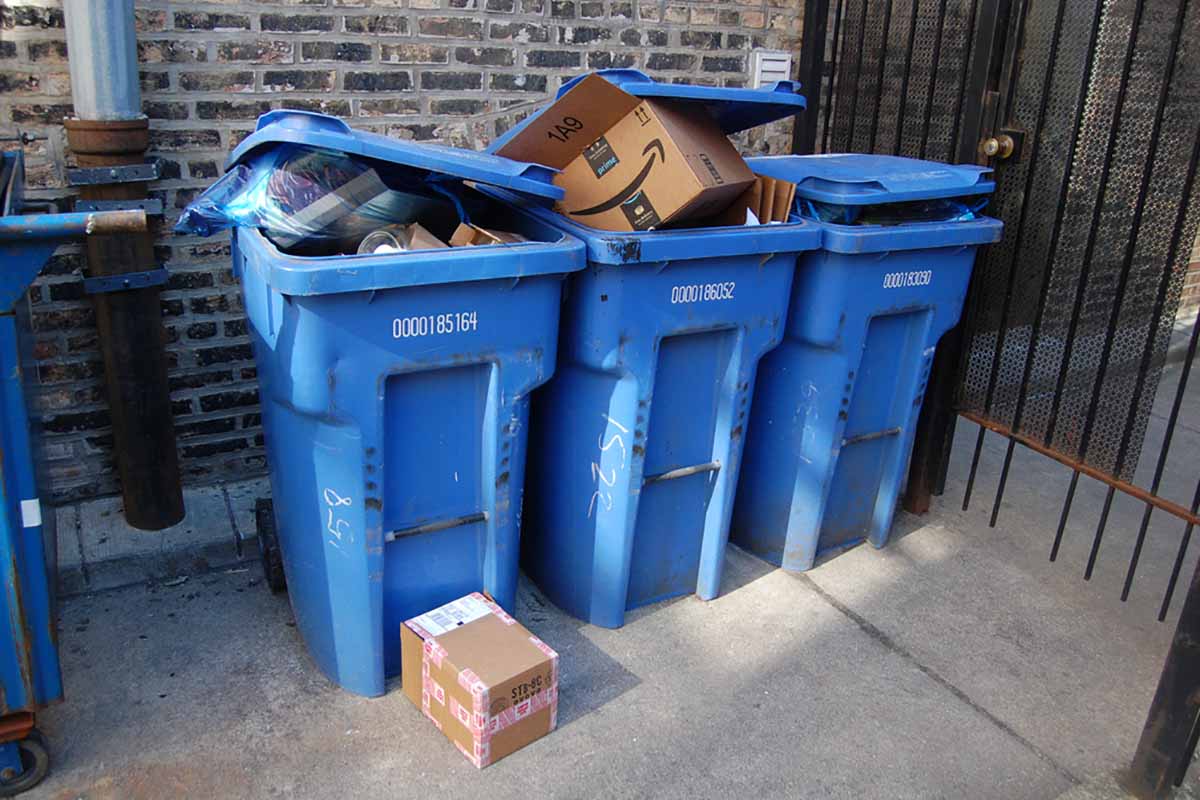
The author argues that a focus on recycling creates a culture of guilt-free consumption, allowing people to feel they can consume more and more as long as they think what they’re consuming can be recycled. | Mary at T-Comms/Shutterstock

America Recycles Day is a campaign I know well. I’ve supported it in various capacities since its national inception in 1997. While I support recycling and composting, I also believe we need to move our efforts up the waste hierarchy and turn the spotlight on waste prevention and reuse.

As a society, we focus too much on recycling and not nearly enough on our culture of infinite consumption, which feeds our recycling centers – and fills our landfills and incinerators – with materials extracted from the earth. Extracting resources just to make stuff we turn around and throw away or recycle has devastating consequences for the planet.

Kelley Dennings
Kelley Dennings

The focus on recycling also creates a culture of guilt-free consumption, allowing people to feel they can consume more and more as long as they think what they’re consuming can be recycled.

We can’t simply recycle more. We need to consume consciously.

Data from the Environmental Protection Agency shows that waste generation per person has nearly doubled since 1960. Our discarded stuff not only fills up landfills and feeds incinerators, but producing it uses water, creates pollution and generates greenhouse gas emissions, all of which harm wildlife and habitat. A goal of infinite consumption, even if what we’re consuming is recycled, cannot be the path forward for planetary resilience.

The Center for Biological Diversity, where I work on consumption issues, is a national, nonprofit conservation organization dedicated to the protection of endangered species and wild places. We recently released the results of a national survey exploring these issues.

The survey found that three out of four respondents think the United States is doing too little to protect natural resources like water, air, wildlife and land. Seventy-four percent of respondents think the average American consumes too many natural resources, and three out of four say they are willing to reduce their personal consumption by buying only what they need.

While the vast majority believe society has a moral responsibility to prevent wildlife extinctions and they acknowledge a connection between consumption patterns and environmental impact, nearly half of all respondents said they think they consume fewer resources than the average American.

In other words, those surveyed realize we have a consumption problem in America, but they don’t think their personal actions are the problem.

I am calling on those celebrating America Recycles Day to broaden their outlook for the health of people and the planet. Let’s create systems to support the 82% of Americans willing to reduce their personal consumption. Let’s build cultural and business models based on a foundation of waste prevention and reuse – not just recycling. Let’s make sure we support a living-wage workforce and provide job training to help transition workers from waste management to waste prevention and reuse roles.

The solutions to make all of this a reality already exist.

When food establishments switch from single-use to reusable cups, containers and packaging systems, they can save money.

Community-based reuse systems create good jobs and aren’t at the mercy of global supply chains that could fall apart in times of crisis. Local chambers of commerce and business development offices should support robust thrift, rental and bulk store opportunities.

According to GreenBiz, customers are looking for supply-chain resilience and renewed value propositions. They want to know what to do with their products when they break. Supporting right-to-repair policies, along with encouraging products to be designed for increased durability, is important.

The fossil fuel industry is aggressively expanding plastic production, which is being driven by an oversupply of cheap, fracked natural gas in the U.S. The biggest thing we can do to reduce plastic pollution and support the frontline communities bearing the health and environmental impacts of fossil fuel development and plastic production is to make less plastic.

We must support the Break Free from Plastic Pollution Prevention Act, which seeks to put  a temporary pause on new plastic facilities until the EPA updates and creates important regulations for those facilities. That bill also includes other waste prevention policies such as extended producer responsibility and single-use plastic bans.

The health and well-being of humans is intrinsically linked to the health and well-being of nature. We owe it to the 76% of Americans who think the U.S. is doing too little to protect natural resources to create thoughtful waste prevention and reuse policies and campaigns.

Let’s turn the tide. On this America Recycles Day, let’s commit to moving up the waste management hierarchy and supporting waste prevention and reuse to decrease resource extraction, conserve land, save energy and water and decrease greenhouse gas emissions that contribute to global climate change.

Kelley Dennings is a campaigner with the Center for Biological Diversity. She has worked for local and state government recycling departments, along with a national nonprofit, where she used the America Recycles Day campaign to instigate action.

The views and opinions expressed are those of the author and do not imply endorsement by Resource Recycling, Inc. If you have a subject you wish to cover in an op-ed, please send a short proposal to [email protected] for consideration.


TweetShare
Kelley Dennings, Center for Biological Diversity

Kelley Dennings, Center for Biological Diversity

Related Posts

Minnesota publishes prelim EPR assessment

Minnesota publishes prelim EPR assessment

byAntoinette Smith
February 20, 2026

The report will inform recommendations featured in the next report to develop the state's EPR program for packaging.

Vermont’s battery stewardship law targets fire risk

byStefanie Valentic
February 20, 2026

The state's new law gives residents more options to safely dispose of everything from single-use alkaline batteries to medium-format e-bike...

Auto Draft

Umicore highlights strength in recycling, catalysis

byDavid Daoud
February 20, 2026

The company's 2025 performance offers a compelling case study in how established recovery models can provide a buffer during periods...

Apto, Tusaar partner on rare earths recovery

Apto, Tusaar partner on rare earths recovery

byDavid Daoud
February 20, 2026

The collaboration centers on capturing critical materials from shredded hard drives for Tusaar’s domestic processing stream.

PureCycle, Toppan partner on recycled PP films

PureCycle, Toppan partner on recycled PP films

byAntoinette Smith
February 19, 2026

Next the companies will target thermoforming applications where brand owners are seeking recycled content solutions to comply with upcoming mandates.

Sony heads renewable plastic supply chain

Sony heads renewable plastic supply chain

byScott Snowden
February 19, 2026

Sony and 13 partners formed a unique global supply chain to make circular plastics for Sony high-performance audiovisual products using...

Load More
Next Post

Third quarter brought more good news for largest haulers

More Posts

Sims Lifecycle leverages hyperscale decommissioning

Sims Lifecycle leverages hyperscale decommissioning

February 18, 2026
Republic Services waiting on fourth Polymer Center

Republic Services waiting on fourth Polymer Center

February 18, 2026
NERC: Blended average prices fell 40% in third quarter

HDPE, PP bales rise as paper fiber and cans stabilize

February 12, 2026
Chinese processing group details goals for US visit

AMP lays out vision of next-generation, AI-driven MRFs

July 24, 2024
Bipartisan reps introduce bill on recycling claims

Bipartisan reps introduce bill on recycling claims

February 12, 2026
Textile clothing bins

Report details how to make CA textile recycling work

February 16, 2026

Focus on recycling film, flexibles takes shape in two reports

February 13, 2026

Origin Materials to reduce staff in reorg

February 13, 2026
Sony heads renewable plastic supply chain

Sony heads renewable plastic supply chain

February 19, 2026
Iron Mountain sees ITAD surge, raises forecast on record Q2

Iron Mountain posts record Q4, guides strong 2026 growth

February 13, 2026
Load More

About & Publications

About Us

Staff

Archive

Magazine

Work With Us

Advertise
Jobs
Contact
Terms and Privacy

Newsletter

Get the latest recycling news and analysis delivered to your inbox every week. Stay ahead on industry trends, policy updates, and insights from programs, processors, and innovators.

Subscribe

Welcome Back!

Login to your account below

Forgotten Password?

Retrieve your password

Please enter your username or email address to reset your password.

Log In

Add New Playlist

No Result
View All Result
  • The Latest
  • Analysis
  • Recycling
  • E-Scrap
  • Plastics
  • Policy Now
  • Conferences
    • E-Scrap Conference
    • Plastics Recycling Conference
    • Resource Recycling Conference
    • Textiles Recovery Summit
  • Magazine
  • About Us
  • Advertise
  • Archive
  • Jobs
  • Staff
Subscribe
This website uses cookies. By continuing to use this website you are giving consent to cookies being used. Visit our Privacy and Cookie Policy.