




Resource Recycling
  • The Latest
  • Analysis
    • All
    • Certification Scorecard
    • Industry Announcements
    • Opinion
    smart glasses

    ITAD’s big wearables challenge

    Partnership ups quality control on device-sales platform

    Certification scorecard — week of Oct. 5

    Industry announcements for January 2026

    Industry announcements for October 2026

    Paladin acquires R&L Recycling, enters European ITAD market

    Following the money in hardware circularity

    SK Tes on track to meet 2030 ITAD goal

    SK tes’ sustainability report offers window into ITAD

    Our top stories from February 2023

    ADS flexes new recycling capacity against resin spikes

  • Conferences
    • Resource Recycling Conference
    • Plastics Recycling Conference
    • E-Scrap: The Longevity Conference
    • Textiles Recovery Summit
  • Publications
    • E-Scrap News
    • Plastics Recycling Update
    • Policy Now
    • Resource Recycling
    • Other Topics
      • All Topics
      • Brand Owners
      • Critical Minerals
      • Glass
      • Grant Watch / RFPs
      • Markets
      • Organics
      • Packaging
      • Research
      • Technology
      • Textiles
Subscribe
No Result
View All Result
Resource Recycling
  • The Latest
  • Analysis
    • All
    • Certification Scorecard
    • Industry Announcements
    • Opinion
    smart glasses

    ITAD’s big wearables challenge

    Partnership ups quality control on device-sales platform

    Certification scorecard — week of Oct. 5

    Industry announcements for January 2026

    Industry announcements for October 2026

    Paladin acquires R&L Recycling, enters European ITAD market

    Following the money in hardware circularity

    SK Tes on track to meet 2030 ITAD goal

    SK tes’ sustainability report offers window into ITAD

    Our top stories from February 2023

    ADS flexes new recycling capacity against resin spikes

  • Conferences
    • Resource Recycling Conference
    • Plastics Recycling Conference
    • E-Scrap: The Longevity Conference
    • Textiles Recovery Summit
  • Publications
    • E-Scrap News
    • Plastics Recycling Update
    • Policy Now
    • Resource Recycling
    • Other Topics
      • All Topics
      • Brand Owners
      • Critical Minerals
      • Glass
      • Grant Watch / RFPs
      • Markets
      • Organics
      • Packaging
      • Research
      • Technology
      • Textiles
Subscribe
No Result
View All Result
Resource Recycling
No Result
View All Result
Home Recycling

City data shows COVID-19 impacts on recycling tonnages

Colin StaubbyColin Staub
April 28, 2020
in Recycling
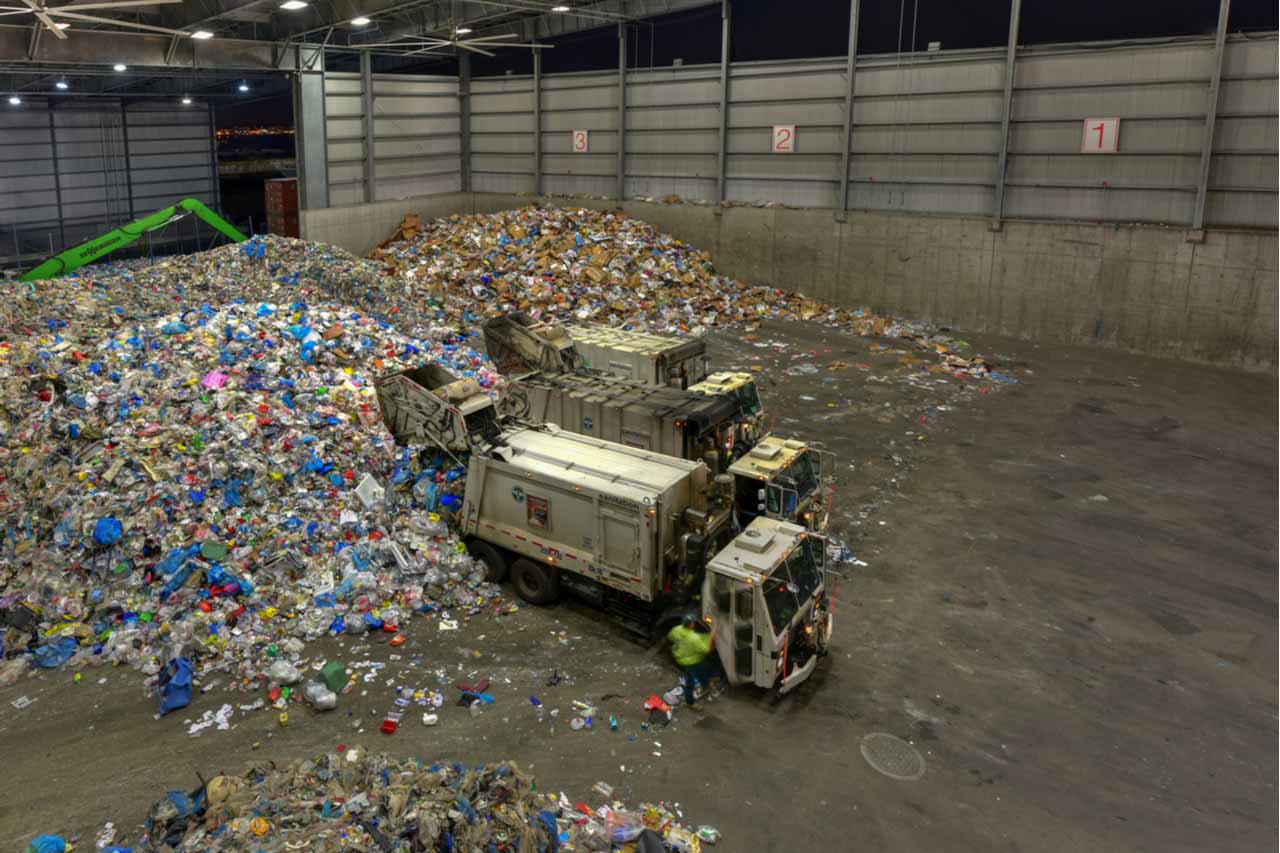
Figures show New York City saw an uptick in collected residential material in March compared with a year earlier. | Felix Lipov/Shutterstock

Recycling programs are reporting greater residential recycling generation in March, concurrent with stay-at-home orders issued nationwide. Stakeholders involved with local programs are also noting the shift away from commercial generation may carry major financial implications.

Major cities note higher volumes

Figures provided to Resource Recycling show the city of Phoenix saw a significant tonnage increase as March progressed. With a population of nearly 1.7 million, the city is the fifth-largest in the U.S.

During the first week of March, Phoenix Public Works crews collected 11,677 tons of residential garbage, recycling and organics. That was a slight uptick from the 11,540 tons the city collected during that period in 2019.

The real increase began during the second week of March, amid significant government actions. President Trump declared a state of emergency on March 11, and Arizona Gov. Doug Ducey declared a public health emergency statewide on March 12.

“That’s when we started seeing the increase, very likely due to stay-at-home recommendations and people eating more at home,” the Phoenix Public Works Department said in a statement.

During that week, Phoenix collected 12,106 tons of material, up 6% over the same period in 2019. In the third week of March, the city collected 13,383 tons, up 12% over that week in 2019. By the last week of the month, the week’s collection was 13,848 tons, up 19% over that week the prior year.

Meanwhile, New York City, saw an uptick in collected material in March compared with a year earlier. The city operates a dual-stream residential recycling program, with residents source-separating paper from glass, plastic, metals and cartons. The Department of Sanitation (DSNY) collects residential material, with the commercial stream handled by private haulers.

New York City sanitation crews collected 253,535 tons of material in March, including garbage, recycling and organics, according to monthly residential tonnage data. That was up 4.2% over the city’s March 2019 collection tonnage, although it was only up slightly compared with the March 2018 figure.

New York’s residential garbage was up 3.3% in March 2020 over the prior year; paper collection was up 2.7%; metals, glass, plastic and cartons were up 11.7%; and organic waste was up 13.3%.

New York City, which has the largest concentration of coronavirus cases in the U.S., enacted a stay-at-home order on March 22.

Changes widespread in North America

Other programs saw similar tonnage shifts in recent weeks:

Coshocton County, Ohio has experienced an increase in recycling tonnage; local officials point to more residents recycling at home.

Wake County, N.C. has seen substantial increases: In the week of April 13, residents generated 29% more trash (total of 739 tons), 45% more cardboard recycling (total 88 tons) and 20% more mixed recycling (253 tons).

“People are staying at home, getting a head start on spring cleaning, and they’re bringing unprecedented amounts of material to our convenience centers,” said solid waste director John Roberson in a release.

York County, S.C. reported a 40% increase in the weight of the trash and recycling streams, according to a news release.

Vancouver, British Columbia noted a shift in weight from commercial to residential waste generation beginning March 20, according to a CBC news report. But despite the growth in residential generation, overall waste tonnage is down by 10%, illustrating the enormous impact of the commercial sector being widely closed down.

Although recent tonnage figures are not yet available, the city of Greensboro, N.C. has seen an increase in contamination and rejected loads in the past few weeks compared to prior months. The weight of rejected tonnage grew from 47 tons in February to 92 tons in March. In an April 27 email, a program representative indicated the April number is about 144 tons.

“We expect this was a result of residents using their recycling cart for excess refuse once they filled up their regular refuse cart,” the city said in a statement.

Kalamazoo, Mich. saw a similar spike in contamination shortly after the stay-at-home order. In a release, the city said it recently learned that 2.4 tons of collected material was rejected due to contaminants. “We understand that the stay-at-home order may have resulted in increased trash per household, but everyone must do their part in keeping the recycle stream as clean as possible,” the city stated.

Tonnage shift has financial implications

The decline of commercial and increase in residential tonnage has the potential to carry major economic ramifications for local-program stakeholders, depending on how contracts are structured.

Louie Pellegrini of Stanford, Calif.-based Peninsula Sanitary Service has seen residential tonnage for garbage increase, as well as a modest increase in residential recycling and organics. Meanwhile, the commercial stream has decreased substantially.

Pellegrini said his company’s transfer station has seen its weight handled decrease by 60%. That site was used heavily for construction waste disposal in the past, but far fewer construction projects are currently taking place in the area.

Pellegrini said residential recycling costs are frequently subsidized by commercial recycling customers, who dump far larger loads and pay based on the amount of material they’re delivering. With the loss of that material stream, the residential recycling side of the business may not cover itself, even if all ratepayers continue paying their bills.

Kevin Roche, CEO and general manager of nonprofit MRF operator Ecomaine, anticipates similar problems in how the tonnage shift impacts recycling economics.

“A lot of the private haulers seem to think they’ve lost so much business on the commercial side that there is concern,” said Roche, whose organization takes in material from more than 70 communities in the Portland, Maine region. “A lot of the residential contracts oftentimes are fixed price contracts even though they are [now] picking up more trash. So that’s an issue for them.”

Roche said some haulers are renegotiating contracts and doing what they can to offset the financial impact.

“It really depends on when commercials come back on-line,” Roche said.

Dan Leif contributed to this report.

 

Tags: Local Programs
TweetShare
Colin Staub

Colin Staub

Colin Staub was a reporter and associate editor at Resource Recycling until August 2025.

Related Posts

University at Buffalo Professor John Atkinson (right) speaks at the NERC conference in New Jersey.

Improving recycling access for underserved communities

byBrian Clark Howard
October 7, 2026

Panelists at the NERC conference in New Jersey talked about solutions to recycling access, from grants to research to technology...

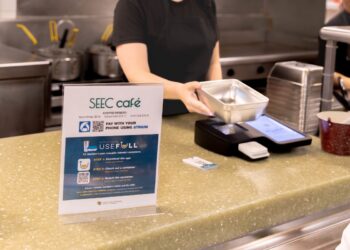
Usefull reusable dining container at SEEC cafe at the University of Colorado Boulder.

CU Boulder launches dining reuse program

byBrian Clark Howard
October 5, 2026

A partnership with Usefull brings reusable, stainless steel containers to university dining spots.

Bin to Better gets students involved in reuse, recycling

Bin to Better gets students involved in reuse, recycling

byPaul Lane
September 24, 2026

E-scrap among three focus areas for student-run, California-based environmental advocacy group.

APR reports success for 2026 recycling tours 

APR reports success for 2026 recycling tours 

byAntoinette Smith
September 23, 2026

In May, more than 2,500 visitors toured 41 facilities in the US and Mexico, during APR's second annual Recycling in...

Leadership at a pivotal moment

Leadership at a pivotal moment

byBrian Clark Howard
September 10, 2026

CalRecycle Director Zoe Heller is heading up an agency tasked with ambitious recycling and sustainability goals. Can she pull it...

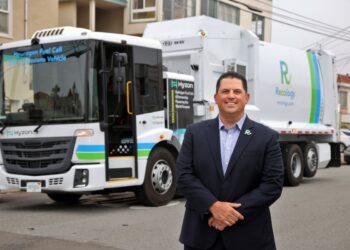
Recology CEO Sal Coniglio in front of one of the hauler's trucks

Recology’s Sal Coniglio on business and policy working together

byBrian Clark Howard
August 31, 2026

The CEO of the West Coast hauler and recycler shares his thoughts on EPR, organics and what keeps him up...

Load More
Next Post

Some cities restart recycling as cuts continue elsewhere

2026 Buyers’ Guide

Equipment, services and technology suppliers serving the recycling industry.

Browse the Guide

More Posts

GM launches recycled EV battery line

GM launches recycled EV battery line

October 5, 2026

SC Johnson CEO: Recycling needs policy fix

October 5, 2026
plastic bale

Underreported sales may cost bottle bill states up to 40%

October 5, 2026
APR, PROs appeal to Ottawa for help

APR, PROs appeal to Ottawa for help

October 6, 2026
Our top stories from February 2023

ADS flexes new recycling capacity against resin spikes

October 1, 2026
Women in Circularity: Sanyukta Saptasagar

Women in Circularity: Sanyukta Saptasagar

September 29, 2026

How EPR and policy is reshaping WM’s facilities

October 5, 2026
How to perform chip harvesting

How to perform chip harvesting

October 1, 2026
Usefull reusable dining container at SEEC cafe at the University of Colorado Boulder.

CU Boulder launches dining reuse program

October 5, 2026
Domestic e-plastics recovery picks up pace 

Domestic e-plastics recovery picks up pace 

September 30, 2026
Load More

About & Publications

About Us

Staff

Archive

Magazines

Work With Us

Advertise
Jobs
Contact
Terms and Privacy

Newsletters

Get the latest recycling news and analysis delivered to your inbox every week. Stay ahead on industry trends, policy updates, and insights from programs, processors, and innovators.

Subscribe

Welcome Back!

Login to your account below

Forgotten Password?

Retrieve your password

Please enter your username or email address to reset your password.

Log In

Add New Playlist

No Result
View All Result
  • The Latest
  • Analysis
  • Recycling
  • E-Scrap
  • Plastics
  • Policy Now
  • Conferences
    • E-Scrap Conference
    • Plastics Recycling Conference
    • Resource Recycling Conference
    • Textiles Recovery Summit
  • Magazines
  • About Us
  • Advertise
  • Archive
  • Jobs
  • Staff
Subscribe
This website uses cookies. By continuing to use this website you are giving consent to cookies being used. Visit our Privacy and Cookie Policy.