Resource Recycling
  • The Latest
  • Analysis
    • All
    • Certification Scorecard
    • Industry Announcements
    • Opinion
    Apple Watch on product box.

    Wearables are coming and ITAD isn’t ready

    Certification Scorecard — Week of April 13, 2026

    EV Battery Pack - Sergii Chernov-Shutterstock

    Redwood, Rivian deal fuels US infrastructure plans

    Bloom ESG and e-Stewards roll out critical metals metric

    Colorado regulators suggest mid-range EPR scenario

    Why collaboration on plastic waste still matters

    Battery recycler Ascend Elements files for bankruptcy

    Battery recycler Ascend Elements files for bankruptcy

    EPR fees are a market signal. Here’s what they’re telling you.

    EPR fees are a market signal. Here’s what they’re telling you.

    Wolframite ore, the primary ore of tungsten from Altai, Russia

    Tungsten scrap export controls draw industry attention

    Certification Scorecard — Week of April 6, 2026

  • Conferences
  • Publications

    Other Topics

    Textiles
    Organics
    Packaging
    Glass
    Brand Owners

    Metals
    Technology
    Research
    Markets
    Grant Watch

    All Topics

Subscribe
No Result
View All Result
Resource Recycling
  • The Latest
  • Analysis
    • All
    • Certification Scorecard
    • Industry Announcements
    • Opinion
    Apple Watch on product box.

    Wearables are coming and ITAD isn’t ready

    Certification Scorecard — Week of April 13, 2026

    EV Battery Pack - Sergii Chernov-Shutterstock

    Redwood, Rivian deal fuels US infrastructure plans

    Bloom ESG and e-Stewards roll out critical metals metric

    Colorado regulators suggest mid-range EPR scenario

    Why collaboration on plastic waste still matters

    Battery recycler Ascend Elements files for bankruptcy

    Battery recycler Ascend Elements files for bankruptcy

    EPR fees are a market signal. Here’s what they’re telling you.

    EPR fees are a market signal. Here’s what they’re telling you.

    Wolframite ore, the primary ore of tungsten from Altai, Russia

    Tungsten scrap export controls draw industry attention

    Certification Scorecard — Week of April 6, 2026

  • Conferences
  • Publications

    Other Topics

    Textiles
    Organics
    Packaging
    Glass
    Brand Owners

    Metals
    Technology
    Research
    Markets
    Grant Watch

    All Topics

Subscribe
No Result
View All Result
Resource Recycling
No Result
View All Result
Home Recycling

Tomra CEO: Industry has an opportunity for greater value recovery

Colin StaubbyColin Staub
August 27, 2019
in Recycling
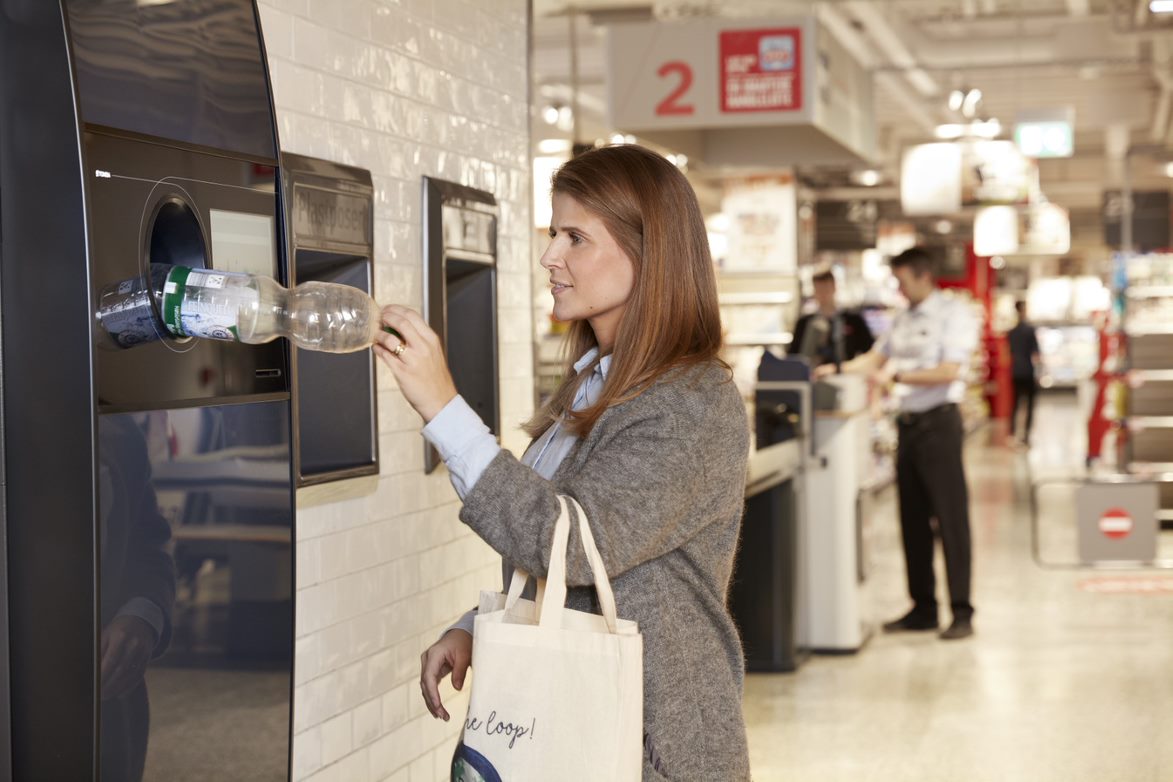
Tomra CEO Stefan Ranstrand shared his perspective on what’s needed to usher in a circular economy. | Courtesy of Tomra.

The leader of a global recycling equipment company says improved processing infrastructure will be vital to the industry’s future. But collaboration among all stakeholders is just as important.

Recent recycling market challenges have spurred significant dialogue over the future of materials recovery and how to avoid market crises. As a major equipment supplier for the recycling industry, Tomra has had a unique position on the market shifts.

Stefan Ranstrand, president and CEO of Tomra, offered his thoughts on the potential available for the industry, given the right investments and cooperation.

“There is an opportunity to extract more value, to turn the tap of virgin and open the tap of recycled material,” Ranstrand said. “This will be done over stages of a long time, not instantly, but every long march starts with a first step, and that’s the journey we want to take with the industry here.”

Tomra was founded in 1972 in Norway and has grown to be a global supplier of equipment for container deposit collection systems as well as MRF sorting systems. Today, the company sells its equipment in 80 countries.

“Lately we have seen some pretty drastic changes,” Ranstrand said.

Since late 2017, China has stopped virtually all of its scrap plastic imports.

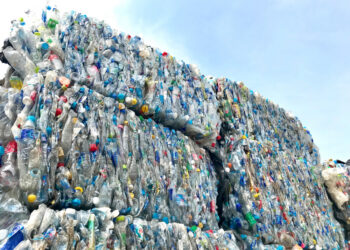
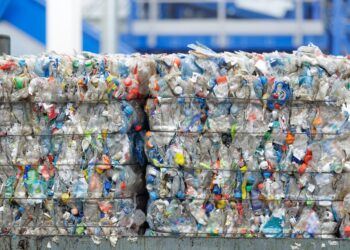
“As a consequence of that, we see how there is a lack of infrastructure investment in the Western world, in the U.S., in Europe, in most developed countries,” Ranstrand said. “They are sitting on mountains of plastic and don’t know what to do with it.”

Opportunity for greater value recovery

From Tomra’s perspective, he said, “waste” is a resource, and it should not be exported to other countries.

“Like you clean your own house, you should also clean up the waste in your own country,” Ranstrand said, “and rather see the opportunity to build a sustainable or green economy around it.”

He also promoted extracting the highest value from recovered material. In recent years, when material such as low-grade mixed plastic was sold to China, the plastics were extracted and processed as mostly low-quality fibers, including those for textiles or straps, Ranstrand explained. In those applications, there’s a far lesser chance the plastic will be recovered and recycled again, meaning it’s “really the end-of-life of that material.”

Stefan Ranstrand

“But we who are in the industry, we know that the material has much better properties and can be reused, and in fact, what the industry is not capitalizing on is the opportunity to upgrade the plastic so you can get much higher value out of it,” Ranstrand said.

He offered a hypothetical example of a bale of mixed plastic selling for $200 per metric ton. With greater sorting, shredding and washing, that material can be upgraded in quality, and its value can increase “by a factor of 2.5 to 7,” Ranstrand said.

Tomra has worked with several consumer goods companies on pilot projects to demonstrate that with greater sorting and washing, low-value plastic can be recycled into packaging. (Ranstrand declined to name the companies, citing confidentiality agreements.)

He likened the recycling process to the refining of oil into gasoline.

“If you think general waste is a commodity, you have to make a product out of that, so really meet consistently precise specifications,” Ranstrand said.

“When we can demonstrate that that is possible, meeting the requirements of the consumer goods companies’ properties that they need for their material, then I think we can generate demand for recycled plastic,” he said.

With a little bit more equipment providing better washing capabilities and more precise sorting, and by working together with end users, the value of the waste stream will increase significantly, Ranstrand said.

Embracing collaboration – and some design changes – to build demand

Although he noted the company is always investigating new options, Ranstrand feels the necessary technology is already available today. Instead of new types of equipment, he said it’s more about investing and building the right process with what is on the market now.

Still, end users incorporating additional post-consumer resin may have to make some changes to their packaging, Ranstrand said. The colors might be slightly different, for example. The properties of the packaging will not change, but visually it may need to shift.

“I think that’s something the industry just needs to work through and create something good out of it,” he said. “I’m convinced that most consumers today would embrace it, will actually like to see their top brands and suppliers being more sustainable and showing that they care about the environment.”

Overall, Ranstrand stressed the importance of collaboration among all sectors involved in the recycling process – the waste management industry, processing sector and end users.

Ranstrand envisions a system in which recycled resin costs less than virgin material. This dynamic has been difficult to achieve in recent years due to low oil prices, but Ranstrand says the key is to build demand.

He noted government regulations could help to build demand, pointing to the single-use packaging directive announced this year in the European Union. The new regulations will increase collection requirements for plastic containers in the coming years and will implement recycled content mandates on new plastic packaging.

Although that type of aggressive EPR system and mandate has not been seen in the U.S., Ranstrand said he is optimistic given the interest from consumer goods companies, even without the regulation.

“There’s a high willingness from them to do something,” he said.
 

Plastics Recycling Conference and Trade Show

Tags: Markets
TweetShare
Colin Staub

Colin Staub

Colin Staub was a reporter and associate editor at Resource Recycling until August 2025.

Related Posts

Volatility reshapes outlook for US metals businesses

byScott Snowden
April 15, 2026

Panelists at the ReMA conference in Las Vegas said tariffs, reshoring and geopolitical tension are remaking trade flows, lifting US...

NERC launches hub to promote PCR demand 

byAntoinette Smith
April 15, 2026

The Northeast Recycling Council's PCR Material Demand Hub offers resources for government procurement, material- and product-specific resources, and certification and...

Industry group: Help us find the plastic bale volumes we need

PET bales sink further as other grades firm 

byRecyclingMarkets.net Staff
April 15, 2026

Pricing for HDPE and PP bales rose again, while PET bales remained low, film grades have steadied, and paper and...

Lead battery recycling market set for steady growth

byScott Snowden
April 14, 2026

The global lead battery recycling market is projected to grow steadily through 2034, supported by regulation, automotive replacement cycles and...

GFL acquires SECURE Waste for $6.4bn

byStefanie Valentic
April 13, 2026

GFL Environmental has agreed to acquire SECURE Waste Infrastructure Corp. in a $6.4 billion deal that expands the waste hauler's...

Trafigura signs $1.1b deal for recycled battery metals

byScott Snowden
April 8, 2026

Trafigura entered the agreement to expand access to recycled critical materials, supporting efforts to build more resilient battery supply chains...

Load More
Next Post

China to increase tariffs on US OCC and other materials

Plastics

Hawaii trials asphalt made with plastic debris and nets

byScott Snowden
April 20, 2026

Researchers at Hawaiʻi Pacific University test asphalt made with fishing nets and plastic debris, with early results showing no increase...

Read moreDetails

More Posts

Recycling Partnership CEO stepping down

April 15, 2026
Battery recycler Ascend Elements files for bankruptcy

Battery recycler Ascend Elements files for bankruptcy

April 13, 2026
EPR fees are a market signal. Here’s what they’re telling you.

EPR fees are a market signal. Here’s what they’re telling you.

April 10, 2026
Industry group: Help us find the plastic bale volumes we need

PET bales sink further as other grades firm 

April 15, 2026

Bloom ESG and e-Stewards roll out critical metals metric

April 15, 2026

WM opens new $60m MRF in Indy

April 10, 2026

GFL acquires SECURE Waste for $6.4bn

April 13, 2026
Colorado regulators suggest mid-range EPR scenario

Why collaboration on plastic waste still matters

April 13, 2026
Solarcycle starts up Georgia recycling plant

S3399 signals a shift in how states are tackling solar panel waste

April 6, 2026

Matium raises $8m, adds buyer financing

April 14, 2026
Load More

About & Publications

About Us

Staff

Archive

Magazine

Work With Us

Advertise
Jobs
Contact
Terms and Privacy

Newsletter

Get the latest recycling news and analysis delivered to your inbox every week. Stay ahead on industry trends, policy updates, and insights from programs, processors, and innovators.

Subscribe

Welcome Back!

Login to your account below

Forgotten Password?

Retrieve your password

Please enter your username or email address to reset your password.

Log In

Add New Playlist

No Result
View All Result
  • The Latest
  • Analysis
  • Recycling
  • E-Scrap
  • Plastics
  • Policy Now
  • Conferences
    • E-Scrap Conference
    • Plastics Recycling Conference
    • Resource Recycling Conference
    • Textiles Recovery Summit
  • Magazine
  • About Us
  • Advertise
  • Archive
  • Jobs
  • Staff
Subscribe
This website uses cookies. By continuing to use this website you are giving consent to cookies being used. Visit our Privacy and Cookie Policy.