

Projects advancing plastics and scrap electronics recovery will receive funding through a federal initiative to save energy and support U.S. manufacturing.
The REMADE (Reducing Embodied-Energy and Decreasing Emissions) Institute announced July 11 its first round of projects to receive funding. The REMADE Institute launched in early 2017 and has been working through the selection process since last summer.
REMADE is funded partially through the U.S. Department of Energy, and its goal has been to develop technologies reducing energy usage and greenhouse gas emissions in manufacturing by improving recycling, remanufacturing and reuse.
A handful of projects selected during the first funding round are related to plastics and electronics recycling. Resource Recycling queried REMADE for more information and compiled the following roundup of seven of the recycling-related projects.
All told, the 17 projects have a combined value of $10 million, which comes from $4 million in federal funding and the remainder in cost-share contributions. The REMADE effort has partnerships with 30 organizations that will be completing the projects.
Capturing hard-to-recycle plastics
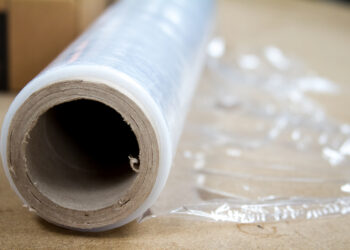
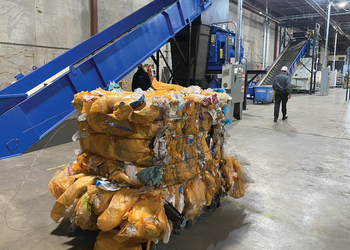
Targeting film and flexible packaging: A project by the American Chemistry Council (ACC), Idaho National Lab and Resource Recycling Systems (RRS) seeks to advance recovery of flexible packaging and plastic film. Titled “Determining Material, Environmental, and Economic Efficiency of Sorting and Recycling Mixed Flexible Packaging and Plastic Wrap,” the project will examine barriers along every stage of the recovery process. Its goal is to gather data on the efficacy of new types of sortation equipment, the impact that equipment has on quality of other commodities processed in the MRF, the market potential for recovered film and flexible packaging, and more. ACC and RRS are already working on a project called Materials Recovery for the Future (MRFF), which involves optimizing MRFs’ ability to sort flexible packaging.
Breaking down barriers to multi-layer film recovery: The project will examine the primary challenges for recycling multi-layer film, which currently is not recycled in large volumes, according to REMADE. The recovery challenges include effectively separating low bulk density film using existing processing equipment and sorting laminated films into separate streams. They also include a lack of markets for the end products, which are “heterogenous blends with altered properties.” The project, titled “Scalable High Shear Catalyzed Depolymerization of Multilayer Plastic Packaging,” seeks to address the issue that there is a lack of cost-effective and energy-efficient conversion technologies for these materials. The project is a collaboration between the ACC, Michigan State University, National Renewable Energy Laboratory, Unilever and the University of Massachusetts-Lowell.
Bring circular economy into systems analysis: A third plastics recycling-related project seeks to incorporate circular economy concepts into other analysis tools. According to the REMADE project description, “Few conceptual models exist for the evolving plastics circular economy. Attempts to envision/assess impacts of a future plastics circular economy are lacking.” This project, titled “Systems Analysis for PET and Olefin Polymers in a Global Circular Economy,” will be carried out by the ACC, Idaho National Lab and Michigan Technological University.
Focus on electronics
Looking at e-scrap on a systems level: This project will be completed by Idaho National Lab and electronics recycling company SunnKing. The project, called “Evaluation of logistics Systems for Collection, Reprocessing, and Production of Secondary Feedstocks from e-Waste,” will examine inefficiencies within the logistics of the current electronics recycling system. “Two reasons for difficulty in accessing residential e-wastes are ineffective placement of collection facilities and low-economic incentives,” REMADE wrote in a project overview. “This results in low availability of raw feedstocks, therefore causing higher costs due to competition between recyclers.” The project proposes to help provide a systems-level understanding of the sector, aiming to help individual players see how their operations are connected to the wider “ecosystem” of e-scrap recovery.
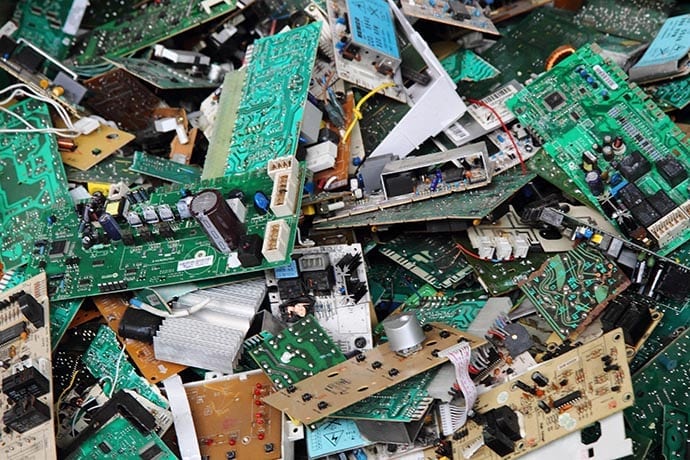
New approach to foster circuit board reuse: Completed by Caterpillar, CoreCentric and the Rochester Institute of Technology, this project will focus on removing the coating material that’s applied to circuit boards during their production. The coating is usually made from silicon or epoxy and is applied to protect the circuit board, but it creates a barrier to reusing circuit boards at end-of-life. The boards are often damaged during removal of the coating. According to REMADE, this project, titled “Epoxy/Silicon Potting Material Removal for Greater Recovery of Circuit Boards,” will rectify “a lack of knowledge of how to effectively and cost-efficiently remove silicon and epoxy potting material without damaging the circuit board,” REMADE wrote.
Deeper dive into device condition: This project, which is being undertaken by the same organizations as the circuit board reuse venture, aims to expand device testing to measure finer details that don’t show up during functional testing. Although functional testing is the industry norm, “there are no technologies available to measure or detect latent defects in used printed circuit boards,” according to REMADE. As an example, the project points to solder joint degradation in circuit boards. This wear-and-tear is responsible for roughly 13 percent of device failures, according to the project overview, but functional testing does not reveal the solder joint condition. Manual inspection of these components is often cost- and time-prohibitive, so the goal of this project, titled “Condition Assessment of Used Electronics,” is to explore technologies that could perform that task in an efficient manner.
Shifting design for an emerging stream: Solar panels are growing as a portion of the end-of-life stream. According to the REMADE description, the “Development of an Industrially Relevant RE-SOLAR Design Framework” project will examine how to improve design-for-recycling. The project will look at the life cycle impact of different materials and manufacturing choices, as well as the economics of various types of end-of-life recovery. “This is an imminent and critical challenge as previously installed solar modules are now creating a surge of electronic waste,” REMADE wrote. “The installation of new systems is also rapidly being scaled up and may create tremendous amounts of e-waste at the end of their lifespan.”
Photo credit:Â Andrii Zhezhera/Shutterstock