




Resource Recycling
  • The Latest
  • Analysis
    • All
    • Certification Scorecard
    • Industry Announcements
    • Opinion

    From CES to the shredder: What 2026 PCs mean for ITAD

    Certification scorecard for week of Jan. 12, 2026

    Industry announcements for January 2026

    Certification scorecard for Dec. 18-30, 2025

    Certification scorecard for Dec. 18, 2025

    Industry announcements for the week of Dec. 15

    Certification scorecard for December 10, 2025

    Industry Announcements for Week of December 8

    Certification Scorecard for December 3, 2025

  • Conferences
  • Publications

    Other Topics

    Textiles
    Organics
    Packaging
    Glass
    Brand Owners

    Metals
    Technology
    Research
    Markets
    Grant Watch

    All Topics

Subscribe
No Result
View All Result
Resource Recycling
  • The Latest
  • Analysis
    • All
    • Certification Scorecard
    • Industry Announcements
    • Opinion

    From CES to the shredder: What 2026 PCs mean for ITAD

    Certification scorecard for week of Jan. 12, 2026

    Industry announcements for January 2026

    Certification scorecard for Dec. 18-30, 2025

    Certification scorecard for Dec. 18, 2025

    Industry announcements for the week of Dec. 15

    Certification scorecard for December 10, 2025

    Industry Announcements for Week of December 8

    Certification Scorecard for December 3, 2025

  • Conferences
  • Publications

    Other Topics

    Textiles
    Organics
    Packaging
    Glass
    Brand Owners

    Metals
    Technology
    Research
    Markets
    Grant Watch

    All Topics

Subscribe
No Result
View All Result
Resource Recycling
No Result
View All Result
Home Recycling

Dispatches from Europe: Getting tough on food waste

byClarissa Morawski, Reloop Platform
September 13, 2016
in Recycling

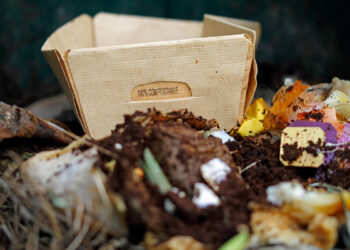
Food waste has become an increasingly hot topic in recent months and for good reason. According to the Food and Agriculture Organization of the United Nations (FAO), about one-third of all food produced in the world for human consumption – approximately 1.3 billion metric tons – ends up as waste each year.

In the European Union alone, it is estimated that around 88 million metric tons of food (or 173 kg per person) are thrown away annually, and the projection for 2020 – if nothing is done – is that the number will grow to roughly 120 million metric tons. The annual cost of this waste is estimated at 143 billion Euros ($160 billion), not to mention the significant costs to the environment and society.

Fortunately, efforts to reduce the amount of food we throw away are gaining momentum, with more and more countries across Europe taking initiatives to address this issue.

National action to reduce food waste

This year France became the first country in the world to pass a law forcing supermarkets to donate unsold food instead of throwing it away or destroying it.

The law, which was unanimously passed by the French Senate in January 2016, also makes it illegal for supermarkets to pour bleach or water on discarded food to deter foragers, or to store it in locked warehouses until garbage pick-up day. The new law also makes it easier for food manufacturers producing perishable products like yogurt or milk to donate excess goods directly to food banks.

As of July 2016, large supermarkets – those over 4,000 square feet – are required to sign donation contracts with charities or local food banks, or face a fine.

Following in France’s footsteps, the Italian government passed a similar law in March. But unlike France, which issues steep fines for those who don’t comply, Italy aims to tackle the issue by offering financial incentives to supermarkets that donate food.

One example is reduced trash taxes – the more food companies give away, the more money they save. In addition, the law makes it easier to donate by waiving the requirement to declare food donations in advance. This allows businesses such as bars, restaurants and supermarkets to alter their donations based on their stock. To further reduce the amount of edible food being thrown away, Italy’s law contains 17 articles proposing changes to the country’s food safety regulations, allowing retailers to donate food products that are past their “best before” dates.

Although France and Italy were the first countries in Europe to introduce national laws targeting food waste, they certainly aren’t the only ones taking steps on the issue. Denmark, for example, which has more food waste initiatives than any other European country, recently saw the opening of its first surplus food supermarket. Called WeFood, it sells only surplus food that otherwise would have gone to waste and does so at discounts of between 30 to 50 percent.

EU decision-makers take steps forward

Food waste has also become an increasingly prominent issue at the EU level. Last month, members of the European Parliament voted 600 to 48 in favor of laws that limit overproduction and the amount of food going to waste. The parliament’s environment committee has also called for binding targets to halve per capita food waste across Europe by 2030, a step that followed the European Commission’s decision to drop food waste reduction targets from its original Circular Economy Package. Such a target would be in line with the United Nations Sustainable Development Goals, which the EU has already committed to achieving.

On a national or pan-European level, one of the key barriers to action on food waste is simply trying to understand the scale or nature of the problem. Most people aren’t aware of how much food goes to waste, or where food loss occurs along production and supply chains. Adding to this is the fact that different countries define and measure food waste differently, which makes it difficult or impossible to compare data and develop well-tailored policies to tackle the issue.

With the recent launch of the Food Loss and Waste Accounting and Reporting Standard, this problem is one step closer to being resolved. The standard has been put together by a wide range of food, environmental and policy stakeholders. For the first time, countries and companies alike will be able to consistently and credibly quantify and report on how much food is lost and wasted, at different stages in the supply chain. Such a common accounting and reporting framework is key to setting baseline actions and measuring progress against any targets that are set.

There is no doubt that a staggering amount of food is going to waste worldwide. With the rising momentum for legislation on this issue, particularly in Europe, it is hoped that the tide will turn and that wasted food will become an issue of the past.


Dispatches from Europe is a monthly column that will keep you posted on developments around the EU’s Circular Economy Package as well other interesting policy developments related to waste reduction in Europe.


Clarissa Morawski is based in Barcelona and serves as the managing director of the Reloop Platform, which brings together industry, government, and non-governmental organizations in Europe to form a network for advances in policy that create enabling system conditions for circularity across the European economy. Clarissa is also principal of Canada-based CM Consulting Inc.


Tags: EuropeOrganics
TweetShare
Clarissa Morawski, Reloop Platform

Clarissa Morawski, Reloop Platform

Related Posts

Aduro reports losses, will pick site for demo plant by end Jan

byAntoinette Smith
January 16, 2026

Canada-based Aduro Clean Technologies plans to finalize site selection, with options including a Dutch site, amid higher quarterly revenue but...

EU contributes €6 million toward textile DRS pilot

byAntoinette Smith
January 16, 2026

The TexMat pilot project will test a deposit return system featuring automated textile collection bins to accompany the rollout of...

Analysis: Dire EU landscape hints at US future

EU Commission fast-tracks support for plastics recyclers

byAntoinette Smith
January 6, 2026

The European Commission acknowledged the urgency for EU-wide measures to protect trade from cheap imports and to provide regulatory certainty...

Carbios delays French PET recycling plant to secure funds

Carbios delays French PET recycling plant to secure funds

byAntoinette Smith
December 19, 2025

The biotech company must structure about 10% of the remaining funding before construction can restart, and has pushed expected completion...

Austria’s DRS on track for 80% collection in first year

Austria’s DRS on track for 80% collection in first year

byAntoinette Smith
December 17, 2025

Austria was the 17th country in Europe to implement a deposit-return scheme for single-use beverage containers, and aims for a...

ESG

Generate Capital accelerates organics-to-energy expansion

byKeith Loria
December 8, 2025

Generate Capital has raised more than $1 billion over the past year to support and expand its credit-investment platform for...

Load More
Next Post

Recycling Partnership teams with Wisconsin county

More Posts

paint cans recycling

PaintCare brings stewardship to Illinois, Maryland on deck

December 19, 2025
Mitsubishi Materials buys into Elemental e-scrap pact in US

Mitsubishi Materials buys into Elemental e-scrap pact in US

December 19, 2025
#PRC2026 Speaker Spotlight: Joel Morales

#PRC2026 Speaker Spotlight: Joel Morales

December 22, 2025
Panel tracks shifts in e-scrap as policy, AI reshape

Panel tracks shifts in e-scrap as policy, AI reshape

December 22, 2025
Robot pilot targets legacy parts to help supply defense

Robot pilot targets legacy parts to help supply defense

December 29, 2025
Solar recycling ramps up in NY with new pickup service

Solar recycling ramps up in NY with new pickup service

December 23, 2025
State policy drives tire recycling investment in Southeast

State policy drives tire recycling investment in Southeast

December 23, 2025
New Hampshire makes progress on waste goals

New Hampshire makes progress on waste goals

December 22, 2025
Federal PACK Act aims to preempt ‘patchwork’ of state laws

Federal PACK Act aims to preempt ‘patchwork’ of state laws

December 23, 2025
APR year in review

APR year in review

December 30, 2025
Load More

About & Publications

About Us

Staff

Archive

Magazine

Work With Us

Advertise
Jobs
Contact
Terms and Privacy

Newsletter

Get the latest recycling news and analysis delivered to your inbox every week. Stay ahead on industry trends, policy updates, and insights from programs, processors, and innovators.

Subscribe

Welcome Back!

Login to your account below

Forgotten Password?

Retrieve your password

Please enter your username or email address to reset your password.

Log In

Add New Playlist

No Result
View All Result
  • The Latest
  • Analysis
  • Recycling
  • E-Scrap
  • Plastics
  • Policy Now
  • Conferences
    • E-Scrap Conference
    • Plastics Recycling Conference
    • Resource Recycling Conference
    • Textiles Recovery Summit
  • Magazine
  • About Us
  • Advertise
  • Archive
  • Jobs
  • Staff
Subscribe
This website uses cookies. By continuing to use this website you are giving consent to cookies being used. Visit our Privacy and Cookie Policy.