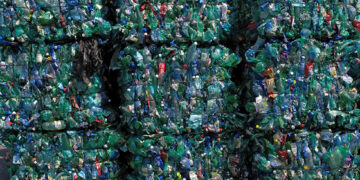












Packaging for beauty items is often uniquely hard to recycle, since it typically comes in very small containers that can slip through sorting machinery and contaminate other material streams. Moreover, it may be made from multiple plastic types that further complicate recyclability.
Pact Collective, an NGO that advocates for packaging design that helps reduce waste and can give beauty products a second life, is working to change that.
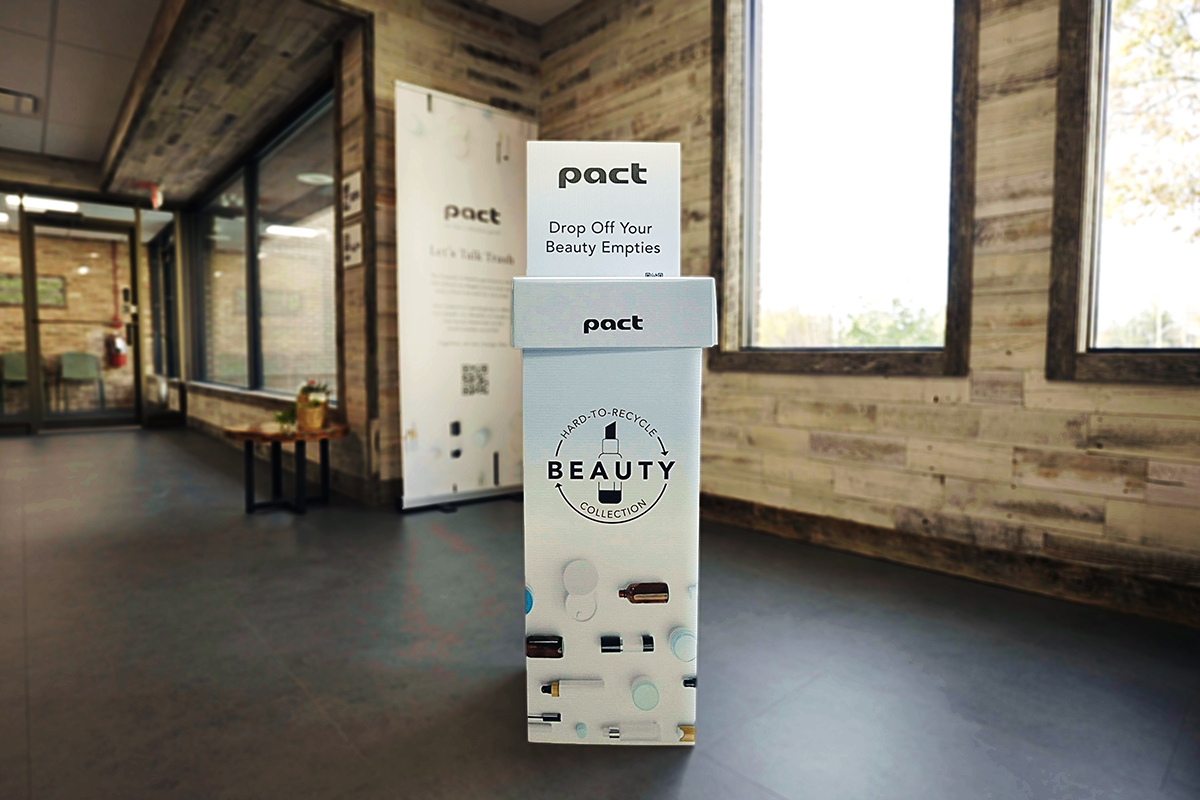
Composed of more than 150 members, including brands such as L’Occitane and L’Oreal USA, and retailers including Ulta, the nonprofit coordinates more than 3,300 in-store take-back bins across the US and Canada, in addition to beauty packaging collection mail-back programs, among other initiatives.
And now the group is opening its first request for proposal (RFP), to add to its membership. The RFP will be open Dec. 4 through Jan. 9 and Pact will award selected applicants by Feb. 1, Tara Fothergill, Pact community and brand director, told Plastics Recycling Update.
“Pact Collective is more than a collection program, we are a nonprofit, membership-based movement uniting the beauty industry to take responsibility for its packaging waste,” she said. “We believe that specialty recycling programs are a tool, not the solution. The long-term answer lies in smarter packaging design, refill/reuse models and true circularity. We expect our partners to share this vision and actively contribute to it.”
In its five years of operation, Pact has collected 800,000 pounds of hard-to-recycle beauty packaging, with nearly half of that in 2025 alone. By adding new partners, Pact is looking to expand its impact even further, by helping to ensure that even returned, expired and damaged goods have a second life.
Fothergill shared further details of the initiative as well as a look ahead (lightly edited for length and clarity).
Pact has expressed a commitment to finding the best possible end uses for materials. What does that philosophy look like in your day-to-day operations?
Fothergill: Pact is committed to driving transformation across the beauty and personal care industry through collective action, collaboration and accountability. When processing our collected material, we use our highest-and-best-use hierarchy to ensure all materials are processed to maximize recyclability and recovery.
This includes exploring mechanical recycling, ideally upcycling, solutions whenever possible and then exploring fewer ideal outcomes when mechanical recycling is not possible. We use waste-to-energy as our last resort, and we do not use landfill as an end-of-life solution.
We hope to identify innovative recyclers willing to work with us on improved technologies and tactics to increase recycling rates when we can. This RFP provides an opportunity for our future potential partners to showcase new capabilities, innovations and efficiencies being developed as we continue our efforts to reduce packaging waste.
How do you identify recyclers who responsibly comply with EPR regulations?
Fothergill: EPR regulations vary state-by-state and are still evolving. Pact stays actively engaged in EPR development, including requirements for responsible end markets (REMs). Oregon has already identified qualifying REMs for their EPR legislation and affected packaging types and these types of partners are the ones we want to talk to.
Other states are still evolving these REMs lists and even the definition of what a responsible end market is. That being said, we want to work with recyclers who are willing to evolve alongside EPR legislation in the coming years to ensure compliance and our best recycling rates possible.
What does the application review process look like?
Fothergill: This RFP covers services across two complementary tracks, one for logistics and materials handling, the other for recycling and processing of collected material. Vendors can submit proposals for one or both tracks if it makes sense based on their offerings.
Pact will review all submissions for operational capabilities, ESG compliance, innovation, EPR considerations and cost competitiveness. Most importantly, submissions will be evaluated for alignment with Pact’s nonprofit mission and our specific program objectives.
What are some of the guiding principles behind Pact membership, actions and goals?
Fothergill: Vendors must align with Pact Collective’s broader mission of reducing packaging waste upstream by sharing insights and data that inform sustainable packaging design and industry-wide innovation.
A guiding principle of this process is around transparency and accountability. Vendors must ensure an auditable chain of custody from bin to facility to recycler to final market, with robust, member-specific reporting.
What has Pact accomplished so far with current partners and what led to accepting more?
Fothergill: Our hard-to-recycle beauty collection programs have been running successfully for five years and we’re proud of what we’ve built with the support of our current partners, advancing industry-wide solutions for beauty’s most difficult-to-recycle packaging.
We have over 3,000 Pact drop-off collection points across the US and Canada where beauty consumers can drop off their hard-to-recycle packaging for proper processing. We also offer a mail-back solution for those not near a Pact collection point and we run collections of obsolete and unsellable goods for beauty companies to properly process bulk material.