



Resource Recycling
  • The Latest
  • Analysis
    • All
    • Certification Scorecard
    • Industry Announcements
    • Opinion

    Certification scorecard – week of Sept. 14

    Canada Plastics Pact reports 2024 progress

    Trade tensions shift global mineral partnerships 

    Spin-off lets Linca focus on battery mineral recovery

    Critical mineral policy shift creates opportunity

    CommanderAI launches searchable hauler database

    Inside the Circle: Put AI to work for the people who do the work

    Northeast commodity values for Q2 reach 2-year high

    Will a MRF shortage limit EPR growth?

    From claims to custody: PCR procurement grows up

    Certification scorecard — week of September 7

  • Conferences
    • Resource Recycling Conference
    • Plastics Recycling Conference
    • E-Scrap: The Longevity Conference
    • Textiles Recovery Summit
  • Publications
    • E-Scrap News
    • Plastics Recycling Update
    • Policy Now
    • Resource Recycling
    • Other Topics
      • All Topics
      • Brand Owners
      • Critical Minerals
      • Glass
      • Grant Watch / RFPs
      • Markets
      • Organics
      • Packaging
      • Research
      • Technology
      • Textiles
Subscribe
No Result
View All Result
Resource Recycling
  • The Latest
  • Analysis
    • All
    • Certification Scorecard
    • Industry Announcements
    • Opinion

    Certification scorecard – week of Sept. 14

    Canada Plastics Pact reports 2024 progress

    Trade tensions shift global mineral partnerships 

    Spin-off lets Linca focus on battery mineral recovery

    Critical mineral policy shift creates opportunity

    CommanderAI launches searchable hauler database

    Inside the Circle: Put AI to work for the people who do the work

    Northeast commodity values for Q2 reach 2-year high

    Will a MRF shortage limit EPR growth?

    From claims to custody: PCR procurement grows up

    Certification scorecard — week of September 7

  • Conferences
    • Resource Recycling Conference
    • Plastics Recycling Conference
    • E-Scrap: The Longevity Conference
    • Textiles Recovery Summit
  • Publications
    • E-Scrap News
    • Plastics Recycling Update
    • Policy Now
    • Resource Recycling
    • Other Topics
      • All Topics
      • Brand Owners
      • Critical Minerals
      • Glass
      • Grant Watch / RFPs
      • Markets
      • Organics
      • Packaging
      • Research
      • Technology
      • Textiles
Subscribe
No Result
View All Result
Resource Recycling
No Result
View All Result
Home Plastics

National bottle bill likely to land in Congress soon

Marissa HeffernanbyMarissa Heffernan
February 9, 2022
in Plastics
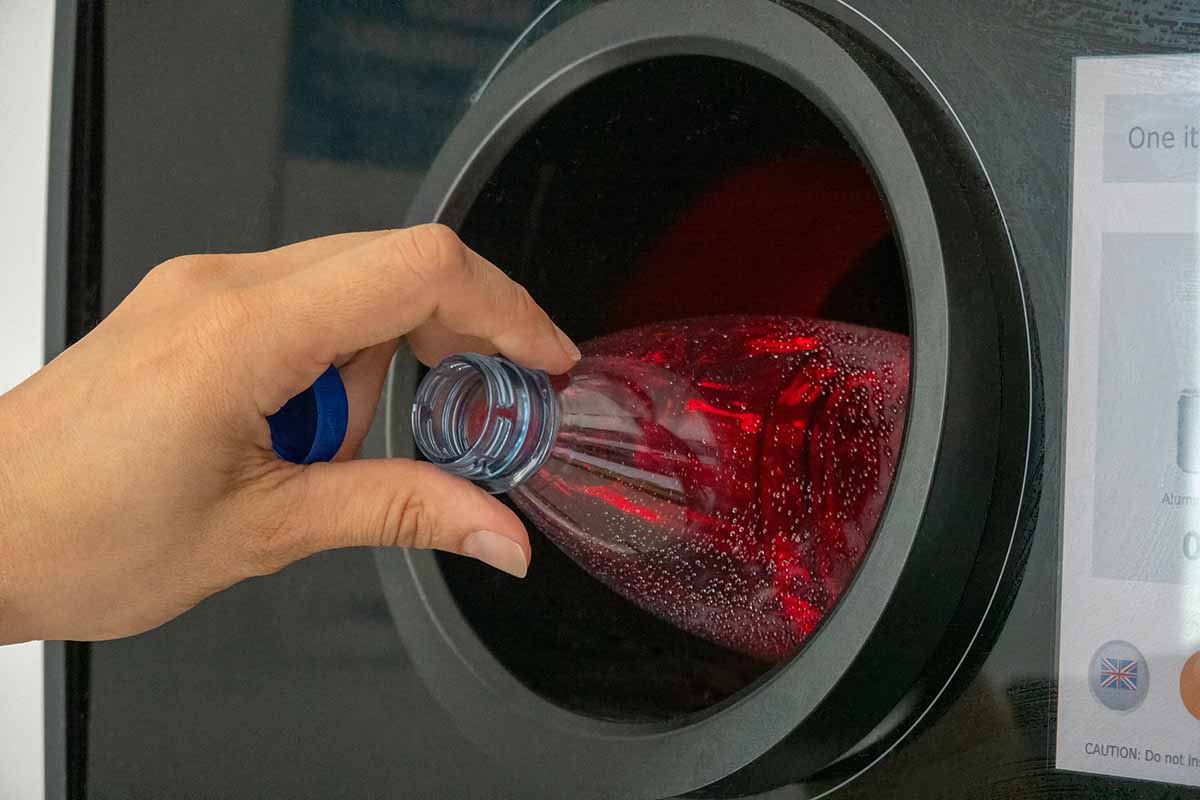
In the draft bill, deposits are set at at least 10 cents for containers under 24 fluid ounces and 15 cents for containers larger than that. | Veja/Shutterstock

West Coast lawmakers plan to introduce a national container deposit bill that one advocate says has a better chance of passing than past proposals because of wide “industry engagement.”

The draft bill, which was developed in large part by advocacy group Texans for Clean Water, would create a standardized bottle deposit system for the country. It would also require minimum recycled content percentages in certain plastic container types.

U.S. Rep. Alan Lowenthal and U.S. Sen. Jeff Merkley, both Democrats, plan to introduce the legislation by mid-March, though supporters are working to get a bipartisan introduction. 

The bill language is still undergoing revision during bipartisan talks and is subject to change, according to Maia Corbitt, president of Texans for Clean Water and former head of the State of Texas Alliance for Recycling. 

“This language has a really good coalition of folks working on it – major environmental groups, like Greenpeace and the National Stewardship Action Council, the U.S. Public Interest Research Group – and more industry engagement than ever before,” she said. 

While the draft bill language was originally taken from the Break Free from Plastic Pollution Act, it has been changed to be more moderate and “very different,” Corbitt said, due to input from stakeholders nationwide as well as bipartisan collaboration. 

“It’s good news,” she said. “The big takeaway is that it’s now becoming probable and not just possible and that’s pretty good.” 

If passed, the bill would take effect Feb. 1, 2023, but Corbitt said that’s subject to negotiation, and there are other target dates for different provisions of the bill. 

Texans for Clean Water pushed for legislation in Texas last year that aimed to develop a deposit-like system for a range of plastic products in the Lone Star State.

National beverage container program 

The bill would cover beer, wine, liquor, carbonated soft drinks, coffee drinks, dairy products derived from animal milk, milk alternatives, energy and sports drinks, fruit juices, kombucha, tea and different types of water, such as flavored, mineral, soda and tonic waters. It would not include medications, infant formula or meal replacement liquids.

The bill also does not count using containers as fuel, energy production, building materials or landfill cover as “recycling,” nor any form of chemical recycling. Chemical recycling refers to processes that use heat, pressure and/or solvents to break down the molecular chains of plastic, creating chemicals that can be used to produce fuels, waxes or new plastics.

Corbitt said the chemical recycling language is a current sticking point in negotiations, as “there are certainly those who don’t want a blanket moratorium put in a bill before the technology has been borne out.” 

Containers collected through deposit systems are typically recycled mechanically, but with the expanded product list comes some items that may be sold in harder-to-recycle pouches or laminates, Corbitt said. 

Deposits are set at at least 10 cents for containers under 24 fluid ounces and 15 cents for containers larger than that. 

“The recycling preclusions for chemical recycling I think will be something that will continue to be negotiated, along with that product list,” Corbitt said, but she added that this is “closer than we’ve ever been.”  

Minimum-recycled-content targets

Corbitt said research from a variety of sources has shown that bottle bills work to both substantially reduce litter and increase recycling rates in the jurisdictions in which they are implemented. Strategies to bring more recycled material into the manufacturing pipeline are growing in importance as more brands set recycled-content targets.“We’re looking at really needing to jump-start that capture and essentially bottle bills are the only things at this point proven to do that,” she said. 

To recycle the container, consumers should not be required to remove anything, such as a cap, label or filter, the proposed legislation reads. 

The bill also sets out minimum post-consumer resin (PCR) requirements for new plastic beverage containers, specifying that the PCR supplies must be in the U.S. The minimum starts at 25% by 2025, then 50% by 2030, 70% by 2035 and 80% by 2040.

For refillable or reusable containers, the bill calls for a study to determine technical and safe minimum post-consumer requirements for glass, metal or other beverage containers, as well as minimum reuse and refill requirements. 

Corbitt said refillable containers are one of the larger sticking points that different parties are still negotiating. While environmental groups are pushing for this section to be included, Corbitt acknowledged that developing required infrastructure for refills would “be a heavy lift” for producers. 

Learn more in person

The upcoming Plastics Recycling Conference outside Washington, D.C. is set to include a two-part “Policy Perspectives” session on Monday, March 7. It will feature a number of leading voices who will break down lawmakers’ recycling focus at the state and national level, and what it all means for plastics processors and others. See complete details on the conference site and register today.

Producer responsibility 

Under the bill, responsible parties would have to provide for the cleanup of beverage containers that become litter and use unredeemed deposits to invest in collection, recycling and reuse infrastructure in the state or region.

The bill calls for the creation of producer responsibility organizations (PROs) to carry out producers’ responsibilities. The organizations would be required to provide outreach and education to consumers on proper end-of-life management of containers, inform consumers of collection locations, and offer recycling instructions in multiple languages.

The PROs would also be required to provide 100% reimbursement to the entity managing the containers, including administrative costs, sorting and reprocessing, and to pay the entity that collects curbside recycling the value of the applicable refund value.

Allowing MRFs to recoup the redemption value of what goes through their facilities is an important part of the bill, Corbitt said.

An annual report is also required from the organizations with data on volumes, recycling rates, final destinations of containers, contamination levels and collection services.

Designing for the environment and labeling

The bill also includes a provision requiring containers to be designed to minimize environmental and health impacts and to have clear, honest labels about the container’s recyclability.

Two years after enactment, the bill would also bring into a play a standardized label for each category of container.

Corbitt said as more individual states eye bottle bills, a federal harmonization of the system is attractive to the industry.

Texans for Clean Water is working closely with Rep. Lowenthal of California and Sen. Merkley of Oregon. Bill backers are in the process of getting Republican support from federal lawmakers in several other states, Corbitt said.

A version of this story appeared in Resource Recycling on February 8.

Shred-Tech

Tags: Container DepositsEPRLegislation & Enforcement
TweetShare
Marissa Heffernan

Marissa Heffernan

Marissa Heffernan worked at Resource Recycling from January 2022 through June 2025, first as staff reporter and then as associate editor. Marissa Heffernan started working for Resource Recycling in January 2022 after spending several years as a reporter at a daily newspaper in Southwest Washington. After developing a special focus on recycling policy, they were also the editor of the monthly newsletter Policy Now.

Related Posts

SB 54 plan for cartons, film draws warning

byStefanie Valentic
September 15, 2026

The new law's cartons and film targets could add 100,000 tons of plastic contamination to California's paper exports annually, a...

Spin-off lets Linca focus on battery mineral recovery

Critical mineral policy shift creates opportunity

byPaul Lane
September 14, 2026

Government leaders are calling for minerals to stay onshore, but industry leaders say more public investment would maximize the ability...

California Governor Gavin Newsom speaking at podium.

What’s on Newsom’s desk after the CA session end

byStefanie Valentic
September 14, 2026

With the California legislature adjourned, packaging, food-waste and EPR advocates are watching a single date, Sept. 30, to see which...

New Jersey pushes back PCR mandate to 2030

New Jersey pushes back PCR mandate to 2030

byAntoinette Smith
September 10, 2026

One of the highest-profile US laws affecting recyclers has been amended only four months before implementation, with the state citing...

Leadership at a pivotal moment

Leadership at a pivotal moment

byBrian Clark Howard
September 10, 2026

CalRecycle Director Zoe Heller is heading up an agency tasked with ambitious recycling and sustainability goals. Can she pull it...

Report shows $5B in materials saved from landfills

Reinvigorating reuse

byPaul Lane
September 10, 2026

Legislation may help spark renewed interest in reusing consumer items.

Load More
Next Post
Eastman unveils plans for $1B polyester depolymerization plant

Evergreen acquires two more PET recycling plants

2026 Buyers’ Guide

Equipment, services and technology suppliers serving the recycling industry.

Browse the Guide

More Posts

New Jersey pushes back PCR mandate to 2030

New Jersey pushes back PCR mandate to 2030

September 10, 2026
Northeast commodity values for Q2 reach 2-year high

Will a MRF shortage limit EPR growth?

September 10, 2026
Lawsuits hover days after SB 54 approval

Preparing for SB 54 design compliance

September 8, 2026
California Governor Gavin Newsom speaking at podium.

What’s on Newsom’s desk after the CA session end

September 14, 2026
Battery fire risk isn’t going away. Insurance is responding

Vape ban awaits California governor’s signature

September 10, 2026
Hawaii's state capitol building.

Funding lapse leaves Hawaii e-scrap collectors seeking answers

September 10, 2026
CommanderAI launches searchable hauler database

Inside the Circle: Put AI to work for the people who do the work

September 14, 2026
Alpek closing Pennsylvania RPET plant

Alpek seizing on war-related opportunity 

July 27, 2026
Sims: Parts reuse helped offset 2020 cloud challenges

ITAD providers should choose their data-center niche

September 8, 2026
Bale pricing mostly flat for September

Bale pricing mostly flat for September

September 9, 2026
Load More

About & Publications

About Us

Staff

Archive

Magazines

Work With Us

Advertise
Jobs
Contact
Terms and Privacy

Newsletters

Get the latest recycling news and analysis delivered to your inbox every week. Stay ahead on industry trends, policy updates, and insights from programs, processors, and innovators.

Subscribe

Welcome Back!

Login to your account below

Forgotten Password?

Retrieve your password

Please enter your username or email address to reset your password.

Log In

Add New Playlist

No Result
View All Result
  • The Latest
  • Analysis
  • Recycling
  • E-Scrap
  • Plastics
  • Policy Now
  • Conferences
    • E-Scrap Conference
    • Plastics Recycling Conference
    • Resource Recycling Conference
    • Textiles Recovery Summit
  • Magazines
  • About Us
  • Advertise
  • Archive
  • Jobs
  • Staff
Subscribe
This website uses cookies. By continuing to use this website you are giving consent to cookies being used. Visit our Privacy and Cookie Policy.