Resource Recycling
  • The Latest
  • Analysis
    • All
    • Certification Scorecard
    • Industry Announcements
    • Opinion
    Intel sign outside of company building.

    What Intel’s blockbuster quarter means for ITAD

    Feds to develop repairable computer donation program

    The whitebox blind spot in PC recycling

    Analysis: circular design still elusive in laptops

    PC shipments grew in Q1, but questions remain

    The independent ITAD at a crossroads

    The independent ITAD at a crossroads

    Certification Scorecard — Week of April 20, 2026

    Apple Watch on product box.

    Wearables are coming and ITAD isn’t ready

    Certification Scorecard — Week of April 13, 2026

    EV Battery Pack - Sergii Chernov-Shutterstock

    Redwood, Rivian deal fuels US infrastructure plans

    Bloom ESG and e-Stewards roll out critical metals metric

  • Conferences
  • Publications

    Other Topics

    Textiles
    Organics
    Packaging
    Glass
    Brand Owners

    Metals
    Technology
    Research
    Markets
    Grant Watch

    All Topics

Subscribe
No Result
View All Result
Resource Recycling
  • The Latest
  • Analysis
    • All
    • Certification Scorecard
    • Industry Announcements
    • Opinion
    Intel sign outside of company building.

    What Intel’s blockbuster quarter means for ITAD

    Feds to develop repairable computer donation program

    The whitebox blind spot in PC recycling

    Analysis: circular design still elusive in laptops

    PC shipments grew in Q1, but questions remain

    The independent ITAD at a crossroads

    The independent ITAD at a crossroads

    Certification Scorecard — Week of April 20, 2026

    Apple Watch on product box.

    Wearables are coming and ITAD isn’t ready

    Certification Scorecard — Week of April 13, 2026

    EV Battery Pack - Sergii Chernov-Shutterstock

    Redwood, Rivian deal fuels US infrastructure plans

    Bloom ESG and e-Stewards roll out critical metals metric

  • Conferences
  • Publications

    Other Topics

    Textiles
    Organics
    Packaging
    Glass
    Brand Owners

    Metals
    Technology
    Research
    Markets
    Grant Watch

    All Topics

Subscribe
No Result
View All Result
Resource Recycling
No Result
View All Result
Home Plastics

KW Plastics adds dedicated polypropylene wash line

Colin StaubbyColin Staub
December 1, 2021
in Plastics
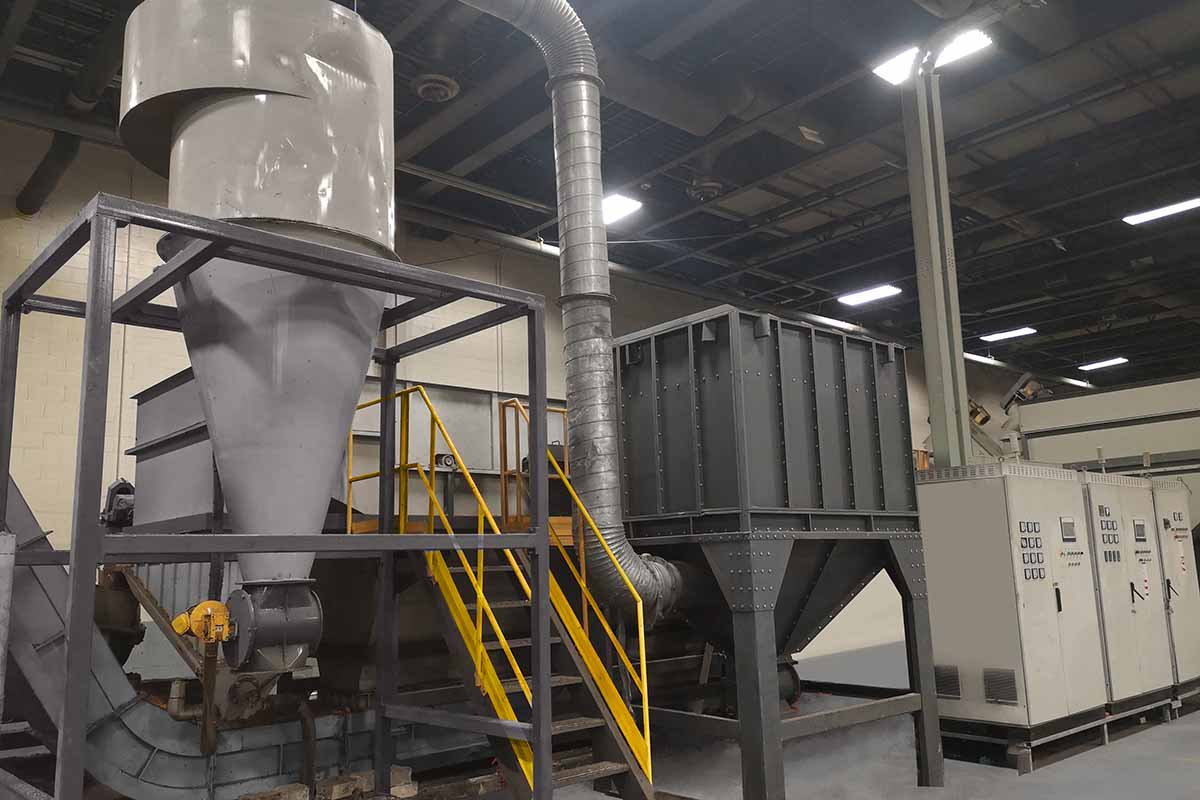
Owl Electronic Recycling's wash line.
KW’s new PP wash line has a full capacity of 100 million pounds per year. | Credit: Scott Saunders
KW Plastics in the past month started up a polypropylene wash line that will increase its processing capacity by 100 million pounds per year. Company General Manager Scott Saunders said the line will boost efficiency.

Troy, Ala.-based KW installed its last wash line in 2013, and the company has since been running both PP tubs and lids as well as HDPE bulky rigids on that line. That meant the company had to split time on the line based on the resin it was processing.

KW has increased the amount of PP tubs and lids it processes substantially since the 2013 line launched, and more recently bulky rigid HDPE has “grown dramatically,” Saunders said in an interview.

“We saw a big increase in demand there, which utilized a lot of our capacity for that material,” he explained.

The bulky rigids demand increase began around late 2019, when new commitments from consumer product companies came on-line, he added. The growth in both material streams led KW to commission a separate PP wash line to increase efficiency and add capacity.

“It’s a big benefit for us when you don’t have to do product changes,” Saunders said.

The PP wash line began construction 14 months ago and was scheduled to be finished this past June, but there were a number of delays related to the pandemic. The wash line started up at the beginning of November.

Dedicated line part of $25 million investment

The line has a full capacity of 100 million pounds per year, and last week it was running at 60% capacity. Saunders anticipated it could reach full capacity by the end of November.

The PP line joins the company’s dedicated wash lines for natural HDPE and mixed-color HDPE, as well as KW’s now-dedicated bulky rigids HDPE line.

“Now we have a big line to run each of our main commodity grades,” Saunders said. Additionally, KW has a smaller line designed to run regrind, he said.

“There are some states that have said PP is not recyclable, but you’ve got ready, willing and able buyers that have paid up to $700 a ton or more for that commodity for the last almost year. How can you say it’s not recyclable?”

With the wash line and other facility expansion projects, KW has invested about $25 million over the past 18 months, Saunders said. And the company anticipates doing a similar investment in the coming 18 months.

“We’re firm believers in the long-term growth of this industry,” Saunders said.

Most of the wash line was designed and constructed in-house, bringing in a handful of external components such as spin dryers and granulators. The company values its ability to build and maintain the equipment, because it allows for adjustment to respond to changes in the inbound stream, Saunders said.

KW buys material from throughout the continental U.S., Canada and Mexico, and there can be variance in the products that come through its doors.

“You really don’t know how the raw material is going to change,” Saunders said.

Reflecting on the state of PP recovery

A number of recent regulatory and legislative moves have spurred discussions of the PP recycling sector, particularly challenges in building up collection and processing of the resin.

It’s collected and reclaimed at a lower rate than PET and HDPE – the U.S. EPA estimates a 2.7% PP recovery rate in 2018, compared with 14.8% for HDPE and 25.4% for PET – but there are industry pushes to improve collection. The Polypropylene Recycling Coalition is issuing grants to MRFs to increase sortation of PP and provide more material for reclaimers, for example.

At the same time, PP has been impacted by efforts to reduce contamination in the recycling stream and pare back the list of collected materials in local programs.

A recent labeling law in California will likely exclude PP from the list of “recyclable” materials due to its current collection rate. A group of recycling stakeholders earlier this year similarly advised California’s recycling regulatory agency to adopt a definition that would exclude PP. And in early 2020, PP was downgraded from “widely recyclable” to “check locally” in the How2Recycle labeling initiative, a reflection of questions over collection access as well as how much collected PP was truly moving to reclaimers.

As North America’s largest PP reclaimer, KW has a vantage point into the current state of the sector. And despite the challenges, the company sees positive signs in current and future PP recovery.

“There are some states that have said PP is not recyclable, but you’ve got ready, willing and able buyers that have paid up to $700 a ton or more for that commodity for the last almost year,” Saunders said. “How can you say it’s not recyclable?”

He agreed PP does not have the market penetration of resins such as PET and HDPE, but he pointed to their decades-long duration in the curbside stream. PP, on the other hand, has only been recycled significantly for less than 10 years.

Saunders suggested the plastics recycling industry needs to come up with a definition that would enable innovation and growth of new materials in the recycling stream, rather than judging new additions by the same criteria as longtime recyclables.

“The industry and the public has become so concerned with greenwashing that we could be hurting our own efforts,” he noted.

 

Starlinger

Tags: PPProcessors
TweetShare
Colin Staub

Colin Staub

Colin Staub was a reporter and associate editor at Resource Recycling until August 2025.

Related Posts

Growth challenges drive M&A for packaging

Growth challenges drive M&A for packaging

byAntoinette Smith
April 20, 2026

Vertical integration can be one option for supply security or guaranteed demand, but comes with caveats, McKinsey consultants say.

WM rolling out curbside acceptance of PP cups 

APR releases first semiannual Design Guide update

byBrian Clark Howard
April 3, 2026

The Association of Plastic Recyclers (APR) has published the first semiannual APR Design Guide for Plastics Recyclability. Now in its...

Policy update: EPR, right to repair and more

TERRA expands certified e-scrap network to Ecuador

byScott Snowden
April 1, 2026

TERRA has added Vertmonde in Quito to its certified electronics recycling network, giving the organization a first member in Ecuador...

Belgian and Flemish flags fly against a backdrop of an ocean beach

PureCycle receives €40m EU grant for new plant

byAntoinette Smith
March 26, 2026

The €250 million PP recycling plant in Belgium is scheduled for mechanical completion toward the end of 2028, with ramp-up...

Greenway now takes e-scrap from Midwest businesses

Greenway now takes e-scrap from Midwest businesses

byScott Snowden
March 11, 2026

Chicago-based Greenway Metal Recycling ties the move to rising volumes of retired electronics and increasing compliance demands.

PureCycle sees easing headwinds to R-PP adoption

PureCycle sees easing headwinds to R-PP adoption

byAntoinette Smith
March 3, 2026

CEO Dustin Olson thinks the worst years of "high headwinds" are mostly behind the industry and that demand from legislation...

Load More
Next Post

News from Back Market, Sortera Alloys and more

More Posts

Birch Plastics gets FDA green-light for post-industrial PP

LyondellBasell upgrade to PreZero assets on hold

April 23, 2026
The independent ITAD at a crossroads

The independent ITAD at a crossroads

April 22, 2026
Towfiqu ahamed barbhuiya

Before the Bin: Breaking down food date labeling

April 20, 2026

Google pilots reuse kits to extend device life

April 21, 2026
EPR fees are a market signal. Here’s what they’re telling you.

Oregon DEQ flags 250 producers for RMA noncompliance

April 21, 2026
Industry group: Help us find the plastic bale volumes we need

PET bales sink further as other grades firm 

April 15, 2026

What Netflix’s ‘Plastic Detox’ gets wrong – and right

April 23, 2026
What is EPR and why it matters

What is EPR and why it matters

April 22, 2026

NERC launches hub to promote PCR demand 

April 15, 2026
Growth challenges drive M&A for packaging

Growth challenges drive M&A for packaging

April 20, 2026
Load More

About & Publications

About Us

Staff

Archive

Magazine

Work With Us

Advertise
Jobs
Contact
Terms and Privacy

Newsletter

Get the latest recycling news and analysis delivered to your inbox every week. Stay ahead on industry trends, policy updates, and insights from programs, processors, and innovators.

Subscribe

Welcome Back!

Login to your account below

Forgotten Password?

Retrieve your password

Please enter your username or email address to reset your password.

Log In

Add New Playlist

No Result
View All Result
  • The Latest
  • Analysis
  • Recycling
  • E-Scrap
  • Plastics
  • Policy Now
  • Conferences
    • E-Scrap Conference
    • Plastics Recycling Conference
    • Resource Recycling Conference
    • Textiles Recovery Summit
  • Magazine
  • About Us
  • Advertise
  • Archive
  • Jobs
  • Staff
Subscribe
This website uses cookies. By continuing to use this website you are giving consent to cookies being used. Visit our Privacy and Cookie Policy.