




Resource Recycling
  • The Latest
  • Analysis
    • All
    • Certification Scorecard
    • Industry Announcements
    • Opinion
    Aurubis: Thefts involved scrap sample manipulation

    Metals and electronics recyclers report growth

    Plastic packaging

    Why SB 54 source reduction planning is becoming the industry’s most challenging EPR test

    Recycler cites market pressure in short-term closure

    AI, data anxiety push enterprises to destroy working devices: report

    Before the Bin: America’s textile waste problem starts in your closet

    Colorado communities prepare for recycling access project

    How to get the reverse side of supply chains talking with the front-end 

    Aurubis smelter pipe system and chimney.

    Aurubis sends positive signal for metals recovery markets

  • Conferences
    • Resource Recycling Conference
    • Plastics Recycling Conference
    • E-Scrap: The Longevity Conference
    • Textiles Recovery Summit
  • Publications
    • E-Scrap News
    • Plastics Recycling Update
    • Policy Now
    • Resource Recycling
    • Other Topics
      • Brand Owners
      • Critical Minerals
      • Glass
      • Grant Watch
      • Markets
      • Organics
      • Packaging
      • Research
      • Technology
      • Textiles
      • All Topics
Subscribe
No Result
View All Result
Resource Recycling
  • The Latest
  • Analysis
    • All
    • Certification Scorecard
    • Industry Announcements
    • Opinion
    Aurubis: Thefts involved scrap sample manipulation

    Metals and electronics recyclers report growth

    Plastic packaging

    Why SB 54 source reduction planning is becoming the industry’s most challenging EPR test

    Recycler cites market pressure in short-term closure

    AI, data anxiety push enterprises to destroy working devices: report

    Before the Bin: America’s textile waste problem starts in your closet

    Colorado communities prepare for recycling access project

    How to get the reverse side of supply chains talking with the front-end 

    Aurubis smelter pipe system and chimney.

    Aurubis sends positive signal for metals recovery markets

  • Conferences
    • Resource Recycling Conference
    • Plastics Recycling Conference
    • E-Scrap: The Longevity Conference
    • Textiles Recovery Summit
  • Publications
    • E-Scrap News
    • Plastics Recycling Update
    • Policy Now
    • Resource Recycling
    • Other Topics
      • Brand Owners
      • Critical Minerals
      • Glass
      • Grant Watch
      • Markets
      • Organics
      • Packaging
      • Research
      • Technology
      • Textiles
      • All Topics
Subscribe
No Result
View All Result
Resource Recycling
No Result
View All Result
Home Plastics

Quantifying environmental benefits of recycled plastic

byJared Paben
August 22, 2018
in Plastics

Researchers have calculated substantial upsides from making products out of recycled PET, HDPE and PP instead of prime plastics.

For example, using RPET may generate half the greenhouse gas emissions (GHG) of virgin plastic, according to preliminary data released by Franklin Associates. The reductions may be even greater for recycled polyolefins.

Franklin Associates is conducting the research on behalf of the Association of Plastic Recyclers (APR). APR’s president, Steve Alexander, noted that brand owners will be able to reference the data to calculate progress toward their sustainability goals when they use recycled plastic. He called the life cycle inventory research “a critical tool to utilize and market the value of recycled materials.”

“We need this information today more than ever if we want to continue to grow and develop the market for recycled plastics,” he said.

Sneak peek at the numbers

APR on Aug. 21 held a webinar to unveil preliminary results from the research. Initiated about 18 months ago, the project involves updating and expanding on PET and HDPE research Franklin Associates released in 2010. For the 2018 update, Franklin Associates, a division of Eastern Research Group, also looked at recycled PP for the first time.

The research investigated GHG emissions from “cradle to gate,” including collection, transportation, sorting and processing into flake or pellet. Franklin Associates didn’t attempt to study impacts associated with manufacturing finished products because of the wide variety of products made from plastics and their varying environmental impacts.

Bev Sauer, senior project manager and life cycle analyst at Franklin Associates, presented during the webinar. She released preliminary findings, noting they’re still subject to change after Franklin Associates receives additional information from plastics reclaimers.

She estimated that if a food and drink packaging manufacturer ditches virgin plastic in favor of “solid-stated” RPET pellet, it would cut GHG emissions by about half (solid-stated means the plastic has been decontaminated for food contact and its intrinsic viscosity boosted). “And for HDPE and PP, it’s looking like the savings are even greater, in the range of 65 to 70 percent,” Sauer said.

The most important part of the analysis was collecting data from plastics reclaimers, Sauer said. Her company gathered detailed information from seven PET reclaimers, five HDPE reclaimers and three PP reclaimers.

The work found that the majority of greenhouse gases generated within the recycling chain come via the reclaimers. For food-contact PET, nearly 90 percent of their gases were associated with reclaimer operations. For HDPE and PP pellet, 70 to 75 percent were generated by the processing steps. PET was higher because of the additional environmental impacts from the decontamination steps, she said.

Where project goes from here

Sauer said her research team is still gathering follow-up information from reclaimers that could shift the numbers. After finalizing the recycled plastic numbers, the recycled flake and pellet numbers will be compared with those for virgin plastics.

For the 2018 report, Franklin Associates added new categories. The 2010 document covered energy usage, solid waste generation, water consumption, GHG emissions, and other atmospheric and waterborne emissions. The 2018 report will go deeper into how air and water emissions affect acidification, eutrophication (excess nutrients in water that can lead to oxygen depletion), smog and ozone depletion, according to Sauer’s presentation.

After completion, the data will be uploaded to the U.S. Department of Energy’s Life Cycle Inventory Database, she said. It will be presented on the “unit process level” so that anyone can adapt the numbers to their particular circumstances to generate more accurate results, she said.

For example, Franklin Associates developed weighted average data sets for each resin based on the amount of material collected at the curb, drop-offs or through container deposit redemption systems. But if a reclaimer that uses only curbside-collected feedstock wanted a number more specific to the company, it could use information from the project to make that assessment.

Sauer also noted her firm is conducting an update to a study of environmental impacts of virgin plastic on behalf of the American Chemistry Council (ACC). That report is expected to be completed near the end of the year.

Kara Pochiro, APR’s communications director, said APR members will get an early look at the recycled PET, HDPE and PP report before it’s released to the public this fall. The data will also be available at the group’s Oct. 9-11 meeting in St. Petersburg, Fla.

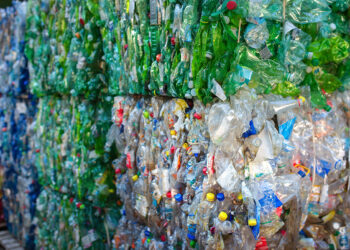
Photo credit: B Brown/Shutterstock

 

Erema

Tags: HDPEIndustry GroupsPETPP
TweetShare
Jared Paben

Jared Paben

Related Posts

Niagara acquires rPlanet Earth assets in California

Niagara acquires rPlanet Earth assets in California

byAntoinette Smith
May 15, 2026

Adding the Southern California facility to its operations, Niagara is expanding its beverage manufacturing operations and pursuing vertical integration.

NJ e-scrap legislation

NJ qualifies PureCycle PP for minimum PCR law

byAntoinette Smith
May 14, 2026

The one-year conditional approval allows resin processed via the company's dissolution method to count toward the state's minimum recycled content...

Industry descends on DC to fight for PET

Industry descends on DC to fight for PET

byAntoinette Smith
May 13, 2026

Amid numerous recent hits to the common packaging plastic, a stakeholder coalition is engaging with policy makers to encourage policy...

Extruder pushes out natural HDPE pellets at KW Plastics in Troy, Alabama.

Rare look inside the world’s largest plastics recycler

byBrian Clark Howard
May 13, 2026

KW Plastics in Troy, Alabama is a leading recycler of PP and HDPE—here’s a glimpse behind the gates.

SWANA hires new executive director

APR, RecyClass wrap up third year of collaboration

byAntoinette Smith
May 12, 2026

The North American and EU organizations are working together to harmonize global recyclability standards.

PP bales rise, paper grades edge higher

byRecyclingMarkets.net Staff
May 11, 2026

The national average price of post-consumer PET beverage bottles and jars rose marginally in May, now averaging 2.24 cents per...

Load More
Next Post
Packaging exec wins GOP nomination

Packaging exec wins GOP nomination

More Posts

Bottle bill backers see opportunity for action

PET collapse exposes gaps in US recycling infrastructure

May 15, 2026
Niagara acquires rPlanet Earth assets in California

Niagara acquires rPlanet Earth assets in California

May 15, 2026
Extruder pushes out natural HDPE pellets at KW Plastics in Troy, Alabama.

Rare look inside the world’s largest plastics recycler

May 13, 2026
NJ e-scrap legislation

NJ qualifies PureCycle PP for minimum PCR law

May 14, 2026

American Battery Technology confirms second site

May 13, 2026
Back-to-school 2026/27: Apple vs. Google

Back-to-school 2026/27: Apple vs. Google

May 13, 2026
Retail aisle with paper and plastic packaging.

Loblaw’s recyclability push could reshape packaging design across North America

May 14, 2026
Surveys examine gaps in consumer recycling education

Study finds lack of proper battery disposal

May 13, 2026
Plastic packaging

Why SB 54 source reduction planning is becoming the industry’s most challenging EPR test

May 19, 2026
APR, industry groups testify on overcapacity

APR, industry groups testify on overcapacity

May 8, 2026
Load More

About & Publications

About Us

Staff

Archive

Magazine

Work With Us

Advertise
Jobs
Contact
Terms and Privacy

Newsletter

Get the latest recycling news and analysis delivered to your inbox every week. Stay ahead on industry trends, policy updates, and insights from programs, processors, and innovators.

Subscribe

Welcome Back!

Login to your account below

Forgotten Password?

Retrieve your password

Please enter your username or email address to reset your password.

Log In

Add New Playlist

No Result
View All Result
  • The Latest
  • Analysis
  • Recycling
  • E-Scrap
  • Plastics
  • Policy Now
  • Conferences
    • E-Scrap Conference
    • Plastics Recycling Conference
    • Resource Recycling Conference
    • Textiles Recovery Summit
  • Magazine
  • About Us
  • Advertise
  • Archive
  • Jobs
  • Staff
Subscribe
This website uses cookies. By continuing to use this website you are giving consent to cookies being used. Visit our Privacy and Cookie Policy.