










EU auditors are warning that Europe is unlikely to secure enough critical raw materials by 2030, because import diversification is stalling, domestic mining is slow and costly, and recycling of key materials like rare earths is still negligible.
In a new report they point to a global scramble for the metals that sit inside electronics, batteries, motors and data centers, pushing ITAD and e-scrap operators closer to the center of industrial strategy.
The report explores the bloc’s Critical Raw Materials Act, and in it the European Court of Auditors concludes that EU efforts to diversify away from a handful of supplier countries “have yet to produce tangible results.”
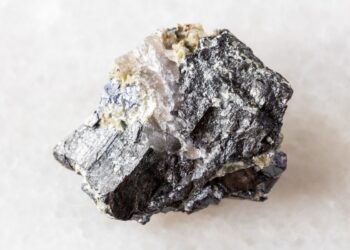
Twenty-six materials are identified as essential for batteries, wind turbines and solar panels, yet the EU is highly or even solely dependent on non-EU suppliers for most of them, with China dominant in refining and rare earths.
The Act sets non-binding 2030 benchmarks, at least 10% of annual strategic raw material consumption from EU extraction, 40% from EU processing and 25% from recycling, plus a cap that no more than 65% of any strategic raw material should come from a single third country, but auditors say there is “a long way to go” on every front.
Recycling is the area where the gap between ambition and reality is most glaring
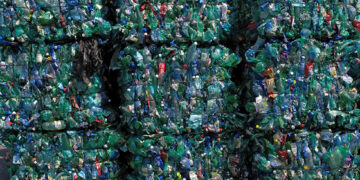
Recycling is the area where the gap between ambition and reality is most glaring. Among the 26 materials needed for the energy transition, seven have recycling rates between just 1% and 5%, and 10 are not recycled at all in practice. Most EU recycling targets are not specific to individual elements, which means they do little to encourage recovery of “hard” materials such as rare earths in electric drives or palladium in electronics.
European recyclers are further constrained by high processing costs, small and scattered volumes, and technological and regulatory hurdles that undercut their competitiveness.
Expanding mining and processing can take decades
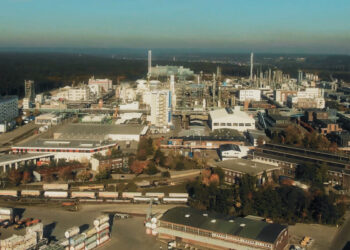
On the mining and processing side, the timeline is even more problematic. The EU wants domestic extraction of strategic raw materials to cover 10% of its needs by 2030 and domestic processing to cover 40%, but new mines can take up to 15-20 years to become operational once permitting and local opposition are factored in. High energy costs have already forced some European metals and processing plants to close, undermining the bloc’s effort to build up refining capacity just as demand soars.
For stakeholders in the ITAD and e-scrap sectors, this development has several clear implications. It confirms that secondary materials are becoming strategically important, not just environmentally desirable. If Europe cannot count on mines or refineries coming online fast enough, the stock of metals locked up in existing products—from smartphones and servers to EV batteries and industrial drives—becomes one of the few levers policymakers can pull within this decade.
How regulation may evolve globally
The report also hints at how regulation may evolve. Because today’s EU recycling targets are mostly generic, auditors argue they fail to drive recovery of specific high-risk materials. Over time, that critique is likely to push Brussels toward more material-specific rules on collection, treatment and recycled content.
For ITAD and recycling companies, that means closer scrutiny of where particular fractions go and how much cobalt, nickel, copper, neodymium or palladium is actually recovered from devices and infrastructure.
In addition, the EU’s difficulties signal that supply pressure will not be purely European. As long as Europe remains “dangerously dependent” on a handful of countries for critical inputs, it will be competing in the same global markets as other industrial powers whenever there is a price spike, export restriction or diplomatic dispute.
That competition increases the importance of every ton of secondary metal recovered and strengthens the case for tighter control over scrap exports and more on-shore or “friend-shored” processing of high-value fractions.
Finally, the auditors’ conclusion that new mines and refineries cannot be built at the speed the energy transition requires pushes more of the burden onto the “urban mine,” the growing reservoir of metals in existing products and infrastructure.
For the ITAD and e-scrap sector, that positions experienced recyclers and ITAD providers, especially those who can trace flows and meet strict environmental standards, as indispensable partners in keeping clean energy and digital infrastructure plans on track.