













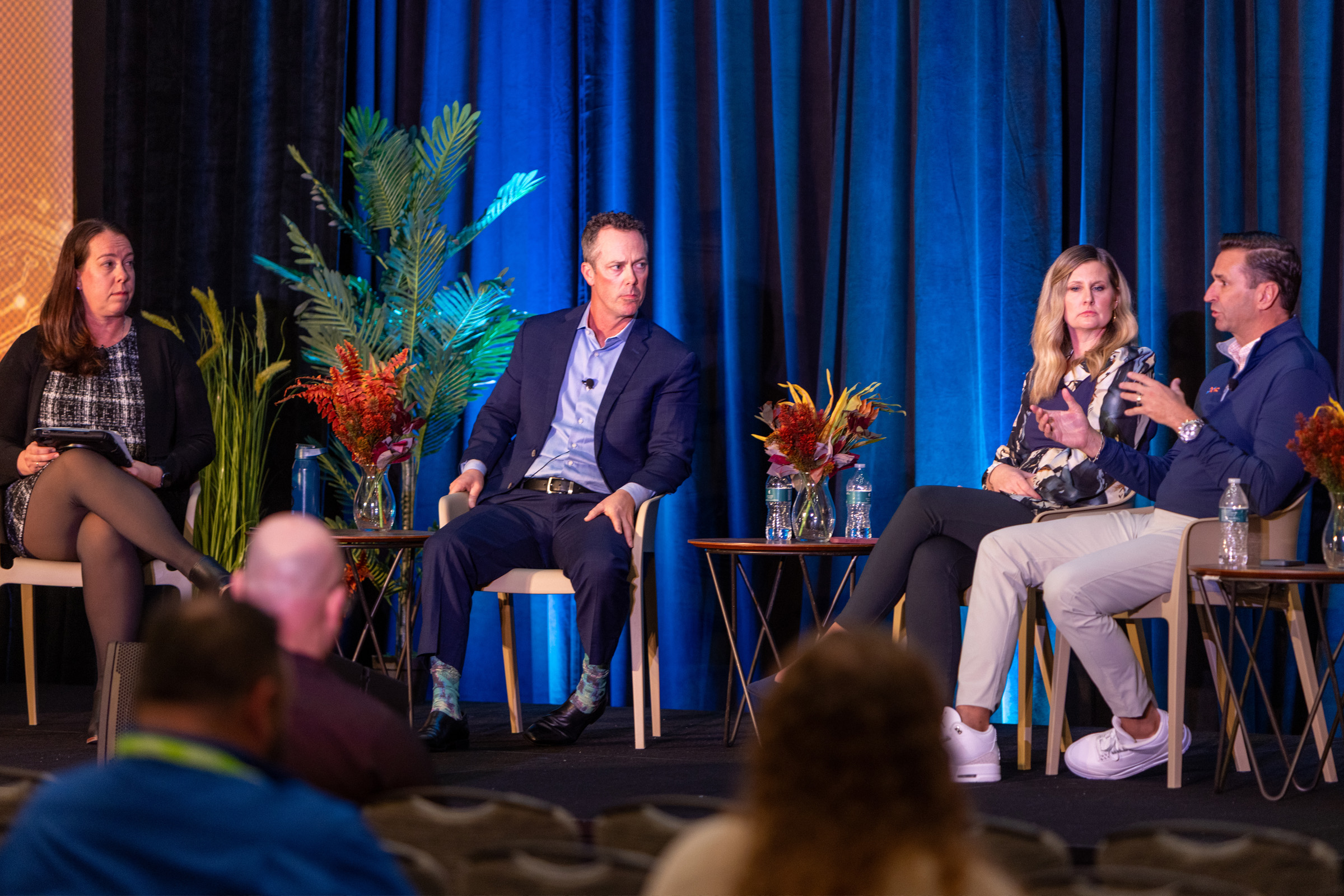
Executives across the electronics recycling and ITAD sector said shifting device design, battery risk, regulatory pressure and rapid data center growth are reshaping how materials are handled and where costs are landing.
The discussion took place during a state of the industry panel at the E-Scrap Conference in Grapevine, Texas. Panelists from ERI, Dynamic Lifecycle Innovations and CXtec described how multiple forces are converging on operations at once, often faster than infrastructure and policy can adjust.
Aaron Blum, chief operating and compliance officer at ERI, said the pace of device change has pushed recyclers to rethink how material enters their facilities and how risks are identified early. He described investments in artificial intelligence and robotics to catalog incoming electronics, automate sorting and reduce manual handling.
Blum said ERI has built an internal product catalog covering about 40,000 devices, allowing systems to recognize products, document components and determine whether each item should be directed toward testing and resale or toward dismantling and shredding. When unfamiliar devices appear, staff dismantle and document them so the information can be added to the system for future processing.
Battery safety dominated the discussion, with panelists saying the risk profile of recycling operations has shifted as lithium-ion batteries appear in smaller and less obvious products. Blum said ERI trains employees to set aside items when battery presence is uncertain and relies on manual dismantling in those cases. He said the company has installed fire detection and suppression systems in high-risk areas and trained in-house response teams to address thermal events.
Amanda Tischer-Buros, vice president of OEM Solutions at Dynamic Lifecycle Innovations, said battery management has forced recyclers to prioritize safety over speed, even when it raises labor costs and adds touches in the process.
Tischer-Buros said Dynamic uses what she described as a “triage based on risk, not even chemistry” to manage compromised cells before they reach shredders or transport. She said the approach can slow throughput but aims to reduce the likelihood of fires across processing and logistics.
Todd Zegers, CEO of CXtec, said his company faces different versions of the same challenge as equipment from hyperscale and corporate data centers becomes more complex. He said some systems arrive with custom hardware configurations that cannot be easily researched through standard documentation.
Zegers said CXtec relies on experienced staff and quarantine procedures when unfamiliar hardware enters the facility, particularly to confirm whether batteries or data-bearing components are present.
Compliance pressures also featured prominently, including tariffs and Basel Convention controls affecting cross-border material flows. Blum said ERI worked with authorities in South Korea to secure prior informed consent so precious metal-bearing circuit boards could continue to be shipped for refining. He also said tariffs have increased the cost of importing advanced processing equipment into the US.
Tischer-Buros said the tariff environment has shifted repeatedly, making planning difficult and reinforcing the need for recyclers to stay engaged with trade associations that track changes and outline compliance expectations.
Policy changes at the state level drew particular concern, especially in California, where battery embedded products will be added to the state electronics recycling program beginning Jan. 1, 2026.
Blum said the new requirements will force recyclers to weigh individual units and capture data on make and model for smaller items such as electric toothbrushes, even when identifying information is not visible without dismantling. He said uncertainty remains because regulators have not released a covered product list, leaving recyclers and their customers unclear about what will be included at launch.
Panelists also discussed how artificial intelligence is accelerating data center refresh cycles, bringing larger volumes of equipment into the recycling stream in shorter time frames.
Zegers said data center decommissioning increasingly involves removing infrastructure such as structured cabling, flooring and power systems in addition to servers. He also said export restrictions on advanced chips could limit reuse options outside the US, tightening downstream markets for high-value components.
Tischer-Buros said the scale and speed of AI-driven growth raises questions about whether current infrastructure can keep pace, particularly when combined with safety issues and new logistical demands.
Blum said the industry is also encountering new cooling systems and other designs that will require updated handling practices, while refresh cycles appear to be shrinking and pushing more equipment into the secondary market.
Panelists closed by urging continued collaboration, workforce training and targeted technology investment as the industry adapts to overlapping pressures that show no signs of slowing.