



Resource Recycling
  • The Latest
  • Analysis
    • All
    • Certification Scorecard
    • Industry Announcements
    • Opinion
    Colorado regulators suggest mid-range EPR scenario

    Why collaboration on plastic waste still matters

    Battery processors lay out latest moves

    Battery recycler Ascend Elements files for bankruptcy

    EPR fees are a market signal. Here’s what they’re telling you.

    EPR fees are a market signal. Here’s what they’re telling you.

    Wolframite ore, the primary ore of tungsten from Altai, Russia

    Tungsten scrap export controls draw industry attention

    Certification Scorecard — Week of April 6, 2026

    Closed Loop Partners acquires Sutter Metals, connecting electronics disposition to metals recovery

    Certification Scorecard — Week of March 30, 2026

    Industry announcements for January 2026

    Industry announcements for April 2026

    Certification scorecard – Week of March 23, 2026

  • Conferences
  • Publications

    Other Topics

    Textiles
    Organics
    Packaging
    Glass
    Brand Owners

    Metals
    Technology
    Research
    Markets
    Grant Watch

    All Topics

Subscribe
No Result
View All Result
Resource Recycling
  • The Latest
  • Analysis
    • All
    • Certification Scorecard
    • Industry Announcements
    • Opinion
    Colorado regulators suggest mid-range EPR scenario

    Why collaboration on plastic waste still matters

    Battery processors lay out latest moves

    Battery recycler Ascend Elements files for bankruptcy

    EPR fees are a market signal. Here’s what they’re telling you.

    EPR fees are a market signal. Here’s what they’re telling you.

    Wolframite ore, the primary ore of tungsten from Altai, Russia

    Tungsten scrap export controls draw industry attention

    Certification Scorecard — Week of April 6, 2026

    Closed Loop Partners acquires Sutter Metals, connecting electronics disposition to metals recovery

    Certification Scorecard — Week of March 30, 2026

    Industry announcements for January 2026

    Industry announcements for April 2026

    Certification scorecard – Week of March 23, 2026

  • Conferences
  • Publications

    Other Topics

    Textiles
    Organics
    Packaging
    Glass
    Brand Owners

    Metals
    Technology
    Research
    Markets
    Grant Watch

    All Topics

Subscribe
No Result
View All Result
Resource Recycling
No Result
View All Result
Home E-Scrap

Lawmakers focus on electronics recycling potential

Colin StaubbyColin Staub
July 24, 2025
in E-Scrap
Lawmakers focus on electronics recycling potential

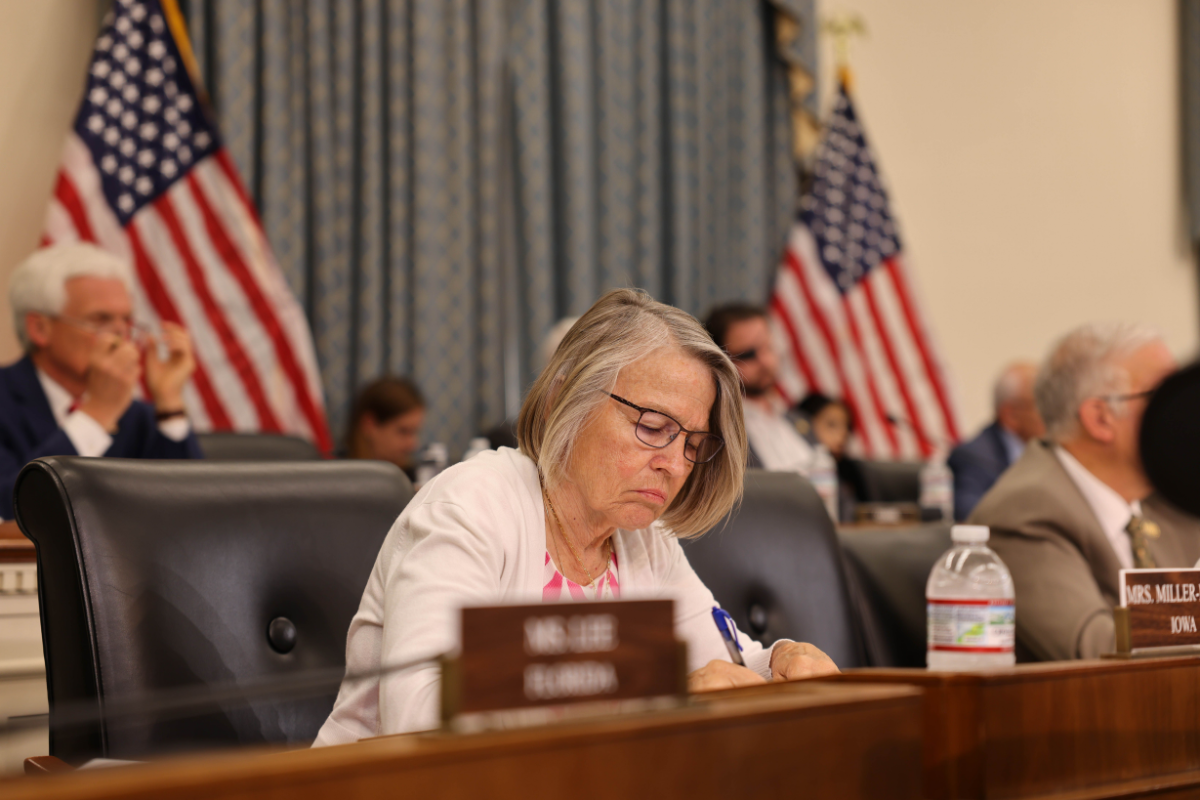
During a Congressional hearing last week, lawmakers expressed enthusiasm for bolstering the U.S. electronics recycling industry as one tool in strengthening the nation’s critical minerals supply lines.

The hearing, titled “Beyond the Blue Bin: Forging a Federal Landscape for Recycling Innovation and Economic Growth,” was held July 16 before the Environment Subcommittee of the House Energy & Commerce Committee. It addressed several segments of the U.S. recycling industry, including electronics processing.

Rep. Gary Palmer, a Republican of Alabama and chairman of the subcommittee, opened the hearing by referencing President Trump’s executive actions calling for securing the country’s critical mineral and rare earth supply chains.

“We must use an ‘all of the above’ approach when it comes to ensuring our ability to access these critical minerals and elements, which is why electronic waste, e-waste, is so important for our future,” Palmer said. “With the growth of data centers and use of technology, e-waste is accumulating at higher rates every year with billions of dollars in losses as this technology reaches its end life. E-waste is a commodity that can be repurposed in our fight to not only be energy independent, but energy dominant.

“Let me be clear, we will not recycle our way out of these issues,” Palmer added. “However, as we look to build out our mining capacities, our processing and refining capacities, e-waste recycling innovation provides vital short- and long-term support for our needs as a nation.”

Emerging smelter-alternative in the spotlight

Rep. Brett Guthrie, a Republican of Kentucky, said in the hearing that the U.S. is “seeing incredible growth in data centers needed to support artificial intelligence infrastructure.”

“But will our waste and recycling laws allow us to manage an expected uptick in electronic waste?” he asked. “And how we can recover valuable materials such as critical minerals from items that are discarded every day?”

Matt Bedingfield, executive vice president of commercial strategy and growth at circuit board refiner Mint Innovation and an expert witness during the hearing, described some of the downstream refining methods available today.

“The conventional solution is pyrometallurgical refining,” Bedingfield told lawmakers. He described these smelters as capital-intensive to construct and requiring several years to build, as well as putting out emissions. There is a dearth of circuit board smelters in the U.S., although Aurubis’s new smelter in Georgia is adding capacity to process boards.

Mint, which is currently developing its first U.S. site in Texas, uses a hydrometallurgical process to recover key metals from e-scrap. Bedingfield noted the company’s facilities cost $30 million and take about a year to build out. The company’s in-progress facility in Longview, Texas, will consume “up to 8,000 tons of printed circuit boards per year, and will recover these metal units to be used domestically in the U.S. supply chain.”

Bedingfield noted the company chose Texas in part because about 15% of U.S. ITAD companies are located in Texas, and that the state is located near a large concentration of data centers. That plant has been sited, Mint is taking possession of the property, and the company has ordered equipment.

“We’re currently out in the market raising capital to ensure that we can build that one and the next one to two after that,” Bedingfield said. He anticipates the facility will be up and running in the first quarter of 2026, with the plant fully operational by the end of that year or early 2027.

Bedingfield also offered support for federal funding to support public education about how and why to recycle electronics, and directing funds to states that can then incentivize local investment in recycling projects to recover critical minerals. He made the case that these investments are more effective than grants to specific company projects.

“As we think about critical minerals security, the United States cannot and should not rely on massive government grants for single projects,” Bedingfield added. “Those can become single points of failure depending on company performance, operations and poor market conditions.”

Federal legislation receives e-scrap industry support

Shortly after the hearing, a bipartisan team of lawmakers introduced the Cultivating Investment in Recycling and Circular Local Economies (CIRCLE) Act. Sponsored by Reps. Brian Fitzpatrick, Republican of Pennsylvania, and Tom Suozzi, Democrat of New York, the legislation would use tax credits to incentivize recycling infrastructure investments, representing a different tack than the grant funding approach the Department of Energy employed under the Biden administration.

The bill creates a “30% investment tax credit — phased out over 10 years — for qualified investments in new or upgraded recycling infrastructure,” the sponsors said in a release. “Municipalities investing directly in waste reduction efforts will receive a direct rebate, ensuring local governments can modernize without passing the burden on to taxpayers.”

Nationwide electronics processor ERI praised the CIRCLE Act in a statement.

“Looking to the future, the only sustainable form of economy is a circular economy, where products are responsibly recycled,” said John Shegerian, chairman and CEO of ERI. “We support and endorse the bipartisan, future-forward, job-creating CIRCLE Act as a productive way to invest in our country. Investing in and incentivizing organizations who are engaging in or empowering circular practices makes perfect sense and we strongly encourage passage of the Act.”
Tags: Legislation & EnforcementPolicy Now
TweetShare
Colin Staub

Colin Staub

Colin Staub was a reporter and associate editor at Resource Recycling until August 2025.

Related Posts

Oregon’s battery EPR bill officially charged for implementation

byStefanie Valentic
April 10, 2026

Oregon Governor Tina Kotek signed HB 4144 into law on April 7, setting into motion the mechanics for an extended...

Bill to update New Jersey e-scrap program heads to governor

New Jersey recyclers talk EPR

byBrian Clark Howard
April 9, 2026

At the Association of New Jersey Recyclers’ spring meeting industry representatives discussed the state and future of the sector.

AF&PA states disappointment over Oregon EPR decision

byStefanie Valentic
April 8, 2026

The American Forest & Paper Association is responding after a federal judge blocked the trade group's bid to intervene in...

MRF equipment firm Machinex wins patent fight with rival

Judge blocks four groups from joining Oregon Recycling Act injunction

byStefanie Valentic
April 7, 2026

A judge has shut the door on four industry groups seeking to join NAW's Oregon EPR injunction and clarified who's...

UBC stakeholders report on recycling progress

Trump’s Section 232 tariff overhaul provides mixed results for recycling industry

byStefanie Valentic
April 7, 2026

A sweeping overhaul of the Section 232 steel and aluminum derivatives tariff program took effect April 6, slashing duty rates...

Oregon’s Recycling Modernization Act faces injunction

Why EPR’s biggest obstacle might not be legislation

byStefanie Valentic
April 6, 2026

A miscommunication around the Oregon injunction has some of the industry operating on bad information, and it's raising bigger questions...

Load More
Next Post
Guilty pleas in surplus equipment disposal scheme

Guilty pleas in surplus equipment disposal scheme

More Posts

Wineries help create model for film recycling

Wineries help create model for film recycling

April 7, 2026
EPR fees are a market signal. Here’s what they’re telling you.

EPR fees are a market signal. Here’s what they’re telling you.

April 10, 2026
With RPET in crisis, focus turns to solutions

With RPET in crisis, focus turns to solutions

April 2, 2026
End markets, policy key to RPET viability

End markets, policy key to RPET viability

April 8, 2026

Trafigura signs $1.1b deal for recycled battery metals

April 8, 2026
Wolframite ore, the primary ore of tungsten from Altai, Russia

Tungsten scrap export controls draw industry attention

April 9, 2026
PCA closing Richmond plant

PCA closing Richmond plant

April 2, 2026

Apparel retailer organization challenges SB 707 textile PRO selection

April 2, 2026
Oregon’s Recycling Modernization Act faces injunction

Why EPR’s biggest obstacle might not be legislation

April 6, 2026
Solarcycle starts up Georgia recycling plant

S3399 signals a shift in how states are tackling solar panel waste

April 6, 2026
Load More

About & Publications

About Us

Staff

Archive

Magazine

Work With Us

Advertise
Jobs
Contact
Terms and Privacy

Newsletter

Get the latest recycling news and analysis delivered to your inbox every week. Stay ahead on industry trends, policy updates, and insights from programs, processors, and innovators.

Subscribe

Welcome Back!

Login to your account below

Forgotten Password?

Retrieve your password

Please enter your username or email address to reset your password.

Log In

Add New Playlist

No Result
View All Result
  • The Latest
  • Analysis
  • Recycling
  • E-Scrap
  • Plastics
  • Policy Now
  • Conferences
    • E-Scrap Conference
    • Plastics Recycling Conference
    • Resource Recycling Conference
    • Textiles Recovery Summit
  • Magazine
  • About Us
  • Advertise
  • Archive
  • Jobs
  • Staff
Subscribe
This website uses cookies. By continuing to use this website you are giving consent to cookies being used. Visit our Privacy and Cookie Policy.