





Resource Recycling
  • The Latest
  • Analysis
    • All
    • Certification Scorecard
    • Industry Announcements
    • Opinion
    SK Tes on track to meet 2030 ITAD goal

    SK tes’ sustainability report offers window into ITAD

    Our top stories from February 2023

    ADS flexes new recycling capacity against resin spikes

    SCS launches chem recycling standard

    Certification scorecard — week of Sept. 28

    NJ’s PCR delay risks making its own excuse permanently true

    NJ’s PCR delay risks making its own excuse permanently true

    E-scrap magnet recycling company scales up

    Why only some rare-earth sources are economically viable

    e-Stewards to develop an ITAD-specific standard

    Certification scorecard — week of Sept. 21

  • Conferences
    • Resource Recycling Conference
    • Plastics Recycling Conference
    • E-Scrap: The Longevity Conference
    • Textiles Recovery Summit
  • Publications
    • E-Scrap News
    • Plastics Recycling Update
    • Policy Now
    • Resource Recycling
    • Other Topics
      • All Topics
      • Brand Owners
      • Critical Minerals
      • Glass
      • Grant Watch / RFPs
      • Markets
      • Organics
      • Packaging
      • Research
      • Technology
      • Textiles
Subscribe
No Result
View All Result
Resource Recycling
  • The Latest
  • Analysis
    • All
    • Certification Scorecard
    • Industry Announcements
    • Opinion
    SK Tes on track to meet 2030 ITAD goal

    SK tes’ sustainability report offers window into ITAD

    Our top stories from February 2023

    ADS flexes new recycling capacity against resin spikes

    SCS launches chem recycling standard

    Certification scorecard — week of Sept. 28

    NJ’s PCR delay risks making its own excuse permanently true

    NJ’s PCR delay risks making its own excuse permanently true

    E-scrap magnet recycling company scales up

    Why only some rare-earth sources are economically viable

    e-Stewards to develop an ITAD-specific standard

    Certification scorecard — week of Sept. 21

  • Conferences
    • Resource Recycling Conference
    • Plastics Recycling Conference
    • E-Scrap: The Longevity Conference
    • Textiles Recovery Summit
  • Publications
    • E-Scrap News
    • Plastics Recycling Update
    • Policy Now
    • Resource Recycling
    • Other Topics
      • All Topics
      • Brand Owners
      • Critical Minerals
      • Glass
      • Grant Watch / RFPs
      • Markets
      • Organics
      • Packaging
      • Research
      • Technology
      • Textiles
Subscribe
No Result
View All Result
Resource Recycling
No Result
View All Result
Home E-Scrap

Partnerships can make or break insurance deals

Marissa HeffernanbyMarissa Heffernan
December 5, 2024
in E-Scrap
Partnerships can make or break insurance deals
While getting insurance for facilities has become much more difficult and costly, working closely with a broker to tell a story of safety can bring down costs, panelists said at the 2024 E-Scrap Conference. | Big Wave Productions/Resource Recycling

Rising insurance costs have been a topic of concern for several years, and while battery-induced fires have caught much of the attention, panelists at the 2024 E-Scrap Conference said there’s more to it – and more options are available to ease the pressure. 

During the session “Navigating Rising Insurance Costs in Recycling Facilities” in Orlando, Florida, in October, speakers touched on the current market, risk factors and how to get the best coverage possible without breaking the bank. 

The panel included Brad Brown, senior director of compliance at evTerra Recycling; Mary Castiglia, executive vice president of HUB International; Michael McBride, property risk control practice leader at HUB International; and Scott Denbo, CEO of Commercial Insurance Associates. It was moderated by Dan Holtmeyer, managing editor of E-Scrap News. 

Market forces at play

For a long time, the insurance market was quite soft, Denbo said. 

“I would make the argument that insurance companies didn’t even keep up with the price of just economic inflation, much less social inflation, for probably a 20-year period,” he said. “And then and as a result of rising natural disasters, catastrophic losses, the market started to firm up in 2018, 2019 – the pandemic probably accelerated it.” 

McBride emphasized that costs relating to natural catastrophes are up significantly. Five years ago, insurance companies were averaging under $70 billion per year in catastrophes, and now it’s up over $100 billion. 

“You might ask, what does it have to do with us?” McBride said. “But once you have that commodity of risk, the capital that it takes to bring that risk management or that risk transfer to you, the price goes up because the losses are going up.”

In the recycling industry specifically, underwriters also started doing class underwriting, Denbo added – so instead of looking at an individual company’s risk, “you guys are getting painted with this really broad brush.” 

Companies such as HUB International can help by working with underwriters to explain specific mitigation steps individual clients are taking and get a price based on that company, not the industry as a whole, McBride said. 

“Our job is to partner together to help navigate these turbulent times to get the best possible solution,” he said. “We can’t create a new environment, but we can get the most out of the environment.” 

Castiglia added that it used to be much easier to get coverage in general, and now underwriters are more selective because “insurance is a little bit of legalized gambling.” 

“It used to be you could always just get insurance from one insurance company, but no, not anymore,” she said. “Now you have to buy insurance for property most of the time from more than one insurance company. It’s called a quota share, so you have maybe three or four or five (companies). I have placements that have 10 or 20, which means it’s a really tough placement.”

Castiglia added that Hub does an overall survey of market conditions in different lines of coverage, and the market is much more stabilized today. Rate hikes of 100% or 200% are no longer common. 

“It was really nasty a couple of years ago,” she said. “But it does seem like the marketplace is behaving and the underwriters are acting in a more logical, reasonable fashion. So you might be seeing some increases, but not like, ‘Oh, my God, I wasn’t expecting my rates to double.'” 

How to make it work 

Close relationships, continuous improvement and the ability to tell – and sell – your story are the best ways to get favorable insurance prices, the panelists agreed. 

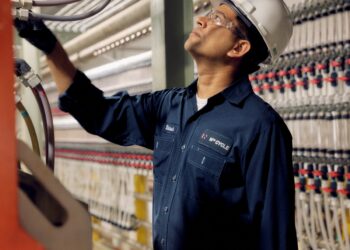
Brown noted that evTerra has made “tremendous investment” in its facilities over the years, from the Bennett AI-based X-ray system to identify battery containing devices to fire suppression and heavy metal exposure protections for workers. The company has also worked closely with Hub International and invited them into the facility to perform safety audits and learn more about the risk mitigation processes in place. 

“We taught them why some of our controls matter and how they’re monitored and how they’re supported,” Brown said. “And a lot of what they were unaware of, some of these controls we have and some of this technology that we have – that makes it easier for them to promote us through their underwriting process, and it’s been a great partnership.” 

The experience taught evTerra how to present itself differently, he added, which has been a benefit. 

McBride emphasized the need to explain new technologies, because insurance carriers will hear “automatic sprinklers” and think about a simple system of sprinkler heads in rafters, not necessarily today’s infrared fire suppression systems. 

“You need to create a different conversation,” McBride said. “You have to take it to the next level. In our case we actually reach out to those vendors that are manufacturing it” and get a technical explanation to show to underwriters. 

Castiglia added that it will help to “wring out the ambiguity, because if there’s ambiguity, that just means the underwriters are going to charge more.” 

“You want to work closely with your brokers and make sure your story gets told,” she said. 

That’s especially true for the e-scrap industry, Denbo said, because many people will think about scrap metal facilities, which are often less regulated and have few controls. 

For example, he often sees scrap metal businesses buy industrial warehouses from 1920, putting $20 million of equipment in, and “yet they aren’t necessarily retrofitting and doing things like putting good sprinkler protection in and thinking about fire protection.”

“It drives me, as an insurance broker, crazy,” he said. And even though it’s less of an issue in the e-scrap industry, “unfortunately you’re kind of getting painted with the same brush because of the commodities that you’re processing.” 

Denbo added that another layer of complexity is that most e-scrap facilities are running slightly differently, meaning many mitigation solutions are bespoke and require extra explanation. He said it’s worth looking at new technologies and talking to an insurance broker about “where the biggest bang for the buck is.” 

Another key, McBride said, is collaboration. As difficult as a relationship with an insurance company can be, he said, “we can’t look at them as the enemy. We have to look at it as a three-way partnership really to get to the best solution possible.”

“What we need to do is work together to find the best solution that’s both as economically palatable as possible and at the same time reduces the risk, which actually benefits the client as well,” he said. And while all that investment might seem overwhelming, it doesn’t need to happen all at once, and “you don’t have to be perfect.” 

Insurance companies want to see a plan for continuous improvement, he added, and they understand the constraint of capital expenses and that those upgrades won’t happen overnight.  

“You just want to make sure that your submission, the story that you’re giving to the insurance company, doesn’t put you on the bottom of the pile,” he said. “It puts you on the top of the pile.”

Tags: BatteriesMarketsProcessors
TweetShare
Marissa Heffernan

Marissa Heffernan

Marissa Heffernan worked at Resource Recycling from January 2022 through June 2025, first as staff reporter and then as associate editor. Marissa Heffernan started working for Resource Recycling in January 2022 after spending several years as a reporter at a daily newspaper in Southwest Washington. After developing a special focus on recycling policy, they were also the editor of the monthly newsletter Policy Now.

Related Posts

Nth Cycle expands critical mineral network

Nth Cycle expands critical mineral network

byPaul Lane
October 2, 2026

$1 billion partnership with Glencore comes on the heels of federal grant to build out processing facility, supply chain.

Domestic e-plastics recovery picks up pace 

Domestic e-plastics recovery picks up pace 

byAntoinette Smith
September 30, 2026

Amid the current push to nearshore supply chains, e-plastics processors see opportunity – if handled correctly.

USFFI signs first film offtake deals

USFFI signs first film offtake deals

byAntoinette Smith
September 29, 2026

The brand-led group has moved more than 3 million pounds of flexible packaging from two California MRFs to reclaimers and...

trash bags

Sorted: Should we use recycled trash bags?

byBrian Clark Howard
September 28, 2026

Manufacturers’ resistance is rooted in performance and cost, but the products may have an important role to play.

Facility fires remain high across US, Canada in August

byPaul Lane
September 23, 2026

Despite high August numbers, the latest Fire Rover report indicated there may be overall progress in slowing the number of...

Bridge Green, Hartree partner on mineral processing deal

Bridge Green, Hartree partner on mineral processing deal

byPaul Lane
September 21, 2026

The agreement will see Bridge Green’s lithium carbonate sold to and marketed by Hartree.

Load More
Next Post
Trashie launches mail-in e-scrap recycling program

Trashie launches mail-in e-scrap recycling program

2026 Buyers’ Guide

Equipment, services and technology suppliers serving the recycling industry.

Browse the Guide

More Posts

Newsom nixes recycled content claims bill

Newsom nixes recycled content claims bill

September 28, 2026
Analysis: Undersupply of PCR is ‘stifling’ brand goals

US lawmakers urge protection of domestic RPET

September 25, 2026
trash bags

Sorted: Should we use recycled trash bags?

September 28, 2026
Recyclers reeling from NJ PCR extension

Recyclers reeling from NJ PCR extension

September 23, 2026
Domestic e-plastics recovery picks up pace 

Domestic e-plastics recovery picks up pace 

September 30, 2026
Oregon state capitol building with state flag and blue sky.

NAW appeals Oregon EPR ruling

September 25, 2026
Diversion Dynamics: Policy needed to reach full charge for vape recycling

Disposable vapes banned in California

September 28, 2026
USFFI signs first film offtake deals

USFFI signs first film offtake deals

September 29, 2026
NJ’s PCR delay risks making its own excuse permanently true

NJ’s PCR delay risks making its own excuse permanently true

September 28, 2026
How to perform chip harvesting

How to perform chip harvesting

October 1, 2026
Load More

About & Publications

About Us

Staff

Archive

Magazines

Work With Us

Advertise
Jobs
Contact
Terms and Privacy

Newsletters

Get the latest recycling news and analysis delivered to your inbox every week. Stay ahead on industry trends, policy updates, and insights from programs, processors, and innovators.

Subscribe

Welcome Back!

Login to your account below

Forgotten Password?

Retrieve your password

Please enter your username or email address to reset your password.

Log In

Add New Playlist

No Result
View All Result
  • The Latest
  • Analysis
  • Recycling
  • E-Scrap
  • Plastics
  • Policy Now
  • Conferences
    • E-Scrap Conference
    • Plastics Recycling Conference
    • Resource Recycling Conference
    • Textiles Recovery Summit
  • Magazines
  • About Us
  • Advertise
  • Archive
  • Jobs
  • Staff
Subscribe
This website uses cookies. By continuing to use this website you are giving consent to cookies being used. Visit our Privacy and Cookie Policy.