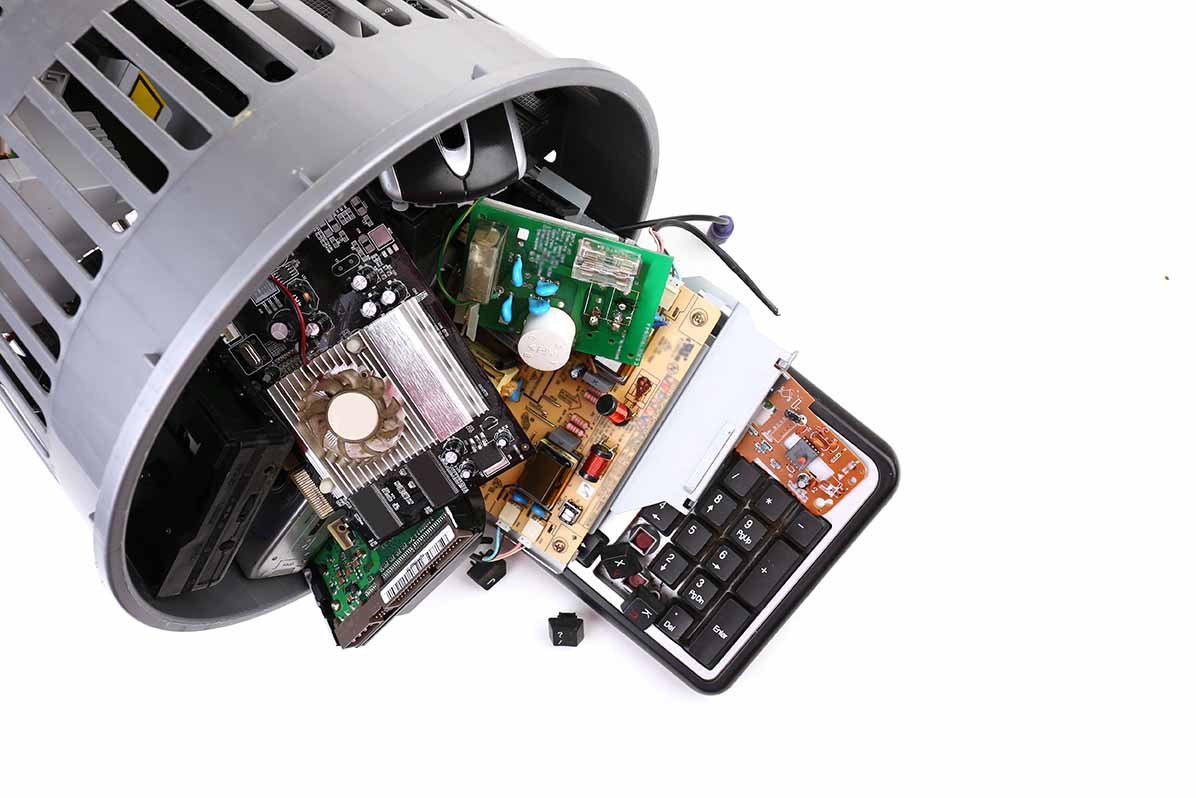
In the future, e-scrap processors in California could receive state money to recycle electric toothbrushes, electronic greeting cards, toys and a host of other items with embedded batteries, state regulators recently suggested.
The California Department of Resources Recycling and Recovery (CalRecycle) recently held a workshop to explore just what the signing into law of Senate Bill 1215 could mean for the country’s oldest regulated e-scrap program. In short, it will entail major changes, even as substantial questions remain to be answered by forthcoming regulation.
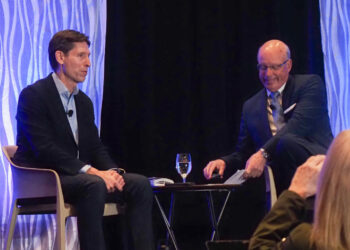
“This is an expansion of our e-waste program, which is over 20 years old and has done a lot for the state of California to collect and appropriately recycle electronic waste for the people of California,” said Rachel Machi Wagoner, director of CalRecycle, discussing how she was involved with crafting the original e-scrap program legislation while working in state government in the late 1990s. “The evolution of this program is very exciting to me.”
California’s Covered Electronic Waste (CEW) program, which went into effect in 2005, charges consumers a fee at the point of sale for video display devices (with at least 4-inch screens) that state Department of Toxic Substances Control (DTSC) scientists have determined contain toxic substances. The fee revenue is collected by the state and paid to registered processors when they properly recycle covered electronics, a list that currently includes several categories of TVs, monitors, laptops, portable DVD players and tablets.
Processors pay a portion of the state payment to e-scrap collectors.
The program currently has 293 approved e-scrap collectors and 20 approved recyclers, said Ana-Maria Stoian-Chu, manager of the CEW program at CalRecycle.
Last fall, legislators ushered in a huge expansion of the list of covered devices when they passed – and Gov. Gavin Newsom signed – SB 1215. The bill adds to the program all electronics with batteries that are embedded and aren’t designed to be removed by consumers.
Consequential questions remain
During a March 15 workshop, CalRecycle staff laid out exactly what the bill could mean, and they identified areas where they believe administrative rules will be needed to clarify and interpret the statutory language.
Zoe Heller, acting deputy director of policy development for CalRecycle, noted that the bill would add a huge list of products to the program, including toothbrushes, greeting cards, toys, phones and more.
SB 1215 calls for adding any product “from which the battery is not designed to be easily removed from the product by the user of the product with no more than commonly used household tools.” The bill does automatically exempt some other categories of electronics, such as many medical devices, energy storage devices and nicotine vape pens.
But the definition leaves room for interpretation about what will be included. Does it mean that if a consumer can bash the device with a hammer and remove the battery that device should be excluded from the state program?
Two speakers at the workshop said that wasn’t the intention.
Nick Lapis, director of advocacy for Californians Against Waste (CAW), which co-sponsored the legislation, said a hammer would be inconsistent with any reasonable reading of the statute. The requirement for exemption is that the battery be designed to be removed, he said.
Doug Kobold, executive director of the California Product Stewardship Council, which also sponsored the bill, agreed. “We’ll have to definitely ferret out what is considered easily removable by a consumer,” he said, adding that the intent was to refer to a simple screwdriver.
Stoian-Chu noted CalRecycle will explore adding specificity to what’s included in the regulations. In doing so, the department would appreciate comments from the public, she said.
SB 1215 also presents questions about when an electronic device is considered “recycled,” and thus eligible for a state payment. Currently, state regulations pay payments for covered electronics that are “canceled.” For CRTs, that means relieving the tube’s vacuum and dismantling the device down to a bare tube. For non-CRT devices, it means dismantling the device to a bare panel. Companies must then submit proper documentation proving the recycling took place.
The goal behind the regulations is to prevent companies from defrauding the state by claiming to have recycled one device multiple times and then receiving multiple payments.
But what does “cancellation” mean when you’re talking about the wide array of additional types of battery-embedded devices?
Stoian-Chu noted that state regulations currently don’t allow shredding entire CEWs as an authorized cancellation method. In developing the regulations, CalRecycle will need to establish a cancellation method and consult with DTSC to ensure that method complies with DTSC’s regulations, she said.
CalRecycle will also need to decide what proper documentation of “cancellation” looks like, she said, as well as what documentation is needed to prove the devices came from California.
Flexibility to adjust payments rates yearly
SB 1215 also gave CalRecycle the authority to conduct annual updates to the processing fee rates paid to e-scrap companies, Stoian-Chu noted. Previously, the law allowed the department to adjust those rates every two years.
The last adjustment, in mid-2022, involved a substantial increase in the rate CalRecycle pays for CRT devices and non-CRT devices.
Citing the rising costs of doing business, high inflation, trade impacts from the war in Ukraine and other reasons, CalRecycle raised the CRT collection and recycling rate from 66 cents to 85 cents per pound and the non-CRT collection and recycling rate from 87 cents to $1.03 per pound.
The authority to update annually will allow CalRecycle to better react to global market trends, like those spurred by COVID-19 and the war in Ukraine, Stoian-Chu noted.
In terms of timelines, Irina Kaminer, a staff attorney for CalRecycle, explained that the department must adopt its SB 1215 regulations by Jan. 1, 2025. Starting Jan. 1, 2026, consumers must begin paying point-of-sale fees on covered electronics (including both new and refurbished ones).
Beginning April 1, 2026, e-scrap processors can begin filing claims with CalRecycle to be paid for recycling newly added devices, provided that they were first collected during the first quarter of 2026.
For the remainder of 2023, CalRecycle will develop concepts for the regulations, Kaminer said. In 2024, the department will craft and finalize regulations.
For his part, Kobold said he hopes California’s program will continue to be expanded even after SB 1215 is implemented.
“This is hopefully the first of several different expansions we’ll get as time progresses,” he said.