





Resource Recycling
  • The Latest
  • Analysis
    • All
    • Certification Scorecard
    • Industry Announcements
    • Opinion
    Industry announcements for January 2026

    Industry announcements for May 2026

    Apple store

    Apple leads on inputs, faces questions on ITAD

    Unlocking the power of source reduction in US EPR

    Unlocking the power of source reduction in US EPR

    Following petition, Microsoft extends Windows 10 support

    Windows AI Recall is pushing data destruction upstream

    Certification Scorecard — Week of April 27, 2026

    Five trends shaping PCR packaging to 2031

  • Conferences
    • Resource Recycling Conference
    • Plastics Recycling Conference
    • E-Scrap: The Longevity Conference
    • Textiles Recovery Summit
  • Publications
    • E-Scrap News
    • Plastics Recycling Update
    • Policy Now
    • Resource Recycling
    • Other Topics
      • Brand Owners
      • Critical Minerals
      • Glass
      • Grant Watch
      • Markets
      • Organics
      • Packaging
      • Research
      • Technology
      • Textiles
      • All Topics
Subscribe
No Result
View All Result
Resource Recycling
  • The Latest
  • Analysis
    • All
    • Certification Scorecard
    • Industry Announcements
    • Opinion
    Industry announcements for January 2026

    Industry announcements for May 2026

    Apple store

    Apple leads on inputs, faces questions on ITAD

    Unlocking the power of source reduction in US EPR

    Unlocking the power of source reduction in US EPR

    Following petition, Microsoft extends Windows 10 support

    Windows AI Recall is pushing data destruction upstream

    Certification Scorecard — Week of April 27, 2026

    Five trends shaping PCR packaging to 2031

  • Conferences
    • Resource Recycling Conference
    • Plastics Recycling Conference
    • E-Scrap: The Longevity Conference
    • Textiles Recovery Summit
  • Publications
    • E-Scrap News
    • Plastics Recycling Update
    • Policy Now
    • Resource Recycling
    • Other Topics
      • Brand Owners
      • Critical Minerals
      • Glass
      • Grant Watch
      • Markets
      • Organics
      • Packaging
      • Research
      • Technology
      • Textiles
      • All Topics
Subscribe
No Result
View All Result
Resource Recycling
No Result
View All Result
Home E-Scrap

Why all operators should test for lead

Colin StaubbyColin Staub
July 13, 2017
in E-Scrap
Why all operators should test for lead

Even if an e-scrap facility is not thought to be processing toxics-emitting devices, it should be testing for toxic substances.

That’s one takeaway from a researcher who co-authored a new report titled “Lessons learned from surface wipe sampling for lead in three workplaces.” Researchers from the National Institute for Occupational Safety and Health (NIOSH) and Harvard University compiled the report.

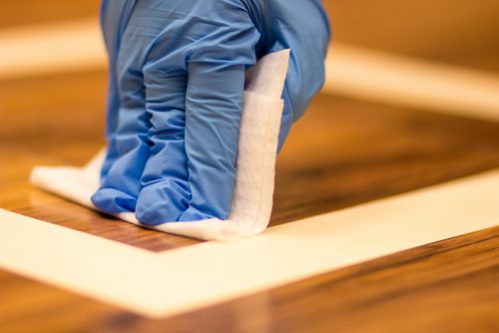
The study focuses on the methodology for wiping a surface with an absorbent pad and analyzing the sample to gauge the presence of toxic substances. The study looks at surface wipe sampling in an e-scrap processing facility, battery recycling plant and firing range.

The surface wipe sample provides evidence of lead migrating from the processing area of a facility into non-processing spaces such as the lunch or break room.

But the report also serves as a reminder for e-scrap facilities to regularly test – regardless of whether they believe they’re encountering toxic substances.

In an interview with E-Scrap News, co-author Diana Ceballos, a researcher at Harvard University, said shredding facilities, particularly those dealing with CRTs and PCBs, are often aware of the lead exposures they face and are more likely to have testing procedures in place. But she also pointed to the facilities that simply dismantle CRTs and send the glass downstream to another outlet.

“Even by doing that they are releasing dust,” Ceballos said, and they may be less aware of the lead exposure. “The way I see it is, only the facilities that know it’s an issue consider surface sampling.”

Ceballos spoke at E-Scrap 2016, detailing the results of her previous research into worker safety at e-scrap processing facilities.

The electronics recycling field is a bit different than others when it comes to testing for lead, because unlike the lead-acid battery recycling facility or gun range, in an e-scrap facility lead is just one of many toxic materials that are present. Cadmium, chromium, nickel and other substances are also frequently found in electronics recycling facilities.

Some of the other metals present, notably tin, have the potential to interfere with one form of the surface wipe sample procedure: the colorimetric test, which provides results immediately on the wipe using colors. Instead, e-scrap facilities should use the “quantitative” test method, in which the samples are sent away to a lab for analysis.

The difference is stark enough that the color test didn’t show any lead in the studied e-scrap facility due to tin contaminating the results, but the lab test returned positive lead readings.

Ceballos said the surface wipe sample procedure could also be usefully employed in a wider range of waste management facilities. She pointed to the fact that CRTs are ending up in landfills and that there’s a large portion of the e-scrap stream that still doesn’t get properly recycled. That means there are even more facilities – including municipal recovery facilities (MRFs) sorting curbside recyclables – that are handling toxic materials but may not conduct the same tests as an e-scrap facility.

Ceballos said the real takeaway is that a facility should choose a method of testing and stick with it over time. That way, the results can be compared from test to test. In an ideal world with all the available resources, she said, testing would be conducted at least once per year.


 

Tags: Critical MineralsResearch

TweetShare
Colin Staub

Colin Staub

Colin Staub was a reporter and associate editor at Resource Recycling until August 2025.

Related Posts

Closeup of a printed circuitboard

Can modular metals recovery challenge the smelter model?

byDavid Daoud
April 28, 2026

UK-based startup DEScycle is testing a new approach to extracting metals from electronic scrap.

What Netflix’s ‘Plastic Detox’ gets wrong – and right

byKeith Loria
April 23, 2026

Advocates are excited about the attention brought on plastics by the documentary, but scientists say more nuance is needed.

Hawaii trials asphalt made with plastic debris and nets

Hawaii trials asphalt made with plastic debris and nets

byScott Snowden
April 20, 2026

Researchers at Hawaii Pacific University test asphalt made with fishing nets and plastic debris, with early results showing no increase...

EV Battery Pack - Sergii Chernov-Shutterstock

Redwood, Rivian deal fuels US infrastructure plans

byStefanie Valentic
April 15, 2026

Batteries that are no longer ideal for powering a vehicle still have substantial capacity left. Automobile manufacturer Rivian and battery...

Bloom ESG and e-Stewards roll out critical metals metric

byDavid Daoud
April 15, 2026

The two groups announced the upgrade to their jointly developed Environmental Benefits Calculator.

Amazon, DOE partner on critical materials recovery

byScott Snowden
April 13, 2026

DOE and Amazon will study recovery of graphite from textiles and gallium from IT hardware, aiming to strengthen US supply...

Load More
Next Post
Illinois lawmakers pave way for e-scrap program reform

Illinois lawmakers pave way for e-scrap program reform

More Posts

New version of California EPR regulations released

CalRecycle approves SB 54 regulations

May 2, 2026

What Netflix’s ‘Plastic Detox’ gets wrong – and right

April 23, 2026
Plastic Ingenuity to use PureCycle PP for coffee lids

Plastic Ingenuity to use PureCycle PP for coffee lids

April 30, 2026
Intel sign on company building with blue sky and trees.

Intel boosts margins by selling what it used to scrap

April 29, 2026
EPR fees are a market signal. Here’s what they’re telling you.

Oregon DEQ flags 250 producers for RMA noncompliance

April 21, 2026
Unlocking the power of source reduction in US EPR

Unlocking the power of source reduction in US EPR

May 1, 2026
Our top stories from April 2022

Peters-Michaud named CEO, Houghton chair of Sage Sustainable Electronics

April 28, 2026
Float-sink technology at the Quantum Lifecycle Partners facility in Toronto, Canada enables the processing of e-plastics.

E-plastics recovery line opens in Canada

April 28, 2026
Birch Plastics gets FDA green-light for post-industrial PP

LyondellBasell upgrade to PreZero assets on hold

April 23, 2026
Intel sign outside of company building.

What Intel’s blockbuster quarter means for ITAD

April 27, 2026
Load More

About & Publications

About Us

Staff

Archive

Magazine

Work With Us

Advertise
Jobs
Contact
Terms and Privacy

Newsletter

Get the latest recycling news and analysis delivered to your inbox every week. Stay ahead on industry trends, policy updates, and insights from programs, processors, and innovators.

Subscribe

Welcome Back!

Login to your account below

Forgotten Password?

Retrieve your password

Please enter your username or email address to reset your password.

Log In

Add New Playlist

No Result
View All Result
  • The Latest
  • Analysis
  • Recycling
  • E-Scrap
  • Plastics
  • Policy Now
  • Conferences
    • E-Scrap Conference
    • Plastics Recycling Conference
    • Resource Recycling Conference
    • Textiles Recovery Summit
  • Magazine
  • About Us
  • Advertise
  • Archive
  • Jobs
  • Staff
Subscribe
This website uses cookies. By continuing to use this website you are giving consent to cookies being used. Visit our Privacy and Cookie Policy.