Resource Recycling
  • The Latest
  • Analysis
    • All
    • Certification Scorecard
    • Industry Announcements
    • Opinion
    Wisconsin prepares for E-Cycle rulemaking

    Reading Asia’s e-scrap recycling market through YDDL

    Back-to-school 2026/27: Apple vs. Google

    Back-to-school 2026/27: Apple vs. Google

    Certification Scorecard — Week of May 11, 2026

    May pricing bullish for most bales

    May pricing bullish for most bales

    PP most likely plastic to shift in 2026

    PP most likely plastic to shift in 2026

    CompuCycle brings e-plastic recycling upgrade online

    Quantum expands e-plastics recovery

  • Conferences
    • Resource Recycling Conference
    • Plastics Recycling Conference
    • E-Scrap: The Longevity Conference
    • Textiles Recovery Summit
  • Publications
    • E-Scrap News
    • Plastics Recycling Update
    • Policy Now
    • Resource Recycling
    • Other Topics
      • Brand Owners
      • Critical Minerals
      • Glass
      • Grant Watch
      • Markets
      • Organics
      • Packaging
      • Research
      • Technology
      • Textiles
      • All Topics
Subscribe
No Result
View All Result
Resource Recycling
  • The Latest
  • Analysis
    • All
    • Certification Scorecard
    • Industry Announcements
    • Opinion
    Wisconsin prepares for E-Cycle rulemaking

    Reading Asia’s e-scrap recycling market through YDDL

    Back-to-school 2026/27: Apple vs. Google

    Back-to-school 2026/27: Apple vs. Google

    Certification Scorecard — Week of May 11, 2026

    May pricing bullish for most bales

    May pricing bullish for most bales

    PP most likely plastic to shift in 2026

    PP most likely plastic to shift in 2026

    CompuCycle brings e-plastic recycling upgrade online

    Quantum expands e-plastics recovery

  • Conferences
    • Resource Recycling Conference
    • Plastics Recycling Conference
    • E-Scrap: The Longevity Conference
    • Textiles Recovery Summit
  • Publications
    • E-Scrap News
    • Plastics Recycling Update
    • Policy Now
    • Resource Recycling
    • Other Topics
      • Brand Owners
      • Critical Minerals
      • Glass
      • Grant Watch
      • Markets
      • Organics
      • Packaging
      • Research
      • Technology
      • Textiles
      • All Topics
Subscribe
No Result
View All Result
Resource Recycling
No Result
View All Result
Home E-Scrap

Lightweighting trend on display in Washington

byJared Paben
May 25, 2017
in E-Scrap
Lightweighting trend on display in Washington

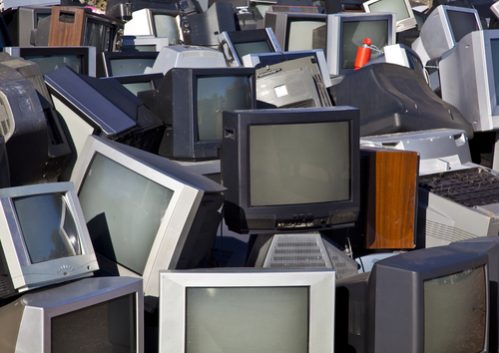
TVs dominate the end-of-life stream in Washington state now more than ever. They just don’t look like they used to, with fewer CRT devices and more flat-panel displays coming in the door.

Recently released data for the Washington State extended producer responsibility program for electronics provides a glimpse at the changing e-scrap stream. Along with less overall weight collected, the Washington stream includes less CRT glass weight from TVs and monitors and a greater percentage of metals, e-plastics and printed circuit boards.

Across the U.S., the composition of new and end-of-life electronics is changing fast. An analysis by the Rochester Institute of Technology, Consumer Technology Association (CTA) and Staples Sustainable Innovation Lab found that a couple of years after U.S. households essentially stopped buying CRT TVs and monitors, roughly in the 2006-07 timeframe, the weight of all CRT glass entering the end-of-life maxed out. Since that peak about seven years ago, CRT glass has continued to fall as a component of the stream.

One nationwide e-scrap expert noted the billing implications of a changing stream.

“It’s going to make the industry have to think differently about how they charge for their services,” said Jason Linnell, executive director of the National Center for Electronics Recycling (NCER).

Changing composition

Data from the Washington Materials Management and Financing Authority (WMMFA), which works to fulfill electronics manufacturers recycling obligations in the Evergreen State, shows TVs last year made up more than 83 percent of the stream by weight. That was the greatest percentage since the Washington E-Cycles program started in 2009.

But looking at materials instead of types of devices, CRT glass makes up less and less of the weight collected. In 2016, CRT glass fell to less than 43 percent of the stream’s weight, down from nearly 50 percent two years earlier.

“It’s a pretty simple relationship. Obviously, CRTs are declining and the flat-panel LCDs are increasing,” said John Friedrick, executive director of the WMMFA.

The decrease in CRT glass has meant a greater percentage of the stream now consists of metals (23 percent), e-plastics (17 percent) and printed circuit boards (12 percent). The remaining 5 percent consists of a mix of materials, including wood, batteries and mercury.

The overall weight of electronics collected has fallen sharply, a result of lighter electronics entering the stream. In 2016, 36.8 million pounds were collected, down from a program high of 45.2 million pounds in 2013.

In March, Friedrick told the WMMFA board he expected the weights collected to continue falling by 6 percent to 8 percent in 2017.

Beyond per-pound charges

Linnell said the reduced CRT weights are showing up in more mature programs such as in Washington and Oregon but not yet in some of the newer East Coast ones.

“Eventually they will look like this after several years,” he said.

Linnell’s NCER also runs Oregon’s state contractor program to fulfill obligations for some manufacturers.

In Oregon, citing a changing stream, state officials recently approved 2018 recycling targets that were 22 percent below the 2017 obligations.

From a cost perspective, Linnell noted that, in general, a shift from CRT weight toward flat-panel weight can be a doubled-edged sword. On one hand, processors have less leaded glass to send downstream, saving money. On the other hand, more disassembly labor and mercury lamp downstream costs may eat into those savings.

And, with fewer pounds overall, processors may need to change how they charge for services, beyond simply increasing their cents-per-pound charged. Linnell noted that a high number of tablets that have been sold in recent years will enter the end-of-life stream.

“That’s going to make the recyclers have to think twice about how they’re charging for the recycling service that they’re providing,” he said. “I don’t think you’d want to charge a per-pound rate on a one-pound tablet.”




Tags: CRTsEPRFlat-panel displays

TweetShare
Jared Paben

Jared Paben

Related Posts

Retail aisle with paper and plastic packaging.

Loblaw’s recyclability push could reshape packaging design across North America

byKeith Loria
May 14, 2026

The retailer is pursuing aggressive plans to ensure all packaging on its shelves is recyclable or reusable.

Industry descends on DC to fight for PET

Industry descends on DC to fight for PET

byAntoinette Smith
May 13, 2026

Amid numerous recent hits to the common packaging plastic, a stakeholder coalition is engaging with policy makers to encourage policy...

Lawsuits hover days after SB 54 approval

Lawsuits hover days after SB 54 approval

byStefanie Valentic
May 6, 2026

NRDC and Californians Against Waste are suing CalRecycle over finalized EPR regulations they say unlawfully allow chemical recycling and other...

Person filling a bottle with product

How reuse fits into EPR

byBrian Clark Howard
May 6, 2026

Reusable packaging is a growing sector and is supported by several state EPR programs, though implementation varies.

CAA seeks comment on REM recycling standard

byStefanie Valentic
May 6, 2026

Circular Action Alliance is now accepting public comment for its draft Responsible End Markets certification standard.

Lithium-ion battery recycler to build New York facility

Why battery EPR doesn’t have a packaging problem

byStefanie Valentic
May 4, 2026

While packaging EPR fights injunctions, battery EPR has achieved a mostly harmonized legal framework across nearly every state that has...

Load More
Next Post
Data offers insight into mobile device trade-ins

Data offers insight into mobile device trade-ins

More Posts

Extruder pushes out natural HDPE pellets at KW Plastics in Troy, Alabama.

Rare look inside the world’s largest plastics recycler

May 13, 2026
Niagara acquires rPlanet Earth assets in California

Niagara acquires rPlanet Earth assets in California

May 15, 2026

American Battery Technology confirms second site

May 13, 2026
Industry descends on DC to fight for PET

Industry descends on DC to fight for PET

May 13, 2026
NJ e-scrap legislation

NJ qualifies PureCycle PP for minimum PCR law

May 14, 2026
Lawsuits hover days after SB 54 approval

Lawsuits hover days after SB 54 approval

May 6, 2026
APR, industry groups testify on overcapacity

APR, industry groups testify on overcapacity

May 8, 2026

PP bales rise, paper grades edge higher

May 11, 2026
Orange County landfill fees to spike 53%

Orange County landfill fees to spike 53%

May 11, 2026
Back-to-school 2026/27: Apple vs. Google

Back-to-school 2026/27: Apple vs. Google

May 13, 2026
Load More

About & Publications

About Us

Staff

Archive

Magazine

Work With Us

Advertise
Jobs
Contact
Terms and Privacy

Newsletter

Get the latest recycling news and analysis delivered to your inbox every week. Stay ahead on industry trends, policy updates, and insights from programs, processors, and innovators.

Subscribe

Welcome Back!

Login to your account below

Forgotten Password?

Retrieve your password

Please enter your username or email address to reset your password.

Log In

Add New Playlist

No Result
View All Result
  • The Latest
  • Analysis
  • Recycling
  • E-Scrap
  • Plastics
  • Policy Now
  • Conferences
    • E-Scrap Conference
    • Plastics Recycling Conference
    • Resource Recycling Conference
    • Textiles Recovery Summit
  • Magazine
  • About Us
  • Advertise
  • Archive
  • Jobs
  • Staff
Subscribe
This website uses cookies. By continuing to use this website you are giving consent to cookies being used. Visit our Privacy and Cookie Policy.