




Editor’s note: Critical minerals will be featured in sessions at the 2026 E-Scrap: The Longevity Conference Oct. 26-28 in New Orleans.
With a nine-figure federal grant in place to help build a critical minerals refinery, Nth Cycle is working to secure feedstock for that facility and buyers for the critical minerals it will process.
Boston-based Nth Cycle signed a term sheet late last month with Glencore, agreeing to buy 10 years’ worth of black mass in a deal with more than an estimated $1 billion.
Switzerland-based Glencore, which operates more than a dozen sites in the US and Canada, will send black mass to Nth Cycle’s Project SHIELD, a planned battery minerals refining facility it’s building in a to-be-determined location in the southeastern US. Nth Cycle will use its electroextraction process to obtain mixed hydroxide product and battery-grade lithium carbonate from the black mass, and Glencore has agreed to offtake some of that product as part of the arrangement.
The news was announced weeks after the US Department of Energy (DOE) awarded Nth Cycle up to $100 million to help fund Project SHIELD. That money allowed Nth Cycle to double the size of its proposed facility, according to CEO and co-founder Megan O’Connor.
With the Glencore deal and a similar one worth an estimated $1.1 billion Nth Cycle has with Trafigura, Nth Cycle will have enough feedstock to meet its goal of refining 24,000 metric tons of black mass per year, she said. Both Glencore and Trafigura have agreed to buy some of the minerals Nth Cycle makes.
“We’re turning those feedstocks into usable minerals,” she said. “We have over $2 billion in committed off-takes. We’re very excited about all this momentum.”
Nth Cycle’s technology has performed at scale in testing completed at the company’s Ohio facility, O’Connor said, giving company leadership the confidence to make these agreements. Work at that Fairfield facility began in 2024 and has seen 99% mineral recovery rates with 98% purity.
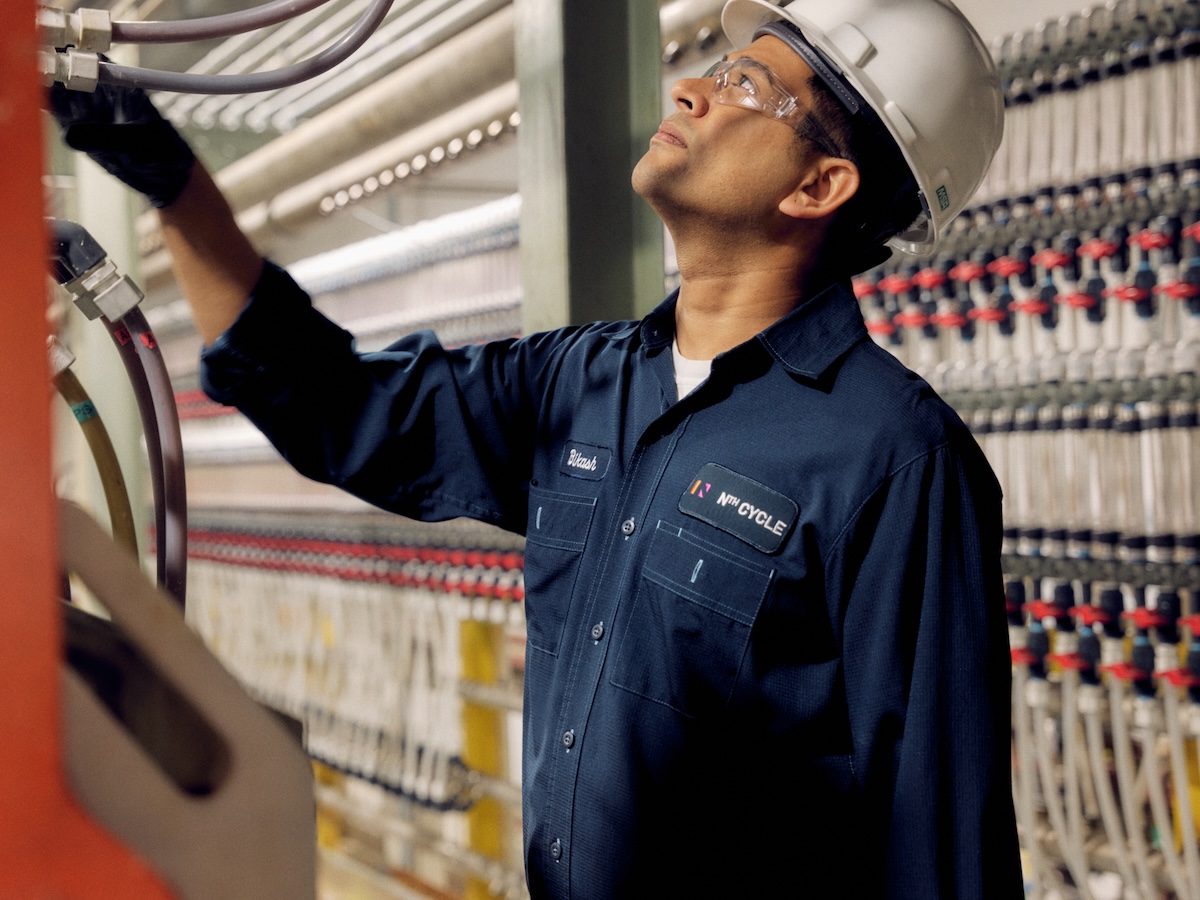
O’Connor said Nth Cycle’s process does that while reducing capital intensity 70% as compared to other refining processes at a 5-10 times smaller scale. The OYSTER system can be installed inside existing buildings and set up near recyclers or manufacturers, reducing permitting and construction costs. Electroextraction also eliminates the need for oxalic acid, which is often used in refining but is foreign-sourced and potentially harmful, she said.
“It’s a faster, cheaper, cleaner system,” she said.
It also, she said, helps complete a circularity loop for US minerals. Black mass has traditionally been sold off-shore, but recent federal policy shifts have banned exporting black mass while calling for more domestic production and processing. Nth Cycle will help close a domestic midstream recycling gap, she said, ensuring there’s a place for black mass to go so it’s worth keeping on shore.
“Nth Cycle has been at the forefront of building domestic US refining capacity,” said Jyothish George, Glencore’s head of marketing, metals and bulks. “By supplying black mass from our US operations and taking the refined product to market, we can help close the loop in the supply of critical minerals for our US customers.”
Also as part of the deal, Nth Cycle will work with Glencore to assess an existing Glencore site for a possible buildout to bolster its capabilities. The companies will also explore deploying Nth Cycle technology into Europe and across the copper and rare earth value chains.
A separate deal Nth Cycle entered into earlier this year with Ionic Rare Earths will see Nth Cycle’s technology installed into Ionic’s Belfast recycling and refining facility by early next year; the resulting rare earth oxide powders will return to the US for magnet production. Ionic has partnered with US Strategic Metals to have the latter process those powders at a facility it’s building in Missouri.
Anything that reduces reliance upon Chinese and other foreign-sourced materials and processes, O’Connor said, is a step forward.
“Our technology can reduce supply chain dependence,” she said. “From day one, our mission was to create a cost-effective solution to produce these minerals and build these supply chains. You can invest in mining and recycling, but without refining, there’s really not a secured supply chain.”
In addition to the DOE money, Nth Cycle entered an SPAC deal with Kensington Capital Acquisition Corp. this past summer to fund the company’s buildout.