



Editor’s note: Electronics recycling will be featured in sessions at the 2026 E-Scrap: The Longevity Conference Oct. 26-28 in New Orleans.
Paladin EnviroTech has moved fast since its founding roughly a year and a half ago, building its US platform through the acquisitions of IRT and TSI, expanding its domestic footprint toward 600,000 square feet across seven states, and extending into Europe through acquisitions in Ireland and the Netherlands backed by a $70 million expansion.
In an interview, Luke Wray, the company’s senior vice president of critical materials & defense, said a share of recoverable value in electronics waste currently goes unclaimed through conventional refining, and that Paladin is building infrastructure to recover it.
Wray said the waste stream typically contains 15 to 22 metals that fall outside standard refiner reporting, material that gets recovered in processing but isn’t itemized or valued back to the client. Refiners and smelters, he explained, typically pay clients out on gold, silver, copper and palladium. Other metals present in the same waste streams, including rare earths that end up in the steel fraction because of their magnetic properties, have historically gone unreported and unrecovered.
“There has not been a push, if you look five years back, really to focus on how do we get that out of the steel fraction, because the steel mills aren’t recovering it,” he said. That’s beginning to change, he added, largely because hyperscalers are now pushing processors to find ways to pull rare earth content out of the steel stream and get it into a usable oxide form.
That gap in current refining practice is the commercial basis for Paladin’s joint venture with Critical Materials Recycling (CMR). The separation technology at the heart of the venture originated at Ames National Laboratory, and Paladin’s role has been bringing supply, offtake, and pre-processing capabilities to the table.
Pre-processing is the piece Wray singled out as decisive: much of the rare earth recycling technology developed to date struggles to reach the actual magnet material buried inside end-of-life electronics and equipment, and without that step, downstream separation technology has nothing to process. The JV’s facility, located in Boone, Iowa, is currently processing around 40 metric tons of material annually. Wray said the company plans to scale that to 300 metric tons within the next 12 months, and separately intends to transfer the technology to Paladin’s Netherlands facility sometime in 2027.
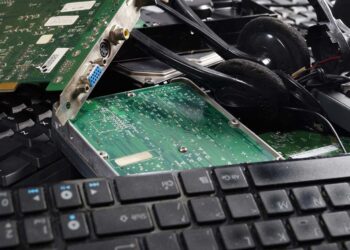
Precious-metals refining is one part of the business Paladin has not brought in-house. Precious metals recovered from circuit boards still get refined overseas, mostly in Japan, a decision Wray attributed to two specific constraints: US permitting is difficult for that class of refining, and no domestic facility currently operates at the necessary scale. He pointed to domestic facilities such as Sipi, Abington and Aurubis’s Georgia plant, noting that each is built around specific materials and process types, and that no US facility currently offers full-scope precious-metals refining at the volume overseas partners provide.
Beyond the infrastructure gap, Wray pointed to a trust factor built over time: shifting away from a refining relationship established over a decade means re-establishing confidence in sampling and assay accuracy, where a 5% miscalculation at today’s gold and copper prices carries real financial weight. Newer domestic technology entrants, he said, have not yet demonstrated they can handle volume at the scale established overseas partners can — though he sees an opening for whichever one does, particularly around payment terms, since overseas refiners typically run 90- to 120-day cycles that put pressure on smaller recyclers’ cash flow.
Wray also drew a distinction between hyperscale and enterprise refresh cycles: hyperscale customers are turning over high-compute assets roughly every three to four years, compared with a five- to seven-year range typical of banking and other enterprise accounts. He pointed to managed services — on-site support for large enterprise accounts — as a growing part of Paladin’s business that the company expects to highlight more as it continues to build out that offering.
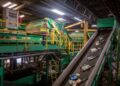
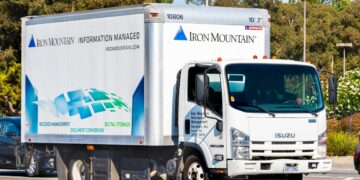
Wray also shared operational figures that include Paladin’s main processing sites receiving several truckloads of material daily, and larger facilities are moving 10 to 20 loads of circuit boards a month. Smaller regional aggregation sites — 5,000 to 10,000 square feet, staffed by one or two people — feed into that network on a roughly weekly cycle.
Asked about acquisitions, Wray said Paladin continues to evaluate targets domestically and internationally, with diligence discipline as the deciding factor.