



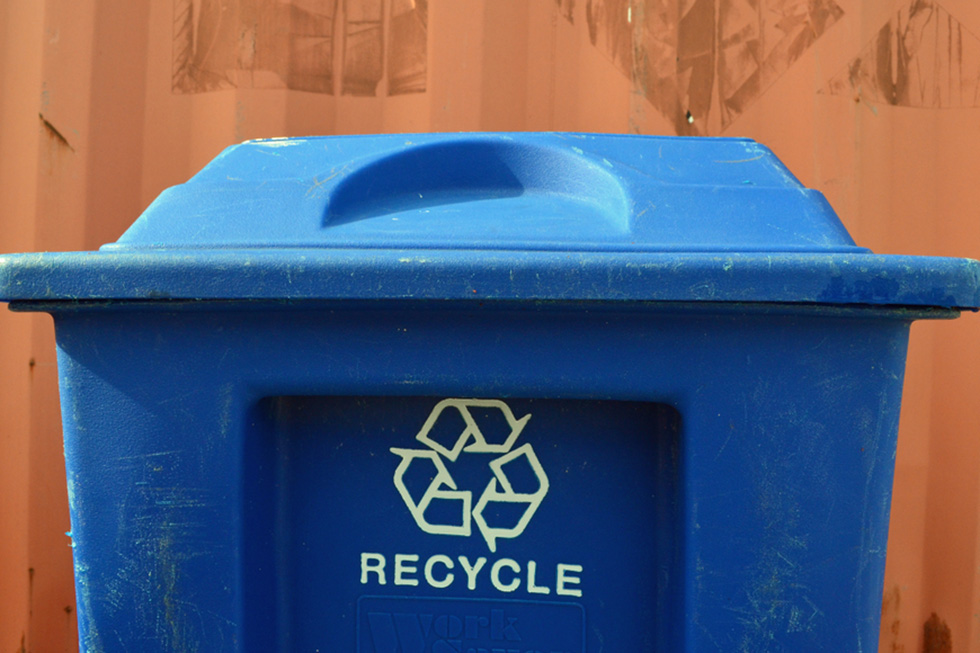
A bicameral bill introduced Aug. 7 would set national criteria for when packaging, food service products and beverage containers can be labeled recyclable, compostable, reusable or refillable.
Rep. Lou Correa (D-CA) and Sen. Jeff Merkley (D-OR) introduced the Truth in Labeling Act of 2026, which directs EPA and the Federal Trade Commission (FTC) to jointly establish enforceable definitions for those four terms, along with a standardized on-package label producers could choose to use.
“People shouldn’t have to question whether something belongs in the recycling bin or the trash,” Correa said, adding that the bill “brings common-sense standards to product labeling” and “strengthens our recycling system.”
The legislation would replace the current patchwork of state rules and voluntary industry guidance.
Merkley positioned the measure as a corrective to industry practice, saying that too often “the reality with plastics is the three Bs — buried, burned and borne out to sea.”
The bill sets numeric thresholds tied to actual recovery infrastructure.
Under Section 5, a material qualifies as recyclable only if it’s “collected, separated, or otherwise recovered from the waste stream through an established recycling program for which a responsible end market exists that covers at least 60 percent of consumers or communities where the item is sold.”
A lower, 40 percent threshold would allow for a “qualified” recyclability claim paired with on-pack disclosure. Compostable claims carry similar tiers, requiring collection by at least 50 percent of established composting programs for a full claim or 30 percent for a qualified one.
The bill also closes the fuel-recovery loophole: converting material into fuel or burning it for energy “shall not be considered recycling” or count toward either threshold.
Enforcement would run through the FTC Act. Two years after EPA and FTC finalize the standardized label, using a chasing-arrows symbol or recyclability claim on a non-qualifying material would become a deceptive practice, with fines escalating for each day a violation continues after a 180-day cure period. Collected penalties would flow to existing federal recycling infrastructure and consumer-education grant programs.
The bill also creates a 27-member advisory committee that spans industry, MRFs, environmental groups, and state and local government. The group would help shape the criteria and label design and directs EPA to publish public lists of which materials meet the bar every two years.
The legislation drew support from Ocean Conservancy, Just Zero, Recology, the US Composting Council, the Recycled Materials Association, the Paper Recycling Coalition, Upstream Solutions and The Recycling Partnership, whose Anthony Tusino called labeling “only one piece” of a functioning recycling system.