


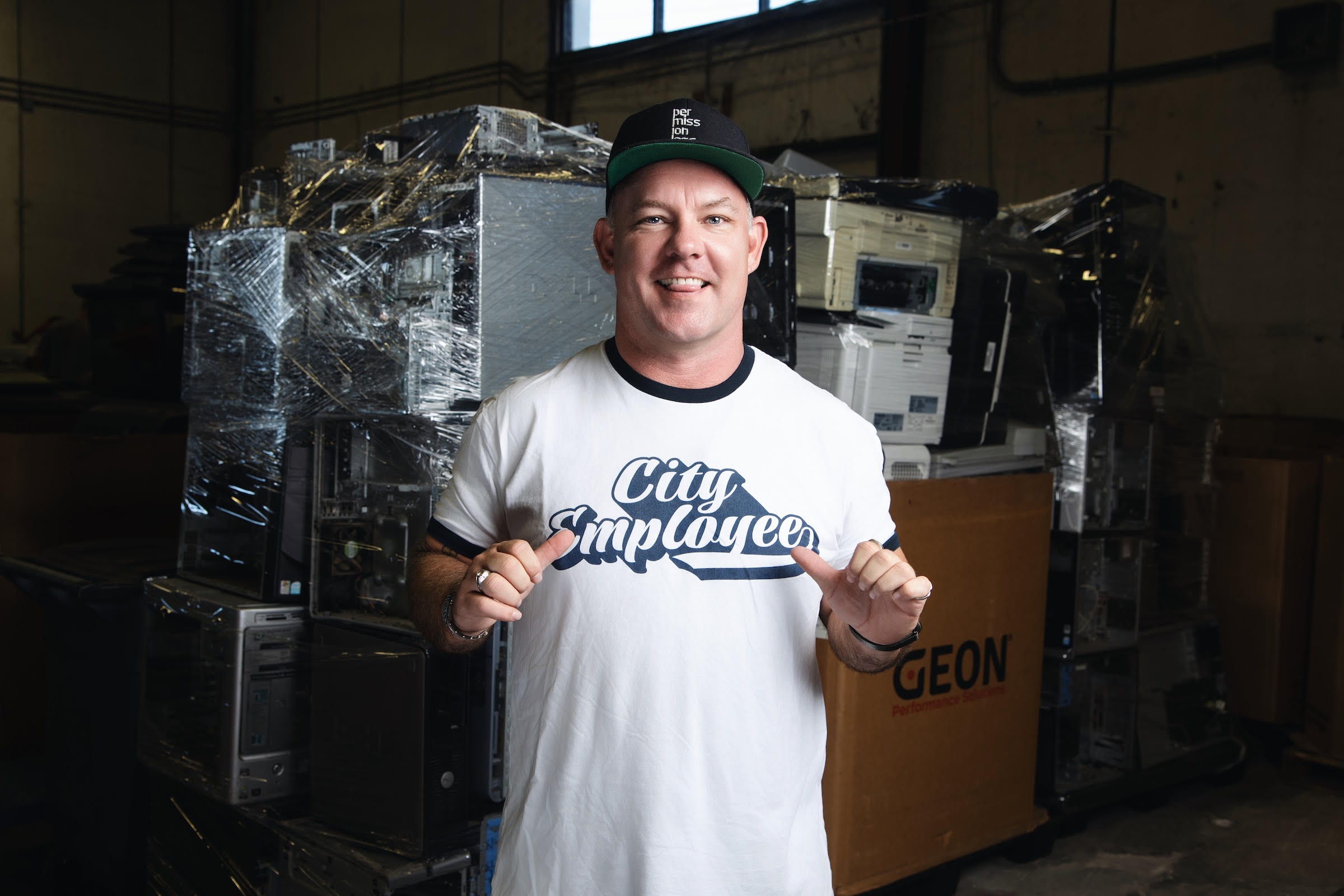
Matthew Rogers loves electronic recycling.
The Tennessee native had launched and left five different businesses by 2018, when at age 39 he was burnt out, semi-retired and looking for his next path. He came upon a yard sale from which he took some rained-on servers he got for free. He then did an internet search for “what is valuable in a server” and launched the business he now refers to as “Willy Wonka meets Captain Planet.”
That search led to Franklin eWaste, which he launched in a spare room in 2019. Rogers gained a municipal contract with the city of Franklin a year later, and two years after that the business grew to the point where he had to relocate. By 2024, he was ready to take the idea national, relaunching as City eWaste and becoming the first e-scrap franchise, with 16 locations in operation in Tennessee and Texas, and more set to debut next year in Georgia.
Having just celebrated its eighth anniversary, City eWaste may finally give Rogers the professional forever home he’s been looking for.
Inventory, not waste
The central theme to Rogers’ growing enterprise is to find the something that exists within the nothing.
He established a “sourcing, sorting and selling” system that finds a new home for every item that comes in aside from trash.
“Reddit, Facebook groups, keyword-optimized landing pages — you name it, I use every single tool at my disposal to find the people who want the e-waste that comes in,” he said.
If something is reusable, Rogers looks to do just that. He claims an extensive database of collectors who seek hard-to-find electronics, something he said “e-waste recyclers have been ignoring for decades.” Anything that can’t land a second home gets sold into the secondary metals market for recycling.
A scrappy start
Rogers said the business did fine in its first few months, but he gained a real appreciation of the desire for e-recycling once COVID-19 hit. The city solid waste director in Franklin asked if Franklin eWaste could accept items from residents, and Rogers quickly agreed.
“Dozens and dozens of residents pulled up to my house and dropped their electronics off on designated pallets out front, every single day. It did not slow down,” he said. “I have the most amazing neighbors who were patient and understanding, but I hired all their kids to help me organize.”
He also put out-of-work musician friends on the job as the business grew during the pandemic, using stimulus money to buy and equip a barn to handle the influx of equipment. After that and seven storage units were quickly filled with discarded products, he filed an LLC to become official.
“I had a paid-off pickup truck, a dolly, a basic set of tools and a hell of a lot of skills in reselling and entrepreneurship,” he said.
A scalable model
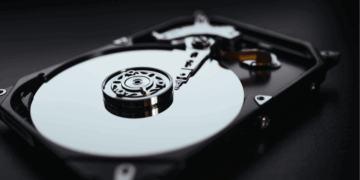
Rogers has also learned some of the finer points of e-scrap — ensuring data security, for example. City eWaste performs secure data destruction on anything with a drive before passing materials on. Anything that doesn’t sell moves on to R2-certified recyclers, he said.
Continued growth in Tennessee, combined with the knowledge he’d gained in the industry, made Rogers realize the potential for similar results elsewhere.
“Once I figured out that 9% of the market was scrappers in pickup trucks who couldn’t scale, and on the other end 18% was enterprise e-waste giants all fighting over the same slice of money, that left the middle market wide open for a unified brand to take over,” he said. “Instead of spending my own capital to expand into different states, why not hand-select the owner-operators I want to work with and use their money to build out the network?”
So he did just that, seeking out “the ’96 Bulls bench of operators” of franchisees to expand the business. By picking people who understand wealth creation through waste streams, then putting them through the “eWaste University” training program to pick up the business’ finer points, Rogers created the first-ever e-scrap franchise.
The central operation in Tennessee offers marketing, web and other functions for franchisees, Rogers said. It also supplies a franchise management system, links to potential regional partners, a unified call center and a national network of municipal negotiators, buyers and sales professionals.
“Not to mention the private club of owner-operators at your disposal for mentorship, the extensive support from corporate and the stuff that grinds business owners down every day. Social media, marketing, websites, lead generation, sales and answering the phone is completely taken care of,” he said. “We’re the first e-waste company in the world to do it this way, and we’re confident it’s a recipe for success.”
More growth ahead
The business is set to expand into its third state next year when Atlanta-based franchisees join the fold. Rogers sees no reason the concept can’t go national or even farther, given the expected surge in demand for ITAD-related services.
“The winners in this industry will be the companies that treat e-waste as a national security asset instead of a sustainability checkbox,” he said. “Doing good in your community feels great, but that’s the byproduct, not the business. Every future that matters runs on materials, energy and data, and e-waste collection is the tip of the spear for all three.”
City eWaste has secured numerous municipal contracts offering free collection services for residents, he said, while aligning with environmental groups to host community education events.
The effort has been paying off. City eWaste only discloses tonnage for municipal contracts, and in the first half of this year the business has collected a cumulative 200 tons of discarded electronics through those; Rogers declined to share any further collection or financial information.
That’s about all he’s withholding, though. A book he’s working on, “Yardmining eWaste: The Complete Guide for Backyard Urban Mining,” will be designed to show young people how to take a similarly fulfilling (and profitable) path as the one that’s led Rogers to City eWaste.
“The number of people who come into our shop absolutely stoked, sometimes in tears, about what we’re doing is incredible to witness,” he said. “Nothing scratches all my itches like running an e-waste business. You never know what treasures are coming through the door, what highly sought-after collectibles will be saved, or what seemingly trashy item is an actual gold mine. Where else can you get handed free stuff to sell that has a market price openly traded every day?”