




Rare earth elements are increasingly critical to modern electronics, but their unstable supply channels present sourcing challenges. Toyoshima has developed a process that recovers these critical materials at high purity in an efficient and practical way.
Rare earths are used in automobiles, computer hard drives, mobile phones, wind turbines, medical equipment, electric mobility devices, and many types of industrial equipment. They are also used heavily in military applications, including in air fighters and naval vessels. Each US Virginia-class nuclear submarine contains an estimated 4.6 tons of rare earths. The White House has described rare earths as “indispensable to almost every industry, including national defense programs and critical infrastructure.”
Despite their domestic importance, 71% of the rare earths used in the U.S. come from China, according to the U.S. Geological Survey.
For such a high-demand and difficult-to-source material, recycling has a promising value proposition. But it must be done right: These minerals are too valuable to lose through processing inefficiency.

That means avoiding shredding, a common but inefficient processing method (in the recycling industry, we joke that a processor spends $1 million to install a shredder, and $2 million to separate the shredded fractions again). Shredding also limits metal recovery, with gold yield often dropping by 10% once electronics are shredded.
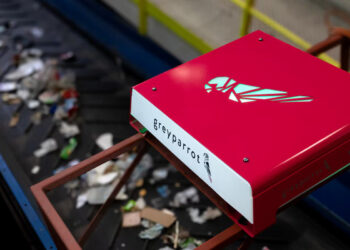
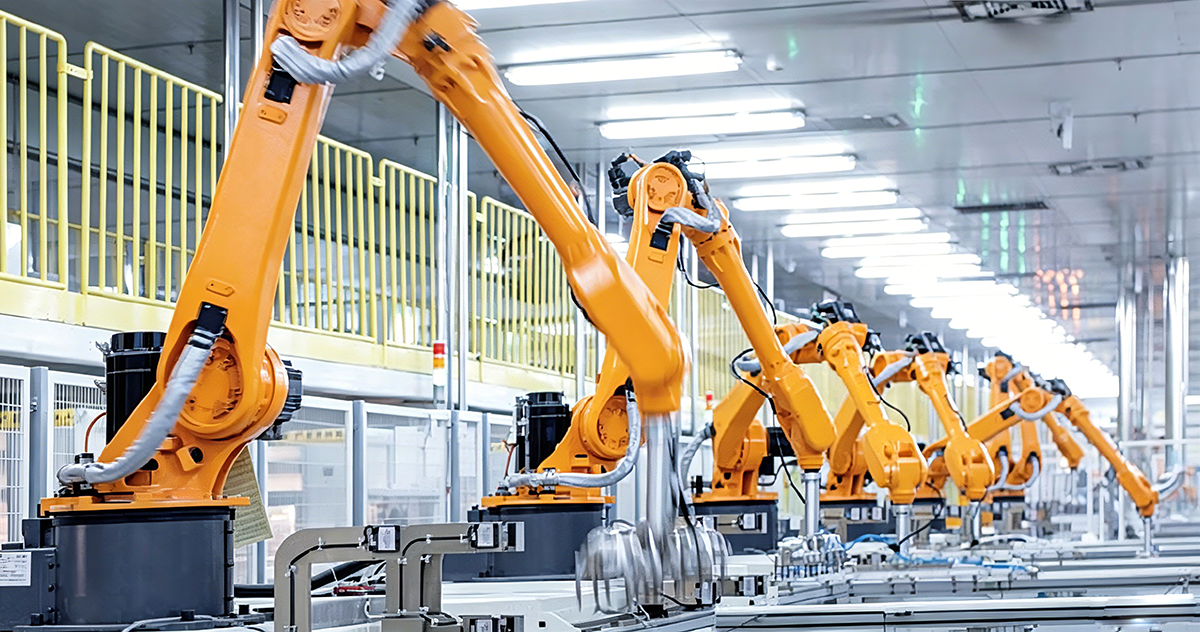
Toyoshima advocates for dismantling devices and sorting components before extraction, rather than shredding a commingled stream. This ensures higher-value output. In recent years, Toyoshima has used artificial intelligence-driven robotics to disassemble and sort end-of-life devices.
Toyoshima is now applying that technology to rare earths, using AI-trained robots to disassemble hard drives. This produces high-purity aluminum, circuit boards ready for smelter processing, and high-purity magnets we process separately.
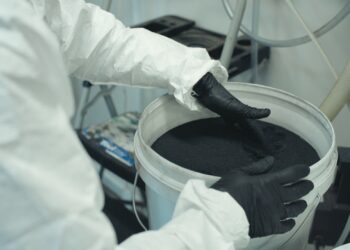
Hydrometallurgical leaching process efficiency is typically dragged down by trace elements that are byproducts of shredding. Our magnet processing technique instead uses an innovative graphene oxide aerogel (which is a lightweight, solid material with strong adsorption properties). We use this to extract the rare earth neodymium, typically yielding 25% to 30% recovery, based on a forthcoming paper. The aerogel remains effective in repeat use, demonstrating 86% of its initial capacity after five full extraction cycles.
Rare earth recovery also has data security implications. Hard drives, including those at data centers, are a major feedstock for magnets. Rather than moving these data-bearing drives to another location for processing, Toyoshima advocates for deploying on-site robotic disassembly systems at data centers. This protects data by ensuring intact devices are dismantled before leaving the premises.
This distributed or modular unit strategy deploys inexpensive equipment with a small footprint. That accessibility has the potential to scale up rare earth recovery.
Processors evaluating the costs of rare earth recovery should think about rare earths as byproducts generated during the primary material recovery process. In this way, the recovery cost allocated to rare earth elements is smaller. This mirrors how rare earths are considered in natural resource extraction, as byproducts generated while refining aluminum, tantalum or niobium. Considering the metals this way ensures costs are distributed across the full spectrum of reclaimed materials.
Selecting the correct processing technology is critical, but government intervention is another important driver of success.
Governments should support recovery through financial subsidies for installing dismantling equipment. Governments can also regulate, including limiting export of rare earth-bearing materials. Governments should also adopt producer responsibility programs, which incentivize manufacturers to create efficient return systems. This ensures materials move to a centralized location for the lowest cost, highest efficiency robot processing.