


The battle for back-to-school 2026/27 is already underway. In March, Apple moved first, unveiling the MacBook Neo at $599 ($499 for students), the cheapest MacBook the company has ever shipped and its first serious attempt to crack the education market that Chromebooks have owned for more than a decade. On May 12, Google responded with a different approach: the company introduced a premium category to replace the Chromebook playbook.
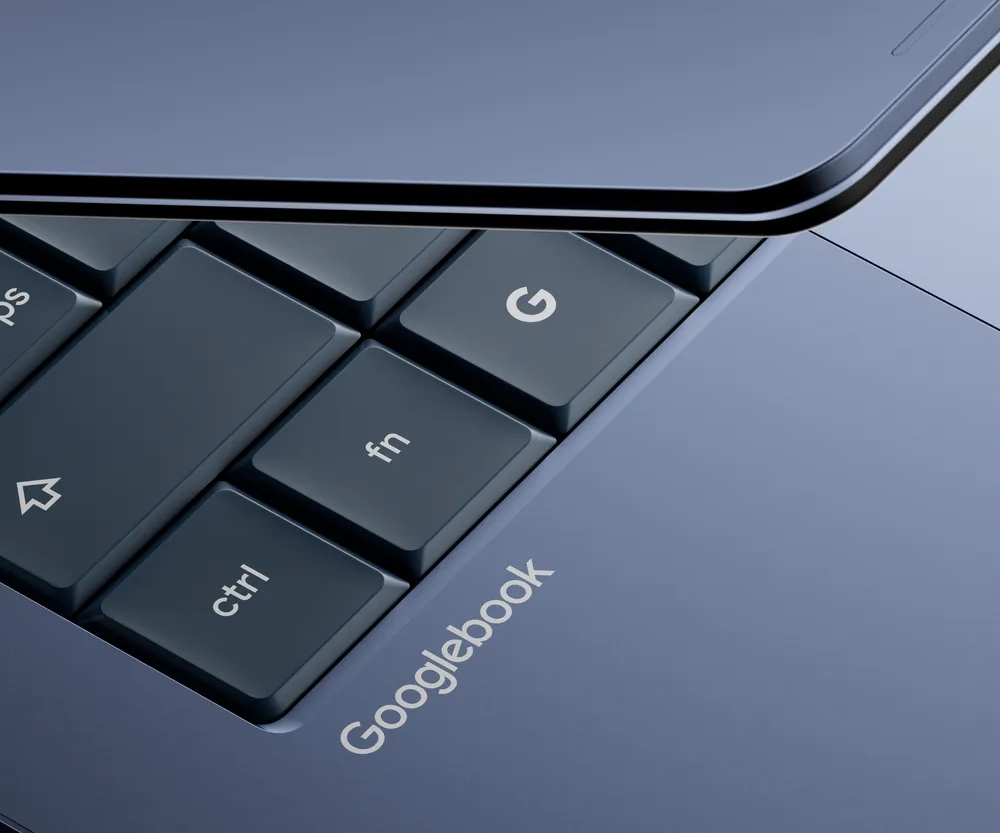
The Googlebook is a new category of laptops, built on the Android tech stack rather than ChromeOS, designed from the ground up around Gemini AI, and, in Google’s own framing, “premium.” First devices ship this fall from Acer, ASUS, Dell, HP, and Lenovo. Pricing has not been announced.
In considering the implications of this new product in the end-of-life sector, the word “premium” carries more weight than any spec sheet that will eventually follow. It signals a structural shift in what a school-and-business laptop is, what it costs, how long it lasts, and what comes back through the reverse-logistics chain at end of life.
What Googlebook actually is
Writing for the company blog, Alex Kuscher, Google’s senior director for laptops and tablets, framed the shift in platform terms: “as we are moving from an operating system to an intelligence system, we see an opportunity to rethink laptops again.” The Chromebook was built for a cloud-first world; the Googlebook is built for an AI-first one.
Two features anchor the pitch. “Magic Pointer” lets a user wiggle the cursor to surface Gemini-powered contextual actions, such as pointing at a date in an email to schedule a meeting, or selecting two images to visualize them together. “Create your Widget” generates custom dashboards on demand by prompting Gemini against Gmail, Calendar and other connected services.
The platform shift extends beyond the feature list. Googlebooks run on the Android stack, with native access to Google Play apps and seamless file handoff to Android phones. ChromeOS, as a distinct operating system on new hardware, is being absorbed into the new platform. Google has confirmed that “many Chromebooks will be eligible to transition to the new experience,” with more details promised this fall. The company has not said which models qualify, and the heavy AI focus suggests the cutoff will favor newer, more powerful silicon.
Googlebook vs. Chromebook vs. Windows: three different bets
Three distinct strategies now target the same buyer. The Chromebook bet was affordability and simplicity: $200–$400 devices, locked-down OS, cloud-first workflows, and a fleet-management story built around the Google Admin console. It owned K-12 because deployment was inexpensive, replacement costs were low, and management was simple. That bet is not being retired. Google explicitly committed this week to continuing Chromebook sales, though it has been moved to a value tier inside a broader portfolio.
The Windows PC bet, especially post–Windows 11 and post–Copilot+, is hybrid: a wide price range from $400 budget machines to $2,000 ultrabooks, broad OEM choice, and an NPU-driven AI story tied to Microsoft’s ecosystem. Windows still owns commercial fleets and the long tail of legacy enterprise software. Its weakness in education has always been cost-of-ownership and management overhead.
The Googlebook bet is different. Google has taken the Chromebook OEM relationships (Acer, ASUS, Dell, HP, Lenovo, the same five names that build Chromebooks and Windows machines) and paired them with premium hardware budgets, differentiating on AI rather than price. The category competes directly with Apple’s MacBook Air and Microsoft’s Copilot+ PCs, while drawing on Chromebook ecosystem relationships. Apple’s MacBook Neo arrived two months earlier at $599; the two announcements reflect the same market insight from opposite ends of the market.
What it means for ITADs, refurbishers, and recyclers
The announcement does not immediately change what arrives at a typical ITAD receiving dock, but it reshapes key elements of an ITAD program, from volume and timing to the character of the returns stream that will arrive over the next five years. The most consequential signal sits inside an enterprise blog post that ran the morning after the launch.
Writing for Google Cloud, ChromeOS director of product management Naveen Viswanatha told existing enterprise and education customers they could “extend the life of your existing PCs with ChromeOS Flex to convert the devices in your fleet nearing end of support, at no cost.” The line landed during the same week that millions of Windows 10 machines, now past Microsoft’s end-of-support date, are still functional but unsupported, and at risk of premature scrapping. Google is positioning Flex as the migration path. And so if you are a refurbisher capable of wiping, imaging, and redeploying fleet returns onto Flex, that is a free operating system from a brand schools and IT directors already trust.
The Chromebook itself is not going away. The same Google Cloud post reiterated that ChromeOS will continue to receive 10 years of automatic updates, that existing fleets can still be managed through the Google Admin console without new licenses, and that, in Viswanatha’s words, “no immediate action is required” for institutions already deployed. A Chromebook bought in 2024 now has a documented software-support runway into 2034, the longest manufacturer-backed support window of any mainstream laptop platform. Refurbishers reselling lightly-used devices through that window have a longer revenue tail than they had a week ago.
Working in the other direction is what “premium” has historically meant on a teardown bench. No spec sheets exist yet, but the trajectory of every premium laptop category over the past decade, from the MacBook Air to the XPS to the Surface to the Galaxy Book, has been toward thinner chassis, soldered memory, glued batteries, and proprietary SSDs. The “unique glowbar” Google touts as a Googlebook design signature is decorative, and is unlikely to be field-repairable. Refurbishers should expect the new category, when it arrives, to require more labor per unit than the Chromebooks it replaces, and to carry higher residual values that justify the extra time.
The hardest question to answer right now is which Chromebooks will make the jump. Google has promised “multiple pathways to transition over to the new experience,” with details to come this fall. If only premium Chromebook Plus models migrate, the budget K-12 fleet stays on legacy ChromeOS and continues through refurbishment channels as before, with a decade of remaining support to monetize. If migration cuts deeper, expect a second wave of Chromebook decommissioning ahead of the original schedule, with the corresponding rise in inbound volume for processors and a heavier transition workload for the IT departments managing the fleets. Either way, the answer Google delivers this fall will shape ITAD inventory mix and pricing through 2028.
What I will watch: The sustainability question Google has not yet answered
As this is a new product, the launch material does not mention recycled content, product carbon footprint, EPEAT registration, repairability scores, or end-of-life programs for the new category. The Chromebook brand accumulated a credible sustainability story over 15 years: long support windows, low-power silicon, and modest material budgets. Googlebooks start from zero. When the first OEM spec sheets land later this year, the questions sustainability officers and procurement teams should ask are concrete and many and include use of recycled aluminum, plastic, and packaging and battery user-replaceability. Is the device EPEAT-registered, and at what tier? Until those answers exist, “premium” remains the only sustainability signal, and the historical record on premium hardware is mixed.
Implications
Apple’s MacBook Neo and Google’s Googlebook are expected to compete intensely in the months ahead. Both reflect the same market signal: entry-commercial and education laptops are being repositioned upmarket, with AI as the differentiator and price as a secondary lever. The EOL sector will be involved some four to five years from now, as these devices find their way into the secondary market or recycling streams. But for refurbishers and recyclers paying attention now, the work to do is in three places. The first is building a ChromeOS Flex redeployment capability while Google is actively promoting it as a Windows 10 replacement path. The second is staying close to school-district and enterprise procurement contacts as they evaluate Googlebook pilots this fall. The third is resisting the temptation to write off the Chromebook brand. It has a decade of manufacturer support remaining, and substantial work remains for the secondary market during that period.