Resource Recycling
  • The Latest
  • Analysis
    • All
    • Certification Scorecard
    • Industry Announcements
    • Opinion
    Top stories from March 2025

    3 factors force e-scrap processing onshore

    Data center boom sets up ITAD growth

    Certification Scorecard — Week of June 15, 2026

    Tzvika Shahaf of Blancco

    Blancco names new SVP of product strategy

    IT security driving plans, reshaping budgets

    Study cuts projected AI server e-waste by 90%

    A call to action: End markets and EPR

    A call to action: End markets and EPR

  • Conferences
    • Resource Recycling Conference
    • Plastics Recycling Conference
    • E-Scrap: The Longevity Conference
    • Textiles Recovery Summit
  • Publications
    • E-Scrap News
    • Plastics Recycling Update
    • Policy Now
    • Resource Recycling
    • Other Topics
      • All Topics
      • Brand Owners
      • Critical Minerals
      • Glass
      • Grant Watch / RFPs
      • Markets
      • Organics
      • Packaging
      • Research
      • Technology
      • Textiles
Subscribe
No Result
View All Result
Resource Recycling
  • The Latest
  • Analysis
    • All
    • Certification Scorecard
    • Industry Announcements
    • Opinion
    Top stories from March 2025

    3 factors force e-scrap processing onshore

    Data center boom sets up ITAD growth

    Certification Scorecard — Week of June 15, 2026

    Tzvika Shahaf of Blancco

    Blancco names new SVP of product strategy

    IT security driving plans, reshaping budgets

    Study cuts projected AI server e-waste by 90%

    A call to action: End markets and EPR

    A call to action: End markets and EPR

  • Conferences
    • Resource Recycling Conference
    • Plastics Recycling Conference
    • E-Scrap: The Longevity Conference
    • Textiles Recovery Summit
  • Publications
    • E-Scrap News
    • Plastics Recycling Update
    • Policy Now
    • Resource Recycling
    • Other Topics
      • All Topics
      • Brand Owners
      • Critical Minerals
      • Glass
      • Grant Watch / RFPs
      • Markets
      • Organics
      • Packaging
      • Research
      • Technology
      • Textiles
Subscribe
No Result
View All Result
Resource Recycling
No Result
View All Result
Home Plastics

EU recyclers urge understanding of solvent-based methods

Antoinette SmithbyAntoinette Smith
October 22, 2025
in Plastics
Eastman, LyondellBasell provide plant updates
Dissolution recycling processes leave a polymer structure intact, and belong in the physical recycling category along with mechanical recycling, Plastics Recyclers Europe said. | Rene Notenbomer/Shutterstock

Industry association Plastics Recyclers Europe is looking to raise the profile of dissolution recycling, an often-overlooked process that doesn’t quite fit into common recycling categories.

“As the European Union intensifies its push toward a circular economy, dissolution recycling emerges as a promising solution that bridges the gap between mechanical and chemical recycling,” according to a new white paper from Brussels-based PRE, which comprises more than 200 EU companies. 

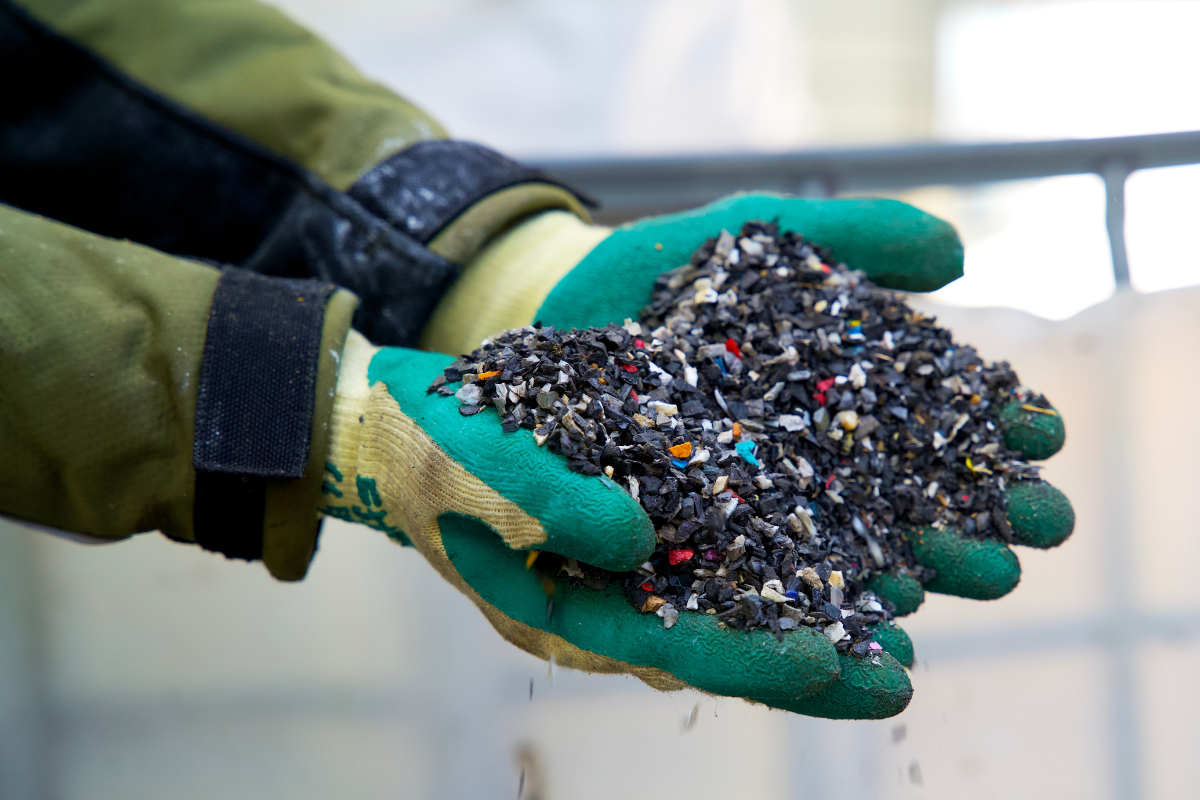
Dissolution uses a solvent to dissolve an intended polymer, most commonly PE and PP but also polystyrene, nylon, PET, PVC, polycarbonate and ABS. Other substances, such as inks, additives and barrier layers, do not dissolve and then can be removed, leaving the purified polymer to be collected from the solvent and processed into virgin-quality resin. 

The process keeps a polymer’s chemical structure intact, while chemical recycling techniques such as pyrolysis and gasification break down a polymer’s complex chemical structure into new, smaller compounds. As such, dissolution recycling processes belong in the physical recycling category, along with mechanical recycling, PRE asserts. 

Along these lines, the Association of Plastic Recyclers in the US says physical recycling is also known as dissolution, and is a “process in which a plastic is subjected to a series of purification steps to separate the target polymer/polymers from other polymers, additives and other added materials such as fibers, fillers, colorants and contaminants, resulting in recovered polymers, which remain largely unaffected by the process and can be reformulated into plastics.”

APR owns Resource Recycling, Inc., publisher of Plastics Recycling Update.

Christian Bruey, director of communications and government relations at US-based PureCycle, told Plastics Recycling Update that the concerns the EU white paper raises are also evident in the US, particularly the lack of regulatory consistency. “There needs to be harmonization. We see New Jersey’s got this rule for recycled content, we see Oregon lumping dissolution with mechanical, we see Washington differentiating chemical and physical and mechanical. So I think the key takeaway from the white paper is harmonization.”

He added that dissolution and mechanical recycling processes also provide traceability of a polymer, whereas chemical recycling does not. “So lumping them together makes more sense than putting dissolution with chemical processes.”

Another advantage of dissolution recycling PRE highlighted is its compatibility with existing supply chains, polymer processing facilities and waste collection systems, as it is a polymer-to-polymer recycling method.

However, the group emphasized that “as the EU moves towards more sustainable waste management, all recycling technologies, mechanical, dissolution, and chemical, will play complementary roles in addressing different types of plastic waste and achieving different quality standards of recycled materials.”

In April, PRE set up the Dissolution Taskforce to complement its collaboration with the Dissolution Recycling of Plastics Initiative (DROP-IN). At least 40 stakeholders in the EU have joined DROP-IN, including US-based PureCycle and LyondellBasell, which acquired German solvent-based recycler APK last fall. 

“Currently, dissolution recycling operates within a regulatory and definitional grey zone, both in the European Union and globally,” according to a recent DROP-IN post on LinkedIn. The group also describes the process as “the overlooked third option between mechanical and chemical recycling.”

Dissolution technologies produce a high-yield resin of quality that is suitable for demanding applications such as food-contact packaging, automotive and electronics. 

Solvent-based techniques also could enable reuse of hard-to-recycle materials, PRE added. For example, plastics used in electronics have posed challenges when discarded, due to such substances as flame retardants or metals, commonly present in plastics from end-of-life electronics. 

PRE also urged the EU to harmonize standards throughout its member countries, adding that the lack of regulatory clarity and consistency are hindering adoption of dissolution technologies as well as investment in infrastructure. 

However, PRE noted that an International Standards Organization technical committee “is effectively reviewing ISO 15270, with a new focus group ISO 15270 3a, Physical Recycling. This group of experts aims to formally define all known physical polymer recycling processes additional to mechanical recycling, including dissolution recycling (based on the well-known ‘extraction’ separation method, also called dissolution purification).” 
Tags: Chemical RecyclingHard-to-Recycle Materials
TweetShare
Antoinette Smith

Antoinette Smith

Antoinette Smith has been at Resource Recycling Inc., since June 2024, after several years of covering commodity plastics and supply chains, with a special focus on economic impacts. She can be contacted at antoinette@resource-recycling.com.

Related Posts

batteries

WM adds batteries to recycling watch list

byPaul Lane
June 16, 2026

Putting batteries on its “Recycle Right” list could help WM mitigate fires they cause at collection facilities, according to company...

Small plastic recovery trial to begin in California

byPaul Lane
June 16, 2026

The Smalls Consortium’s work on recovering small-format plastics could help shape recycling efforts nationwide.

Rare look inside the world’s largest plastics recycler

Mass balance matters: Why different rules can lead to different outcomes 

bySarah Edwards, Eunomia
June 5, 2026

Mass balance is a critical piece of the recycling puzzle—and one that's important to get right.

Circular Materials to supply PlasCred chem recycling plant

Circular Materials to supply PlasCred chem recycling plant

byAntoinette Smith
June 4, 2026

The planned chemical recycling plant in Alberta, Canada, also has a five-year, fixed price offtake contract, ahead of reaching a...

BASF, Encina expand circular feedstock partnership

BASF, Encina expand circular feedstock partnership

byAntoinette Smith
June 3, 2026

In addition to a previous agreement for chemically recycled benzene, BASF will provide procurement strategy advice and planning for project...

Float-sink technology at the Quantum Lifecycle Partners facility in Toronto, Canada enables the processing of e-plastics.

E-plastics recovery line opens in Canada

byPaul Lane
April 28, 2026

Toronto-based Quantum Lifecycle Partners is helping close the gap on North American e-plastic processing.

Load More
Next Post
EPR rules take shape in Oregon, as first test

EPR rules take shape in Oregon, as first test

More Posts

IT security driving plans, reshaping budgets

Study cuts projected AI server e-waste by 90%

June 16, 2026
Revised CA budget includes $200m for recycling

CAA files California program plan for SB 54

June 15, 2026
Group updates on UBC-sorting robot’s success

Plastic bale pricing falls while paper, UBCs firm

June 15, 2026
Recycling council emphasizes importance of supply

Sorted: Why recycling isn’t a ‘scam’

June 15, 2026
CAA seeks industry input on EPR fees

CAA seeks industry input on EPR fees

June 16, 2026
batteries

WM adds batteries to recycling watch list

June 16, 2026
ICIS monthly recycled plastics pulse: Most Oct resin prices stabilize for fall

CA advances PET payments bill, posts DRS recovery rates

June 18, 2026
Rare look inside the world’s largest plastics recycler

TRP launches fund to boost recycling

June 12, 2026
A call to action: End markets and EPR

A call to action: End markets and EPR

June 16, 2026
Australia battery recycling sector could reach A$6.9bn by 2050

Colorado and California bills take aim at battery recycling gaps

June 12, 2026
Load More

About & Publications

About Us

Staff

Archive

Magazine

Work With Us

Advertise
Jobs
Contact
Terms and Privacy

Newsletter

Get the latest recycling news and analysis delivered to your inbox every week. Stay ahead on industry trends, policy updates, and insights from programs, processors, and innovators.

Subscribe

Welcome Back!

Login to your account below

Forgotten Password?

Retrieve your password

Please enter your username or email address to reset your password.

Log In

Add New Playlist

No Result
View All Result
  • The Latest
  • Analysis
  • Recycling
  • E-Scrap
  • Plastics
  • Policy Now
  • Conferences
    • E-Scrap Conference
    • Plastics Recycling Conference
    • Resource Recycling Conference
    • Textiles Recovery Summit
  • Magazine
  • About Us
  • Advertise
  • Archive
  • Jobs
  • Staff
Subscribe
This website uses cookies. By continuing to use this website you are giving consent to cookies being used. Visit our Privacy and Cookie Policy.