Resource Recycling
  • The Latest
  • Analysis
    • All
    • Certification Scorecard
    • Industry Announcements
    • Opinion
    Rainforest

    Inside the Circle: What the rainforest can teach us about EPR

    Closeup of a printed circuitboard

    Hardware demand puts new focus on parts harvesting

    Rare look inside the world’s largest plastics recycler

    Mass balance matters: Why different rules can lead to different outcomes 

    Certification Scorecard — Week of June 1, 2026

    IT asset disposition and electronics recycling: Now and then

    $60 billion in AI servers will create an ITAD challenge

    The independent ITAD at a crossroads

    DMD acquires ITAD firm Lifespan, outlines acquisition strategy

  • Conferences
    • Resource Recycling Conference
    • Plastics Recycling Conference
    • E-Scrap: The Longevity Conference
    • Textiles Recovery Summit
  • Publications
    • E-Scrap News
    • Plastics Recycling Update
    • Policy Now
    • Resource Recycling
    • Other Topics
      • All Topics
      • Brand Owners
      • Critical Minerals
      • Glass
      • Grant Watch / RFPs
      • Markets
      • Organics
      • Packaging
      • Research
      • Technology
      • Textiles
Subscribe
No Result
View All Result
Resource Recycling
  • The Latest
  • Analysis
    • All
    • Certification Scorecard
    • Industry Announcements
    • Opinion
    Rainforest

    Inside the Circle: What the rainforest can teach us about EPR

    Closeup of a printed circuitboard

    Hardware demand puts new focus on parts harvesting

    Rare look inside the world’s largest plastics recycler

    Mass balance matters: Why different rules can lead to different outcomes 

    Certification Scorecard — Week of June 1, 2026

    IT asset disposition and electronics recycling: Now and then

    $60 billion in AI servers will create an ITAD challenge

    The independent ITAD at a crossroads

    DMD acquires ITAD firm Lifespan, outlines acquisition strategy

  • Conferences
    • Resource Recycling Conference
    • Plastics Recycling Conference
    • E-Scrap: The Longevity Conference
    • Textiles Recovery Summit
  • Publications
    • E-Scrap News
    • Plastics Recycling Update
    • Policy Now
    • Resource Recycling
    • Other Topics
      • All Topics
      • Brand Owners
      • Critical Minerals
      • Glass
      • Grant Watch / RFPs
      • Markets
      • Organics
      • Packaging
      • Research
      • Technology
      • Textiles
Subscribe
No Result
View All Result
Resource Recycling
No Result
View All Result
Home Plastics

Recycling analysis pinpoints gaps in New York data

Marissa HeffernanbyMarissa Heffernan
May 21, 2024
in Plastics
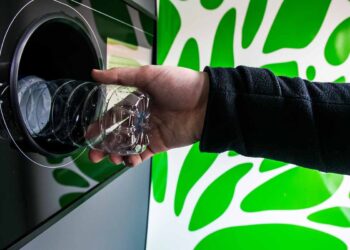
RRS compiled initial data on the collection and recycling system in the state, and of the 121 categories of data the report sought, 43 were available, 27 were partially available and 51 were currently unknown or not currently available. | BestStockFoto/Shutterstock

While New York has several efforts underway to gather more recycling data, significant gaps still remain and could complicate passage of an extended producer responsibility bill for paper and packaging, a recent analysis found.

The gap analysis is the first step toward a needs assessment and was commissioned by the New York State Center for Sustainable Materials Management. RRS carried out the work, which involved compiling initial data on the collection and recycling system and recommendations for closing gaps in data needed for the complete needs assessment. 

“This project was undertaken in anticipation of potential enactment of an extended producer responsibility program for packaging and paper products,” the report stated, adding that “data gap analysis and a comprehensive statewide needs assessment are critical first steps needed to define the necessary actions to be taken under a new EPR for PPP program.” 

EPR supporters in New York have been working to pass a law that covers paper and packaging for several years, and the June 6 legislative session deadline is nearing. 

The report found plenty of gaps. Of the 121 categories of data the report sought, 43 were available, 27 were partially available and 51 were currently unknown or not currently available. 

In particular, information on multifamily residential recycling programs outside of New York City and commercial and institutional recycling programs was lacking, as were details on MRF and composter operations and the drop-off recycling stream. 

New York City is in the process of collecting and assessing all available recycling data, but it was not fully compiled and available for inclusion in the gap analysis, the report noted. 

“To fill the data gaps and chart the course toward a modern, effective recycling system will require continued research and data gathering, supported by improved contracting and reporting systems,” the report stated, adding that New York “should build a more robust data reporting and tracking system,” which may require granting additional statutory or regulatory authority to New York Department of Environmental Conservation or local governments. 

Even so, the initial report determined that 84% of municipal solid waste materials that are currently going to landfills State are recoverable and the remaining materials “cannot be readily recovered in today’s economy.”

Going deeper, about 39% of the current disposal stream is recoverable through MRFs and 31% is organics. Another 13% of the disposal stream includes items that could be recyclable via drop-off, such as plastic film, bulky plastics, scrap metal, textiles and electronics. The final 1% is deposit containers that did not go into the returnable container redemption system. 

Of the 31% of the stream that is organics, food is 55%, which is about 2.89 million tons annually.

“While it is not feasible to capture for diversion all materials currently going to disposal, there is significant opportunity to divert more materials from the MSW disposal stream for recycling, composting and anaerobic digestion in today’s current recovery economy,” the report stated. 

Looking at the materials handled in municipal recycling programs, paper represents an average of 65%, while plastic comes in at 15%. Glass is the next largest portion of the stream at 9%, followed by metals at 7%. The remaining percentage was not described in the report. 

RRS also interviewed seven local governments, and three collectors and processors. Several operators said they would like to see an expansion of the bottle bill to include more glass items on deposit, the report noted. 

Other feedback included a desire for consolidation of the types of plastic used by manufacturers; faster response times from the state; consistency in diversion rules, ordinances and laws; more support for end-market development, glass in particular; and support for more streamlined data collection.

“One recycling program interviewed believes that the state would be valuable in helping programs obtain more complete commercial data, as the state is in a better position to do this than local government,” the report noted. “Another recycling program suggested that the state could start requiring entities disposing above a certain quantity of waste to periodically conduct a waste characterization study.” 

Processors voiced to RRS that they “want the state and New York State legislature to fully understand the current recycling systems and infrastructure in the State before passing an EPR policy.” 

A version of this story appeared in Resource Recycling on May 20.

Tags: DataEPRResearch
TweetShare
Marissa Heffernan

Marissa Heffernan

Marissa Heffernan worked at Resource Recycling from January 2022 through June 2025, first as staff reporter and then as associate editor. Marissa Heffernan started working for Resource Recycling in January 2022 after spending several years as a reporter at a daily newspaper in Southwest Washington. After developing a special focus on recycling policy, they were also the editor of the monthly newsletter Policy Now.

Related Posts

House resolution aims to make recyclability central to product design

NY EPR bill fails to advance after third try

byStefanie Valentic
June 8, 2026

This marks the third session in which the bill cleared the Senate only to stall in the Assembly.

Rainforest

Inside the Circle: What the rainforest can teach us about EPR

byBill Shireman
June 8, 2026

We have a lot to learn from jungles, particularly as we fight the thorny problem of plastic pollution.

CalRecycle withdraws proposed regs for SB 54

Oceana, NRDC, CAW sue CalRecycle over SB 54 regs

byStefanie Valentic
June 5, 2026

The groups allege that the new regulations have too many loopholes for packaging producers.

Rare look inside the world’s largest plastics recycler

Mass balance matters: Why different rules can lead to different outcomes 

bySarah Edwards, Eunomia
June 5, 2026

Mass balance is a critical piece of the recycling puzzle—and one that's important to get right.

Circular Materials to supply PlasCred chem recycling plant

Circular Materials to supply PlasCred chem recycling plant

byAntoinette Smith
June 4, 2026

The planned chemical recycling plant in Alberta, Canada, also has a five-year, fixed price offtake contract, ahead of reaching a...

In My Opinion: Comparing the nation’s first packaging EPR laws

What Maine’s vape EPR law means for recyclers

byStefanie Valentic
June 4, 2026

Maine is the first state to require vape manufacturers to fund end-of-life management for their products. Vape recycler Michael Duckworth...

Load More
Next Post

Pittsburgh MRF automation targets PP

More Posts

Recycling industry addresses Beyond Plastics report

Recycling industry addresses Beyond Plastics report

May 26, 2026
Machinex

Longview mill tragedy raises broader questions for fiber, recycling sectors

May 29, 2026
Fire at an EMR recycling facility in Camden, New Jersey May 29, 2026.

EMR faces shutdown calls after numerous fires

June 2, 2026
The independent ITAD at a crossroads

DMD acquires ITAD firm Lifespan, outlines acquisition strategy

June 2, 2026
IT asset disposition and electronics recycling: Now and then

$60 billion in AI servers will create an ITAD challenge

June 3, 2026
War, not demand driving polymer pricing

War, not demand driving polymer pricing

June 2, 2026
BASF, Encina expand circular feedstock partnership

BASF, Encina expand circular feedstock partnership

June 3, 2026
Our top stories from June 2021

Colorado advances EV battery EPR law

June 3, 2026
In My Opinion: Comparing the nation’s first packaging EPR laws

What Maine’s vape EPR law means for recyclers

June 4, 2026
California extends compostable labeling law

California bills crack down on false recycling, compostable claims

May 29, 2026
Load More

About & Publications

About Us

Staff

Archive

Magazine

Work With Us

Advertise
Jobs
Contact
Terms and Privacy

Newsletter

Get the latest recycling news and analysis delivered to your inbox every week. Stay ahead on industry trends, policy updates, and insights from programs, processors, and innovators.

Subscribe

Welcome Back!

Login to your account below

Forgotten Password?

Retrieve your password

Please enter your username or email address to reset your password.

Log In

Add New Playlist

No Result
View All Result
  • The Latest
  • Analysis
  • Recycling
  • E-Scrap
  • Plastics
  • Policy Now
  • Conferences
    • E-Scrap Conference
    • Plastics Recycling Conference
    • Resource Recycling Conference
    • Textiles Recovery Summit
  • Magazine
  • About Us
  • Advertise
  • Archive
  • Jobs
  • Staff
Subscribe
This website uses cookies. By continuing to use this website you are giving consent to cookies being used. Visit our Privacy and Cookie Policy.