



Resource Recycling
  • The Latest
  • Analysis
    • All
    • Certification Scorecard
    • Industry Announcements
    • Opinion

    Certification scorecard for the week of March 9, 2026

    Diversion Dynamics: Secondhand exports slow down fast fashion

    Certification scorecard for the week of March 2, 2026

    Industry announcements for January 2026

    Industry Announcements for March 2026

    HP receives ocean plastics certification

    HP Inc. earnings point to memory inflation challenge

    Certification scorecard for the week of Feb. 23, 2026

    Umicore highlights strength in recycling, catalysis

    Apto, Tusaar partner on rare earths recovery

    Apto, Tusaar partner on rare earths recovery

    Certification scorecard for the week of Feb. 16, 2026

  • Conferences
  • Publications

    Other Topics

    Textiles
    Organics
    Packaging
    Glass
    Brand Owners

    Metals
    Technology
    Research
    Markets
    Grant Watch

    All Topics

Subscribe
No Result
View All Result
Resource Recycling
  • The Latest
  • Analysis
    • All
    • Certification Scorecard
    • Industry Announcements
    • Opinion

    Certification scorecard for the week of March 9, 2026

    Diversion Dynamics: Secondhand exports slow down fast fashion

    Certification scorecard for the week of March 2, 2026

    Industry announcements for January 2026

    Industry Announcements for March 2026

    HP receives ocean plastics certification

    HP Inc. earnings point to memory inflation challenge

    Certification scorecard for the week of Feb. 23, 2026

    Umicore highlights strength in recycling, catalysis

    Apto, Tusaar partner on rare earths recovery

    Apto, Tusaar partner on rare earths recovery

    Certification scorecard for the week of Feb. 16, 2026

  • Conferences
  • Publications

    Other Topics

    Textiles
    Organics
    Packaging
    Glass
    Brand Owners

    Metals
    Technology
    Research
    Markets
    Grant Watch

    All Topics

Subscribe
No Result
View All Result
Resource Recycling
No Result
View All Result
Home Plastics

Bottle bills erode MRF revenues but create municipal savings

Marissa HeffernanbyMarissa Heffernan
March 7, 2022
in Plastics
Committee issues food-contact recycling decisions
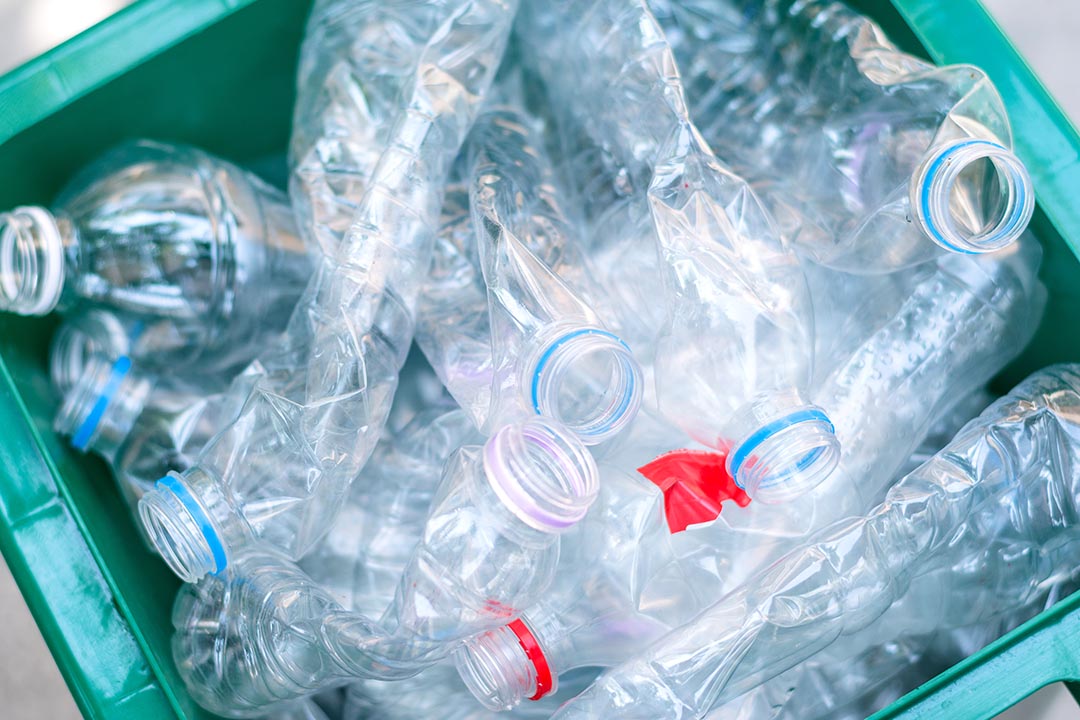
Container deposit systems have benefits for municipalities, but MRFs are likely to see revenues decline as valuable PET and aluminum are removed from their material stream. | Myibean/Shutterstock

Though container deposit systems typically help lift recovery rates for covered materials, the programs also usually reduce tonnages of high-quality PET and aluminum going to sorting facilities. A new study helps to quantify those potential impacts.

The National Waste & Recycling Association (NWRA) released the study evaluating the effect of beverage container deposit systems on MRF costs and revenues, as well as the effects on municipalities.

Prepared by Resource Recycling Systems (RRS), the research modeled six deposit scenarios with variations based on beverage type and deposit value. Each scenario is based on an average-sized MRF with 93,600 tons per year throughput serving a community of approximately 1.25 million people in 473,000 households.

Overall, the findings were that container deposits lead to higher costs and lower revenues because high-value materials move to the deposit system and out of the MRF. The fixed cost per ton is higher as the cost to run the same equipment is spread across fewer tons, the report said.

The research estimates that municipalities could see an annual MRF cost increase of $2.50 to $5 per household.

Resa Dimino, RRS managing principal, said in a NWRA press release the study provided useful data and “shows a need for balance between system and policy.”

“We need to ensure that municipalities and MRFs are kept whole as higher quality materials are collected and removed from our waste streams and waterways,” Dimino said.

The scenarios included three different beverage combinations at a 5-cent deposit and a 10-cent deposit. The combinations were beer and carbonated soft drinks; beer, carbonated soft drinks and water; and all beverages, excluding milk.

The modeling assumed that aluminum, glass and PET beverage containers are included and that a 5-cent deposit yields a 65% redemption rate while a 10-cent deposit yields a 85% redemption rate.

Recycling rates increased in all scenarios, with the highest rates for an all-beverage deposit of 10 cents (77% for PET, 83% for glass and 89% for aluminum, up from a baseline of 29%, 25% and 50%, respectively).

Overall, more glass and aluminum than PET would leave the MRF system under all scenarios, and the study suggested that between 10,770 and 17,630 tons per year would no longer make its way to MRF sort lines. That would result in a revenue loss for a typical MRF of between $11.90 and $23.50 per ton marketed, depending on which deposit scenario was in place.

However, communities could see disposal cost savings from bottle bills, the study said, as well as a reduction in litter and marine debris and related cleanup costs. Higher-value materials are also more likely to be circular, it noted.

The report said further study is needed to understand the effect on recycling collection costs and throughput due to changes in the density of the recyclables mix.

To help offset the negative effects of bottle bills on MRFs, the study suggested policies like that in California, where MRFs are able to redeem containers in bulk and collect the deposits.

“Policy can be structured to capture the benefits of beverage container deposits – high recycling rates for target materials and materials more suited for closed loop applications – while ensuring that municipal recycling programs are not harmed,” the report said.

Bottle bill advocate weighs in

Susan Collins, president of the nonprofit Container Recycling Institute, said in a recent op-ed that the NWRA, by projecting an annual increase per household in MRF processing costs, is creating the impression that bottle bills will raise overall waste management costs for municipalities.

“Nothing could be further from the truth,” Collins wrote. She noted that several studies in the past 15 years have shown that municipalities typically see savings in the form of reduced collection costs, lower landfill tipping fees, less litter to remove from the environment and more.

She added that while the study also found that bottle bills remove high-value materials from MRF streams, “the impact of bottle bills on MRFs will be manageable.”

“The data show the total value of a MRF ton (as of August 2021) at $156, and the value at $154 under a full deposit system scenario (with all beverage containers on a 10-cent deposit). That $2 per ton drop (a 1.3% decrease) pales in comparison to the normal cyclical swings in commodity prices, as the study also shows,” Collins wrote.
 

Tags: CollectionContainer DepositsLegislation
TweetShare
Marissa Heffernan

Marissa Heffernan

Marissa Heffernan worked at Resource Recycling from January 2022 through June 2025, first as staff reporter and then as associate editor. Marissa Heffernan started working for Resource Recycling in January 2022 after spending several years as a reporter at a daily newspaper in Southwest Washington. After developing a special focus on recycling policy, they were also the editor of the monthly newsletter Policy Now.

Related Posts

Landfill

Oregon DEQ issues $3.1 million fine to Republic Services subsidiary

byStefanie Valentic
March 12, 2026

Valley Landfills Inc., a Republic Services subsidiary, must pay $3.1 million in penalties and take corrective actions following a multi-year...

Machinex debuts organics co-collection system

Coastal partners with Machinex on four Florida MRF projects

byStefanie Valentic
March 10, 2026

Coastal Waste & Recycling is accelerating its MRF upgrade strategy as it partners with Machinex on four projects.

RecycleDat! collects nearly 197,000 cans at Mardi Gras

RecycleDat! collects nearly 197,000 cans at Mardi Gras

byScott Snowden
March 9, 2026

The coalition diverted more than 61,000 pounds of material in New Orleans, including nearly 197,000 aluminum beverage cans.

Emerging US EPR programs spark harmonization talks

Washington designates CAA to lead EPR implementation

byStefanie Valentic
March 4, 2026

The state is the sixth to name Circular Action Alliance as the producer responsibility organization for its packaging EPR law.

State policy is redefining plastics recycling in the US

Policy Now March 2026: CalRecycle selects textile EPR PRO

byStefanie Valentic
March 2, 2026

Legislators are working to sharpen the rules governing how products can be marketed as compostable, recyclable or reusable and avoid...

Minnesota publishes prelim EPR assessment

Minnesota publishes prelim EPR assessment

byAntoinette Smith
February 20, 2026

The report will inform recommendations featured in the next report to develop the state's EPR program for packaging.

Load More
Next Post
Braskem adds two PP grades made with PCR

Braskem adds two PP grades made with PCR

More Posts

Chinese processing group details goals for US visit

AMP lays out vision of next-generation, AI-driven MRFs

July 24, 2024
ERI sues Revivn alleging raid on staff and trade secrets

ERI sues Revivn alleging raid on staff and trade secrets

March 10, 2026
Northeast recycled commodity values hit 5-year lows

Northeast recycled commodity values hit 5-year lows

March 6, 2026
E-scrap export pause urged to keep rare earth scrap in US

E-scrap export pause urged to keep rare earth scrap in US

March 11, 2026
How rising fuel and memory prices are impacting ITAD’s margins

How rising fuel and memory prices are impacting ITAD’s margins

March 10, 2026

AI servers reshape ITAD sector, recyclers brace for new wave

March 9, 2026
Ex-Glencore chief starts Valor to refine critical metals

Ex-Glencore chief starts Valor to refine critical metals

September 18, 2025
RecycleDat! collects nearly 197,000 cans at Mardi Gras

RecycleDat! collects nearly 197,000 cans at Mardi Gras

March 9, 2026
Emerging US EPR programs spark harmonization talks

Washington designates CAA to lead EPR implementation

March 4, 2026
Greenway now takes e-scrap from Midwest businesses

Greenway now takes e-scrap from Midwest businesses

March 11, 2026
Load More

About & Publications

About Us

Staff

Archive

Magazine

Work With Us

Advertise
Jobs
Contact
Terms and Privacy

Newsletter

Get the latest recycling news and analysis delivered to your inbox every week. Stay ahead on industry trends, policy updates, and insights from programs, processors, and innovators.

Subscribe

Welcome Back!

Login to your account below

Forgotten Password?

Retrieve your password

Please enter your username or email address to reset your password.

Log In

Add New Playlist

No Result
View All Result
  • The Latest
  • Analysis
  • Recycling
  • E-Scrap
  • Plastics
  • Policy Now
  • Conferences
    • E-Scrap Conference
    • Plastics Recycling Conference
    • Resource Recycling Conference
    • Textiles Recovery Summit
  • Magazine
  • About Us
  • Advertise
  • Archive
  • Jobs
  • Staff
Subscribe
This website uses cookies. By continuing to use this website you are giving consent to cookies being used. Visit our Privacy and Cookie Policy.