






Resource Recycling
  • The Latest
  • Analysis
    • All
    • Certification Scorecard
    • Industry Announcements
    • Opinion
    CompuCycle brings e-plastic recycling upgrade online

    Quantum expands e-plastics recovery

    Certification Scorecard — Week of May 4, 2026

    Building a cleaner future through digital transformation

    Q1 earnings confirm wave of ITAD decommissioning

    Sundry Photography / Shutterstock

    Iron Mountain puts ITAD at the center of its growth

    Industry announcements for January 2026

    Industry announcements for May 2026

    Apple store

    Apple leads on inputs, faces questions on ITAD

  • Conferences
    • Resource Recycling Conference
    • Plastics Recycling Conference
    • E-Scrap: The Longevity Conference
    • Textiles Recovery Summit
  • Publications
    • E-Scrap News
    • Plastics Recycling Update
    • Policy Now
    • Resource Recycling
    • Other Topics
      • Brand Owners
      • Critical Minerals
      • Glass
      • Grant Watch
      • Markets
      • Organics
      • Packaging
      • Research
      • Technology
      • Textiles
      • All Topics
Subscribe
No Result
View All Result
Resource Recycling
  • The Latest
  • Analysis
    • All
    • Certification Scorecard
    • Industry Announcements
    • Opinion
    CompuCycle brings e-plastic recycling upgrade online

    Quantum expands e-plastics recovery

    Certification Scorecard — Week of May 4, 2026

    Building a cleaner future through digital transformation

    Q1 earnings confirm wave of ITAD decommissioning

    Sundry Photography / Shutterstock

    Iron Mountain puts ITAD at the center of its growth

    Industry announcements for January 2026

    Industry announcements for May 2026

    Apple store

    Apple leads on inputs, faces questions on ITAD

  • Conferences
    • Resource Recycling Conference
    • Plastics Recycling Conference
    • E-Scrap: The Longevity Conference
    • Textiles Recovery Summit
  • Publications
    • E-Scrap News
    • Plastics Recycling Update
    • Policy Now
    • Resource Recycling
    • Other Topics
      • Brand Owners
      • Critical Minerals
      • Glass
      • Grant Watch
      • Markets
      • Organics
      • Packaging
      • Research
      • Technology
      • Textiles
      • All Topics
Subscribe
No Result
View All Result
Resource Recycling
No Result
View All Result
Home Recycling

Aluminum can recycling remains below 30-year average

Antoinette SmithbyAntoinette Smith
December 10, 2024
in Recycling
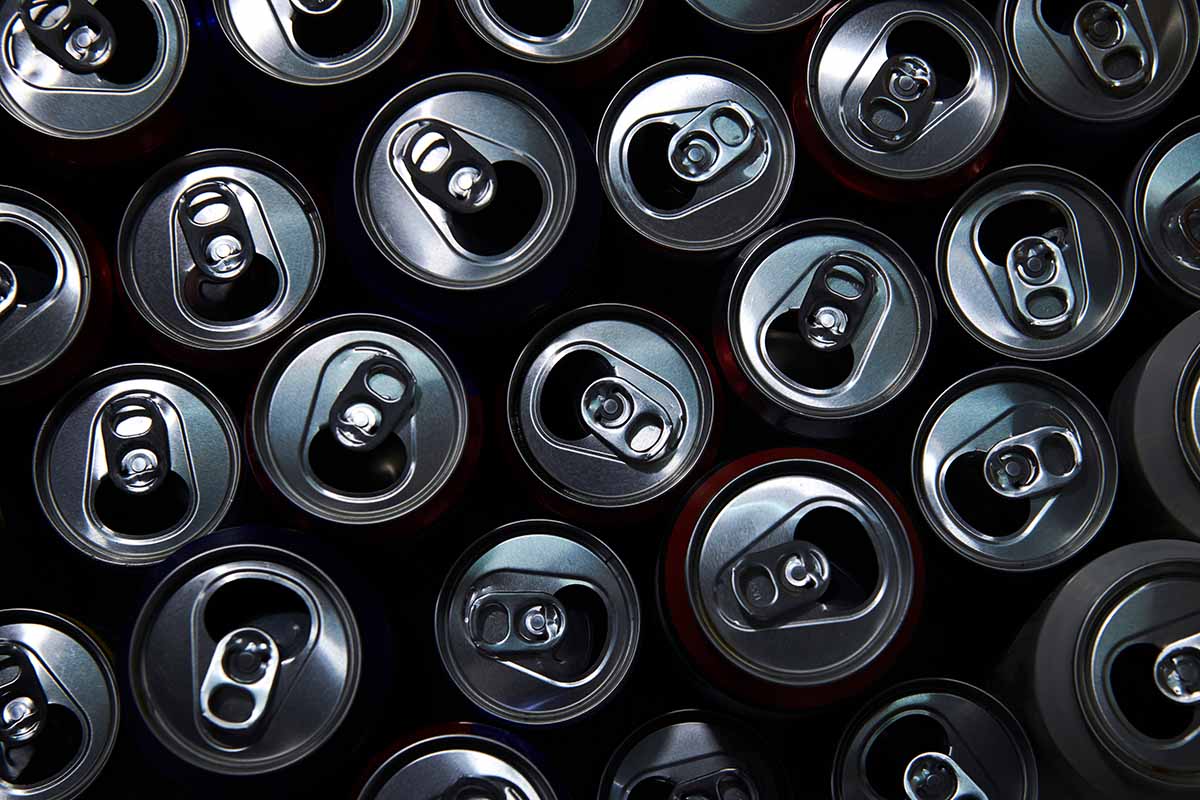
The consumer recycling rate rose from the preceding three years, but industry association executives warned that the U.S. still has much work to be done to compete on a global level. | Ji Jinn/Shutterstock

Only 43% of aluminum cans shipped in the U.S. in 2023 were ultimately recycled, well below the 30-year average but slightly higher than in the previous three years, according to the most recent industry report.

Based on a survey of aluminum can recyclers and canmakers, and government and other data sources, the average consumer recycling rate has been around 52% since tracking began in 1990 and was around 42% in 2020-2022. 

“This is unfortunate given aluminum packaging represents only 3% of the weight but nearly 30% of the economic value of recyclable material generated by a single family home,” according to the annual report, created by The Aluminum Association and the Can Manufacturers Institute and released Dec. 5. 

The consumer recycling rate measures the share of domestic aluminum beverage cans that get recycled and excludes imported scrap. 

“The recycling rate only lowered a few percentage points mainly due to trade dynamics,” said Scott Breen, vice president of sustainability at CMI, in an email. “The underlying fundamentals in the U.S. recycling system have not changed since our last KPI report. That’s the problem. To move the needle, we have to change the system.” 

Breen added that policy is the best means to achieving higher recycling rates, and that deposit return systems are the only policy proven to deliver the high rates the industry is targeting for 2030, 2040 and 2050. He also acknowledged that meeting the 2030 goal of 70% “is looking increasingly unlikely.” 

“Improving household access, proper sortation at recycling centers, and better education and outreach so people understand the importance of recycling cans all help and are included in our pillars of action, but we will not be able to achieve our targets without new, well-designed recycling refund programs,” he said.

In the press release, CMI President Robert Budway pointed to his organization’s recycling primer and roadmap to show how the U.S. can achieve recycling targets. “We recognize reaching these targets will be a challenge that requires tailored strategies for our unique and diverse political environment,” he said. “Certain policy prescriptions, such as comprehensive extended producer responsibility laws that include recycling refunds (deposit return systems), will greatly improve recovery of beverage containers.” 

In addition, he said, CMI members should focus on improving household and away-from-home recycling access, increasing consumer education for recycling and developing more efficient aluminum beverage can sortation at recycling centers.

Industry recycling rate falls for a second year

The industry recycling rate, which includes both imported and exported UBCs, was at 57%, marking the second consecutive year of decline. The rate was 61.8% in 2021 and 58.6% in 2022. In 2012, it was 67.0%, according to the report. 

The closed loop circularity rate – the percentage of recycled material used in making the same product – rose by 4 percentage points to 96.7%, compared to 34% for PET bottles and 30-60% for glass. 

“This higher rate means there is less need for primary material production, which results in decreased greenhouse gas emissions, less material in landfills and a greater preservation of natural resources,” the report’s authors wrote.

In 2023, the industry recycled 46 billion cans, bringing the total to more than 2 trillion since tracking began in 1972. The industry recycling rate represents the amount of scrap U.S. producers recycle as a percentage of finished cans shipped during the year. “In basic terms, the rate provides an indication of industry stewardship and efficiency in managing the metal,” according to the report.

However, the average recycled content of U.S.-made aluminum cans fell to 71%, lower by 2 percentage points from the last reported figure from 2019. Of that 71%, 29% was primary aluminum, 53% was post-consumer scrap, largely from UBCs, and 18% was post-industrial scrap. 

In addition to the report, CMI released an update on its efforts surrounding recycling rate targets.

“Our current approach to recycling in America is simply not working at the level we need,” said Charles Johnson, president and CEO of the Aluminum Association, in a press release. He added that on average U.S. consumers threw away the equivalent of 15 12-packs per person in 2023. “This is bad for the economy, the environment and national security. It also puts the United States toward the bottom of aluminum can recycling compared to peer countries.”

Updates to erroneous government data

The latest report includes revised 2020 figures for statistics including pounds of UBC exports, volumes of cans recycled by U.S. consumers and the consumer recycling rate, due to “inaccuracies in official UBC export volumes published by the Census Bureau” that led the organizations to hold off on issuing reports in 2022 and 2023. 

“Recently completed investigations to correct the data revealed significant issues, including misclassification and data validation errors, that dramatically overstated export volumes, leading to artificially inflated consumer and industry recycling rates. The two-year data revision process is a testament to the Aluminum Association’s mission to publish accurate and complete information, which is crucial for informed decision-making and effective policy implementation in our increasingly sustainability-focused economy,” the report authors wrote.

During a panel during an October electronics sustainability conference, Carolyn Hoskinson, director of the EPA Office of Resource Conservation and Recovery, acknowledged that after publishing the 2020 report, the government “basically found that our data was horrible.” 

She added that the agency had designed an entirely new methodology, and hoped it would debut in 2025. However, she cautioned, “it will not be able to be compared to the old report,” due to the new approach.


Tags: DataEPR
TweetShare
Antoinette Smith

Antoinette Smith

Antoinette Smith has been at Resource Recycling Inc., since June 2024, after several years of covering commodity plastics and supply chains, with a special focus on economic impacts. She can be contacted at [email protected].

Related Posts

Lawsuits hover days after SB 54 approval

Lawsuits hover days after SB 54 approval

byStefanie Valentic
May 6, 2026

NRDC and Californians Against Waste are suing CalRecycle over finalized EPR regulations they say unlawfully allow chemical recycling and other...

Person filling a bottle with product

How reuse fits into EPR

byBrian Clark Howard
May 6, 2026

Reusable packaging is a growing sector and is supported by several state EPR programs, though implementation varies.

CAA seeks comment on REM recycling standard

byStefanie Valentic
May 6, 2026

Circular Action Alliance is now accepting public comment for its draft Responsible End Markets certification standard.

Lithium-ion battery recycler to build New York facility

Why battery EPR doesn’t have a packaging problem

byStefanie Valentic
May 4, 2026

While packaging EPR fights injunctions, battery EPR has achieved a mostly harmonized legal framework across nearly every state that has...

Electronics are the fire risk battery EPR keeps missing

Electronics are the fire risk battery EPR keeps missing

byStefanie Valentic
May 4, 2026

Most battery EPR frameworks don't cover what's actually igniting in collection trucks.

New version of California EPR regulations released

CalRecycle approves SB 54 regulations

byStefanie Valentic
May 2, 2026

CalRecycle approved permanent regulations under SB 54, the state's landmark packaging EPR law. The rules took effect immediately upon filing...

Load More
Next Post

AMP raises $91 million to push AMP ONE ahead

More Posts

New version of California EPR regulations released

CalRecycle approves SB 54 regulations

May 2, 2026
Lawsuits hover days after SB 54 approval

Lawsuits hover days after SB 54 approval

May 6, 2026

Origin Materials to shut down, sell PET cap design

May 6, 2026
Texas plant in limbo after Eastman loses DOE grant

Eastman cites RPET adoption for growth

May 5, 2026
Fiber producers push for June price increases

Fiber producers push for June price increases

May 5, 2026
Plastic Ingenuity to use PureCycle PP for coffee lids

Plastic Ingenuity to use PureCycle PP for coffee lids

April 30, 2026
Electronics are the fire risk battery EPR keeps missing

Electronics are the fire risk battery EPR keeps missing

May 4, 2026
Study quantifies lithium battery threat to infrastructure

Battery fires remain elevated in early 2026: report

May 1, 2026
Sundry Photography / Shutterstock

Iron Mountain puts ITAD at the center of its growth

May 5, 2026
Lithium-ion battery recycler to build New York facility

Why battery EPR doesn’t have a packaging problem

May 4, 2026
Load More

About & Publications

About Us

Staff

Archive

Magazine

Work With Us

Advertise
Jobs
Contact
Terms and Privacy

Newsletter

Get the latest recycling news and analysis delivered to your inbox every week. Stay ahead on industry trends, policy updates, and insights from programs, processors, and innovators.

Subscribe

Welcome Back!

Login to your account below

Forgotten Password?

Retrieve your password

Please enter your username or email address to reset your password.

Log In

Add New Playlist

No Result
View All Result
  • The Latest
  • Analysis
  • Recycling
  • E-Scrap
  • Plastics
  • Policy Now
  • Conferences
    • E-Scrap Conference
    • Plastics Recycling Conference
    • Resource Recycling Conference
    • Textiles Recovery Summit
  • Magazine
  • About Us
  • Advertise
  • Archive
  • Jobs
  • Staff
Subscribe
This website uses cookies. By continuing to use this website you are giving consent to cookies being used. Visit our Privacy and Cookie Policy.