





Resource Recycling
  • The Latest
  • Analysis
    • All
    • Certification Scorecard
    • Industry Announcements
    • Opinion
    SK Tes on track to meet 2030 ITAD goal

    SK tes’ sustainability report offers window into ITAD

    Our top stories from February 2023

    ADS flexes new recycling capacity against resin spikes

    SCS launches chem recycling standard

    Certification scorecard — week of Sept. 28

    NJ’s PCR delay risks making its own excuse permanently true

    NJ’s PCR delay risks making its own excuse permanently true

    E-scrap magnet recycling company scales up

    Why only some rare-earth sources are economically viable

    e-Stewards to develop an ITAD-specific standard

    Certification scorecard — week of Sept. 21

  • Conferences
    • Resource Recycling Conference
    • Plastics Recycling Conference
    • E-Scrap: The Longevity Conference
    • Textiles Recovery Summit
  • Publications
    • E-Scrap News
    • Plastics Recycling Update
    • Policy Now
    • Resource Recycling
    • Other Topics
      • All Topics
      • Brand Owners
      • Critical Minerals
      • Glass
      • Grant Watch / RFPs
      • Markets
      • Organics
      • Packaging
      • Research
      • Technology
      • Textiles
Subscribe
No Result
View All Result
Resource Recycling
  • The Latest
  • Analysis
    • All
    • Certification Scorecard
    • Industry Announcements
    • Opinion
    SK Tes on track to meet 2030 ITAD goal

    SK tes’ sustainability report offers window into ITAD

    Our top stories from February 2023

    ADS flexes new recycling capacity against resin spikes

    SCS launches chem recycling standard

    Certification scorecard — week of Sept. 28

    NJ’s PCR delay risks making its own excuse permanently true

    NJ’s PCR delay risks making its own excuse permanently true

    E-scrap magnet recycling company scales up

    Why only some rare-earth sources are economically viable

    e-Stewards to develop an ITAD-specific standard

    Certification scorecard — week of Sept. 21

  • Conferences
    • Resource Recycling Conference
    • Plastics Recycling Conference
    • E-Scrap: The Longevity Conference
    • Textiles Recovery Summit
  • Publications
    • E-Scrap News
    • Plastics Recycling Update
    • Policy Now
    • Resource Recycling
    • Other Topics
      • All Topics
      • Brand Owners
      • Critical Minerals
      • Glass
      • Grant Watch / RFPs
      • Markets
      • Organics
      • Packaging
      • Research
      • Technology
      • Textiles
Subscribe
No Result
View All Result
Resource Recycling
No Result
View All Result
Home Recycling

Reusable packaging generating reports, action

Marissa HeffernanbyMarissa Heffernan
December 4, 2023
in Recycling
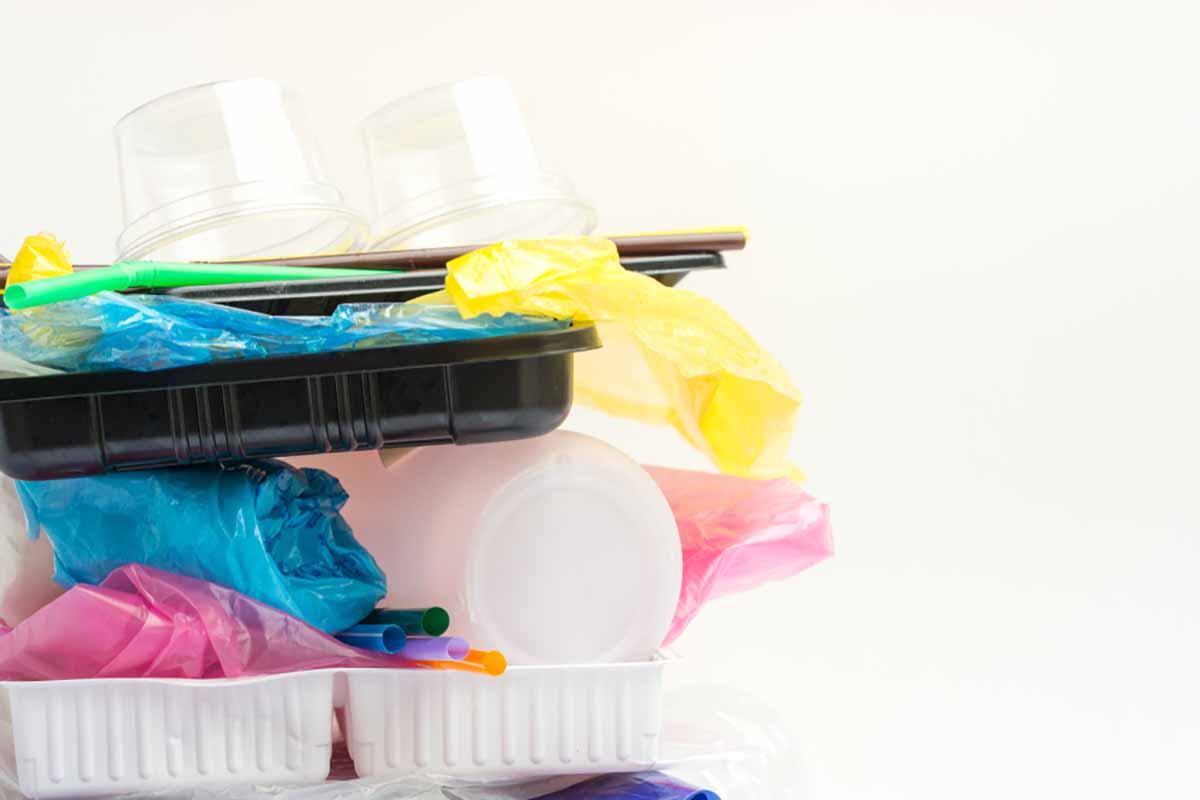
Canadian technology company Reusables.com is working to reduce single-use plastic foodware at universities. | Kanittha Boon/Shutterstock

Several recently published reports from the Ellen MacArthur Foundation and Oceana explored how to scale reusable packaging, while a Canadian company took another step toward establishing one such system.

Canadian circular economy technology company Reusables.com is working to reduce single-use plastic foodware at universities. 

So far, the Tap to Reuse and Smart Return Bin technology has been rolled out at Simon Fraser University in Vancouver, British Columbia in September, after a pilot project last year resulted in the elimination of 125 kg of single-use packaging over six months.

To expand its reach, Reusables partnered with Compass Group Canada’s educational food service division, Chartwells. 

Students at the university can now get stainless steel reusable containers that are linked with Reusables’ RFID technology. That lets them return the containers without an app or a deposit, “making it the most convenient and scalable platform for sustainable packaging,” a press release noted. 

The company’s RFID tags and automated return system has a 99% overall return rate, the press release added. 

Jason Hawkins, Reusables CEO and co-founder, said the company vision is “to make reusable packaging the default for food services globally.” 

Sid Mehta, the senior director of ancillary services at Simon Fraser University, said the program “aligns with our single-use product reduction goals.” 

The state of reusables

Oceana released a report detailing the potential impact of a 10% increase in the use of reusable beverage packaging, and the current state of reusable and refillable packaging around the world. 

According to the report, a 10% rise in reusable beverage packaging by 2030 could replace more than one trillion single-use plastic bottles and cups and prevent up to 153 billion single-use containers from entering oceans and waterways.

In 2022, the global population used 1.5 trillion single-use plastic bottles and cups, the report noted, and up to 168 billion of them became pollution in aquatic systems. Of single-use cups, 59% by weight were polystyrene. The U.S. and China are the top consumers of non-alcoholic ready-to-drink individually packaged beverages, according to the report. 

Some countries are well ahead of others when it comes to reusable infrastructure. Ethiopia, the Philippines, Germany and Nicaragua all have a market share of refillables greater than 30%, followed by Paraguay, Kenya, Sri Lanka, Chile, Mexico and Zambia with shares of over 20%. 

Major markets lacking strong refillable footprints are the U.S., Canada, Indonesia, the United Kingdom, China and Poland, where less than 1% of non-alcoholic beverages are sold in refillable bottles, the report found. 

Also emerging are reusable cup systems, which are currently in use in the U.S. and Europe, and have been adopted by some major companies and organizations. 

Matt Littlejohn, Oceana’s senior vice president for strategic initiatives, said in a press release that “we’ve spent too much time chasing circular fantasies while huge amounts of plastic continue to flood into our oceans.” 

“Adding recycled content to bottles and cups won’t topple this single-use plastic tower,” he said. “The way to really make a difference is to replace single-use plastic with reusable packaging. We need companies and governments to stop betting on the wrong horse with recycling and to prioritize the expansion and re-establishment of reusable packaging systems instead.” 

Oceana is calling for global beverage and bottling companies to increase reusable packaging and to reduce the production and use of single-use plastic. 

“All beverage and bottling companies should set targets to increase reusable packaging by at least 10 percentage points (and hopefully beyond) and to allocate appropriate investment and marketing resources to ensure growth goals are achieved,” the press release said. 

That kind of increase “is clearly possible,” the press release added, because “the world’s leading soft drink companies, The Coca-Cola Company and PepsiCo, have large existing reusable packaging systems and have already pledged to increase the volume of beverages they sell in reusable packaging by 10 percentage points.”

“It is imperative for both companies, which have a history of not meeting commitments, to follow through and for other beverage companies to step up,” the press release stated. 

While most of the report focused on non-alcoholic beverages, it noted that beer is another product area that can easily be transitioned to refillables. Anheuser-Busch InBev sells 35% of its volume in returnable glass bottles already, and Heineken in 2022 estimated that 38% of its packaging in a returnable format, the report said. 

There has been some movement toward refillable legislation in Chile, Austria, France, Germany, Portugal, Romania, Sweden and Spain, the report added.

“The global transition to efficiently designed reusable beverage systems will require investment,” the report noted. “Luckily, reusable beverage packaging is not only good for the environment, but it’s good for business, too.”

A different system of reuse 

The Ellen MacArthur Foundation also shared a new report focused on business-to-consumer reusable packaging. Developed with more than 60 organizations and brands, as well as consulting firms Systemiq and Eunomia, it models four different returnable packaging applications at three different levels of change. 

The four returnable packaging applications are beverages, personal care, fresh food and food that is in a cupboard, while the three levels of change are a system level of change, where the model assumed that 40% of the market would shift to reusable packaging; a collaborative level, where about 10% of the market would shift; and a “fragmented effort” level, where only about 2% of the market changes. 

“The scenarios keep all variables constant across applications to aid comparison, but its likely that any system would have a blend of bespoke and pooled packaging, and high return rates may be easier or harder to reach depending on the application,” the report noted, adding that the outcomes presented are based on French data and geography.

Overall, a successful return system has three key things, the report added: scale and shared infrastructure; packaging standardization and pooling; and high return rates. 

“As the need for action becomes evermore urgent, and in anticipation of increased regulation, now is the time to come together to make this reuse revolution a reality,” the report stated. 

Tags: CanadaIndustry GroupsResearch
TweetShare
Marissa Heffernan

Marissa Heffernan

Marissa Heffernan worked at Resource Recycling from January 2022 through June 2025, first as staff reporter and then as associate editor. Marissa Heffernan started working for Resource Recycling in January 2022 after spending several years as a reporter at a daily newspaper in Southwest Washington. After developing a special focus on recycling policy, they were also the editor of the monthly newsletter Policy Now.

Related Posts

Auto Draft

Canadian company delves into durable second-hand devices

byPaul Lane
October 1, 2026

Rugged Books’ work delivering refurbished devices to specialized industries is set to expand overseas.

Basel Convention could ‘destabilize textile circularity,’ panelists warn

byBrian Clark Howard
September 30, 2026

The international convention may change the way second-hand clothing is regulated, with potentially big impacts.

USFFI signs first film offtake deals

USFFI signs first film offtake deals

byAntoinette Smith
September 29, 2026

The brand-led group has moved more than 3 million pounds of flexible packaging from two California MRFs to reclaimers and...

Analysis: Undersupply of PCR is ‘stifling’ brand goals

US lawmakers urge protection of domestic RPET

byAntoinette Smith
September 25, 2026

In a letter to the US Trade Representative, five representatives asked the USTR to consider trade remedies and support verification...

Oregon state capitol building with state flag and blue sky.

NAW appeals Oregon EPR ruling

byStefanie Valentic
September 25, 2026

NAW is challenging an Oregon judge's ruling in favor of the state's extended producer responsibility law.

APR reports success for 2026 recycling tours 

APR reports success for 2026 recycling tours 

byAntoinette Smith
September 23, 2026

In May, more than 2,500 visitors toured 41 facilities in the US and Mexico, during APR's second annual Recycling in...

Load More
Next Post

NY mayor cuts curbside e-scrap pick-up service

2026 Buyers’ Guide

Equipment, services and technology suppliers serving the recycling industry.

Browse the Guide

More Posts

Newsom nixes recycled content claims bill

Newsom nixes recycled content claims bill

September 28, 2026
Analysis: Undersupply of PCR is ‘stifling’ brand goals

US lawmakers urge protection of domestic RPET

September 25, 2026
Oregon state capitol building with state flag and blue sky.

NAW appeals Oregon EPR ruling

September 25, 2026
trash bags

Sorted: Should we use recycled trash bags?

September 28, 2026
Recyclers reeling from NJ PCR extension

Recyclers reeling from NJ PCR extension

September 23, 2026
Domestic e-plastics recovery picks up pace 

Domestic e-plastics recovery picks up pace 

September 30, 2026
Diversion Dynamics: Policy needed to reach full charge for vape recycling

Disposable vapes banned in California

September 28, 2026
USFFI signs first film offtake deals

USFFI signs first film offtake deals

September 29, 2026
NJ’s PCR delay risks making its own excuse permanently true

NJ’s PCR delay risks making its own excuse permanently true

September 28, 2026
Cyclic launches commercial test of rare earth recycling tech

ERI investment to help fund Cyclic Materials expansion

September 29, 2026
Load More

About & Publications

About Us

Staff

Archive

Magazines

Work With Us

Advertise
Jobs
Contact
Terms and Privacy

Newsletters

Get the latest recycling news and analysis delivered to your inbox every week. Stay ahead on industry trends, policy updates, and insights from programs, processors, and innovators.

Subscribe

Welcome Back!

Login to your account below

Forgotten Password?

Retrieve your password

Please enter your username or email address to reset your password.

Log In

Add New Playlist

No Result
View All Result
  • The Latest
  • Analysis
  • Recycling
  • E-Scrap
  • Plastics
  • Policy Now
  • Conferences
    • E-Scrap Conference
    • Plastics Recycling Conference
    • Resource Recycling Conference
    • Textiles Recovery Summit
  • Magazines
  • About Us
  • Advertise
  • Archive
  • Jobs
  • Staff
Subscribe
This website uses cookies. By continuing to use this website you are giving consent to cookies being used. Visit our Privacy and Cookie Policy.