





As we move further into 2021, we have gained some level of hindsight on those early days of the COVID-19 pandemic. We know what steps we can take to limit the spread of the virus, and we know of the risks that respiratory droplets present.
We also know that the pandemic has changed the way we look at recycling and waste management systems, particularly when it comes to the way our programs connect with the international manufacturing pipelines for many important products.
An essential business in more ways than one
Following on the heels of China’s National Sword policies, COVID-19 added layers of uncertainty to an already-shifting recycling market landscape.
As businesses in the U.S. began to close (either temporarily or permanently), levels of clean OCC dropped precipitously. Here at Ecomaine, which provides waste and recycling services for 70 communities in Maine, we saw a drop in commercial recycling tonnage of 20% in a very short amount of time.
Meanwhile, of course, many people started to work from home, leading to a spike in residential single-stream recycling and MSW tonnage, to the tune of nearly 15%.
Delivery-focused packaging items – boxes, especially – were seen in much greater volumes as residents relied on delivery services for household items, food, office supplies and much more. Additionally, we saw shortages of toilet paper and a number of other items at retail stores. As the pandemic took root, the supply and demand drastically shifted for so many of these materials to which we might not often give a second thought.
But these shifts did not occur in a vacuum. With industry estimates saying that between 40% and 50% of the global manufacturing supply chain depends on recycling for some level of feedstock, the decisions made in relation to local recycling programs moved to the forefront. This essential service was revealed as truly essential – not only to our residents, but to the international system that relies on the post-consumer material that material recovery facilities (MRFs) like ours bring to the marketplace.
Recycling collectors and processors needed to make sure their workers stayed safe, and they also needed to adjust to an incoming stream that was shifting rapidly and move materials into markets hungry for feedstock.
Ongoing shifts in paper markets
That appetite for material among manufacturers during the pandemic can be understood clearly by looking at recent trends in fiber pricing.
Through spring and summer of 2020, mills worked feverishly to keep up with demand, especially for toilet paper, which became known as “white gold.” These mills desperately needed the feedstock coming from MRFs as commercial supplies dwindled. As a result, pricing for OCC and mixed residential paper moved higher and higher over the last year, increasing 80% and 185%, respectively.
Ecomaine suddenly was fielding calls – from domestic mills and Asian buyers – for material we had struggled to receive positive bids for since 2018. This led to positive results for Ecomaine and communities that had stayed the course with recycling programs, through National Sword and into the pandemic.
Indeed, even before the spring of 2020, Ecomaine had been preparing for a global shortage in post-consumer fiber supply. The fallout from National Sword led to massive domestic investment waves in paper mills outfitted to accept residential mixed paper and OCC. Industry analysis showed around 20 planned mill projects in North America, slated to add at least 2 million to 4 million tons of recycled fiber manufacturing capacity in the coming years.
Many of these projects involved mills switching from newspaper and graphic stock to packaging, such as cardboard and paperboard boxes, along with hygiene products. This trend was only accelerated by the shift in supply and demand brought on by COVID-19.
It appears likely that this domestic demand, coupled with Chinese investment in stateside mills, to generate and ship pulp from post-consumer fiber, will continue to drive demand and pricing higher. Additionally, we expect to see increased demand from markets such as India and other Asian countries.
Aligning with United Nations priorities
As we reassess local recycling program ties to global markets, it’s also important to note that humanitarian objectives in the global community align with the ways we are trying to strengthen municipal recycling in our own neighborhoods.
The United Nations’ Sustainable Development Goals (UNSDG) seek to improve lives and livelihoods across the globe, touching on issues of hunger, poverty, education and infrastructure. Many of these goals intersect with the interplay between recycling locally and manufacturing globally.
For instance, goal number 12 within the UN framework aims to ensure sustainable consumption and production patterns. We know that recycling everyday items leads to greater sustainability in production, conserving natural resources such as trees, oil and ore. By committing to reduction, reuse and recycling – particularly during times of great upheaval, like a pandemic – we can align with international goals to maintain natural resources, with the potential to reduce global conflicts that arise over control of those resources.
Additionally, goal 13 under UNSDG seeks to take action on climate change, and there are clearly opportunities for waste managers to overlap here as well.
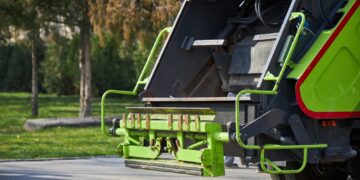
This goes beyond knowing that recycling is preferable to landfilling, in terms of greenhouse gas and methane emissions. Further gains can be made by moving toward the electrification of fleets and drastically reducing greenhouse gas emissions during collection. Ecomaine looks forward to later in 2021, when we’ll welcome two all-electric waste hauling trucks.
Further, promoting policies and actions to use closed landfill cells as locations for landfill solar farms, as Ecomaine will see this summer, can provide clean energy to our power grids.
Make the connection
We may not know what tomorrow brings, whether it is a public health challenge, new governmental policies, or market fluctuations – but we can prepare. And being ready for these challenges requires a perspective that goes beyond town limits or state borders. In a global marketplace, everything is connected, from the recycling cart at the curb to the mill thousands of miles away that’s creating your next home delivery box.
A local recycling program could be seen as just one more service a city provides, but when viewed from the wider global perspective, it becomes clear just how important our collective work is to manufacturing and sustainability across the globe.
Kevin Roche is CEO and general Manager at Ecomaine and can be contacted at roche@ecomaine.org. Ecomaine’s mission, as a municipally owned nonprofit entity, is to provide comprehensive long-term solid waste solutions in a safe, environmentally responsible, economically sound manner, and to be a leader in raising public awareness of sustainable waste management strategies. Ecomaine serves 450,000 people in 70 communities with single-sort recycling, food and organic waste recovery, waste-to-energy, a landfill, and a team of education and outreach professionals from its facilities in Portland, Maine.
This article appeared in the May 2021 issue of Resource Recycling. Subscribe today for access to all print content.