









Advertisement Header Ad
Resource Recycling
  • The Latest
  • Analysis
    • All
    • Certification Scorecard
    • Industry Announcements
    • Opinion

    Certification Scorecard for December 3, 2025

    Industry Announcements for Week of December 1

    News from Dynamic Lifecycle Innovations, Precision E-Cycle

    News from Northeast Recycling Council, Plastipak and more

    News from Northeast Recycling Council, Sortera Technologies and more

    News from MKV Polymers, Metallium Ltd. and more

    Certification Scorecard for November 19, 2025

    News from American Beverage, Inteplast Group and more

    News from Action Carting Environmental Services, International Paper and more

  • Conferences
  • Publications

    Other Topics

    Textiles
    Organics
    Packaging
    Glass
    Brand Owners

    Metals
    Technology
    Research
    Markets
    Grant Watch

    All Topics

Subscribe
No Result
View All Result
Resource Recycling
  • The Latest
  • Analysis
    • All
    • Certification Scorecard
    • Industry Announcements
    • Opinion

    Certification Scorecard for December 3, 2025

    Industry Announcements for Week of December 1

    News from Dynamic Lifecycle Innovations, Precision E-Cycle

    News from Northeast Recycling Council, Plastipak and more

    News from Northeast Recycling Council, Sortera Technologies and more

    News from MKV Polymers, Metallium Ltd. and more

    Certification Scorecard for November 19, 2025

    News from American Beverage, Inteplast Group and more

    News from Action Carting Environmental Services, International Paper and more

  • Conferences
  • Publications

    Other Topics

    Textiles
    Organics
    Packaging
    Glass
    Brand Owners

    Metals
    Technology
    Research
    Markets
    Grant Watch

    All Topics

Subscribe
No Result
View All Result
Resource Recycling
No Result
View All Result
Home Recycling

Researchers offer food for thought on what goes to waste

byJared Paben
October 8, 2019
in Recycling
Share on XLinkedin
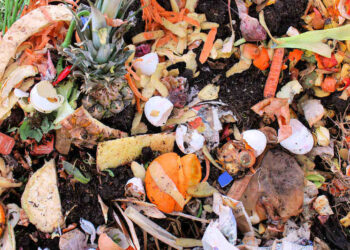
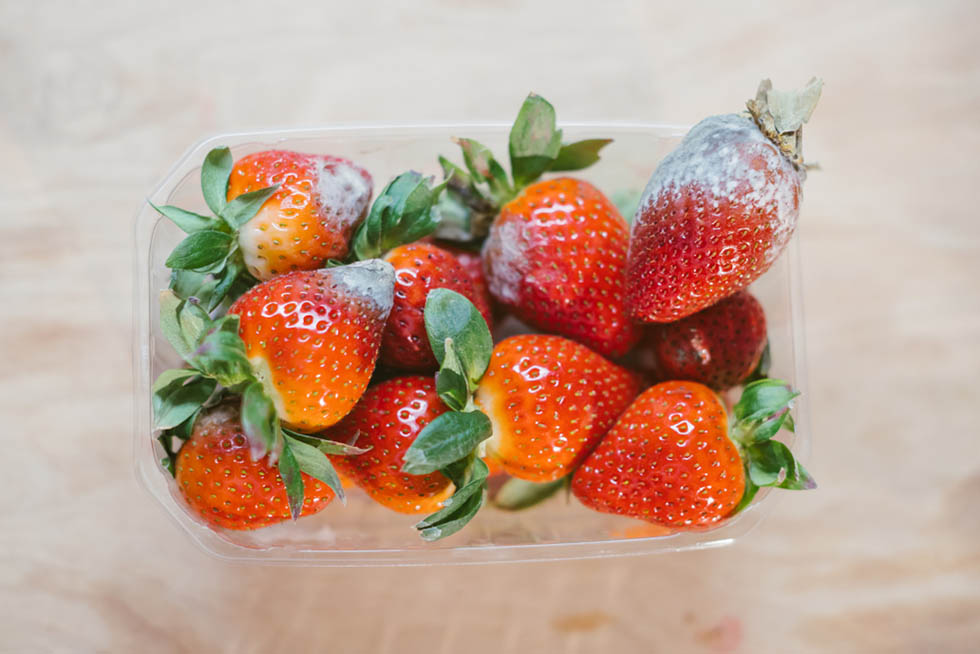
For this study Oregon researchers focused on the problem of people discarding their once-edible food.  | Alina Rosanova/Shutterstock

For most people, a diary entry might recount memorable moments from the previous day, or details on love gone bad.

But in Oregon, residents were recently instructed to journal about the food they sent to disposal, recovery and other channels.

Using those writings, as well as survey results and waste sort data from dozens of households, researchers looked at the types and tonnages of wasted food in the state. The work, conducted by Portland State University for the Oregon Department of Environmental Quality (DEQ), also probed the causes of the waste and residents’ attitudes.

The recently released Oregon Wasted Food Study lays out some compelling data and offers advice for municipal or state program leaders looking to conduct their own food waste studies.

A few takeaways from the Beaver State

Oregon researchers focused on the problem of people discarding their once-edible food. Understanding the reasons for wasted food was a goal of the study.

“Wasted food, that is throwing away food that could have been eaten, is preventable,” the report notes. “Indeed, prevention – avoiding the wasting of food in the first place – has far greater potential to reduce environmental impacts than recovery methods such as composting or anaerobic digestion.”

The study found that 71% of food thrown away by households could have been eaten at some point. The root cause for that food getting discarded, according to researchers, was a failure to manage the food, by either households “losing” it in the fridge until it went bad, or making or buying too much food in the first place.

Researchers in the Beaver State found underreporting was an issue with the diary method. Residents indicated in their diaries they disposed of 1.5 pounds of edible food per capita in curbside garbage and organics carts. But when researchers combed through the contents of those households’ carts, they found 1.9 pounds for each resident.

That being said, both methods came up with remarkably similar numbers for the percentages of inedible food waste versus once-edible wasted food. The diary-keepers indicated 29% was inedible (bones, shells, etc.), very close to the inedible number derived from the sorts: 32%.

The research also involved interviews and surveys to gauge Oregonians’ attitudes about food waste.

In Oregon households, many surveyed residents noted feelings of guilt, saying they felt they should reduce the amount of food they waste. The researchers were able to suss out some ways people react to those feelings. One of those was storing food in the refrigerator. Two-thirds of survey respondents said they felt less guilty about storing leftovers in the fridge rather than immediately throwing them away, even if the food ended up being wasted later anyway.

And nearly three-quarters of survey respondents felt less guilty about disposing of food in compost bins than in the trash.

“Composting has been successfully marketed as a better alternative to landfilling and is contributing to diverting food waste from landfill,” the report noted. “However, composting may also contribute to increased generation of wasted food by alleviating some guilt around throwing food items in the trash. Some respondents justified their over-purchasing by explaining that they would compost the extra food items so it wasn’t actually wasting.”

Considerations for future efforts

Acknowledging more research needs to be conducted into the issue of wasted food, the Oregon report provides advice for others looking to launch studies.

Researchers discussed the comparative advantages and disadvantages of four data-collection techniques: self-reported surveys, self-reported diaries, waste composition studies on aggregated samples, and waste composition studies on the household level.

Diaries take a lot of money and resources in terms of recruiting households to participate. The method also demands ongoing support from research staff, rewards and incentives to get residents to participate, and compilation and analysis afterward.

But that strategy also yields a depth of data that others, such as waste sorts, can’t. For example, they can show all disposal channels, not just curbside carts — the Oregon diaries showed 11.2% of food thrown away was washed down the drain or garbage disposal. And they can glean the reasons why the food went uneaten.

But, as noted earlier, the diaries also suffer from an underreporting of weight, so the Oregon researchers recommended using other strategies, such as sorts of curbside material, to gauge the level of underreporting. Another benefit of sort exercises is they generate more objective data. A household filling out a daily food waste diary may change its behavior because it’s been made more aware of its waste, but an aggregated waste sort shows what households actually do during their usual routines.

The report acknowledges many programs may have limited data on hand. Researchers recommend, at a minimum, assessing how much of the food waste was once edible versus inedible, so the program can track progress toward reducing waste of edible food. Otherwise, well-intentioned programs may be left touting the success of reducing methane generation by diverting food waste from landfills, when the amount of edible food being waste is actually increasing, according to the report.

“If the overall amount of food disposed to all destinations is increasing, so are the environmental, economic, and social burdens associated with that wasted food and in particular, the large upstream impacts of production, which are typically unseen or not considered in traditional waste-based measurement or assessment,” the report notes.

 

Tags: OrganicsResearch
Jared Paben

Jared Paben

Related Posts

Atlas acquisition boosts Circular Services’ organics reach

Atlas acquisition boosts Circular Services’ organics reach

byKeith Loria
November 24, 2025

Circular Services recently acquired Atlas Organics, a prominent organics processor with eight composting facilities nationwide, further expanding its organics portfolio.

Global recycling patent trends may reflect legislative push

Global recycling patent trends may reflect legislative push

byAntoinette Smith
November 25, 2025

Patent applications for chemical recycling technologies have reached a record high globally with government initiatives among the factors driving innovation,...

Familiar roadblock restricts UK recovery rate growth

Familiar roadblock restricts UK recovery rate growth

byColin Staub
January 25, 2017

Research in the U.K. shows that uncertainty over recyclability of plastic products continues to prevent higher recovery rates among the...

Reclaimer argues for goal of 50 percent RPET bottles

Reclaimer argues for goal of 50 percent RPET bottles

byJared Paben
September 12, 2018

Some beverage brand owners are moving toward 100 percent RPET bottles, but one of the country's largest PET reclaimers says...

small electronics

Research provides higher e-scrap disposal estimate

byJared Paben
September 13, 2018

Yale University researchers estimate 3.5 million metric tons of electronics ended up in U.S. landfills in 2015, significantly higher than...

Research provides higher U.S. disposal estimates

byJared Paben
September 18, 2018

Yale University researchers estimate 230 million metric tons of MSW were landfilled in the U.S. in 2015, nearly twice the...

Load More
Next Post

Nation's capital tackles curbside contamination

More Posts

Analysis: Q3 earnings confirm new industry priorities

Analysis: Q3 earnings confirm new industry priorities

November 13, 2025
Iron Mountain raises ITAD guidance on strong growth

Iron Mountain raises ITAD guidance on strong growth

November 13, 2025
ERCC outlines shift toward convenience benchmarks

ERCC outlines shift toward convenience benchmarks

November 13, 2025
Analysis: EU softens ESG rules as compliance pressure builds for US

Analysis: EU softens ESG rules as compliance pressure builds for US

November 20, 2025
Sector holds wide gaps in environmental standards

Sector holds wide gaps in environmental standards

November 20, 2025
From crawl to run: a clear roadmap for ITAD ESG

From crawl to run: a clear roadmap for ITAD ESG

November 20, 2025
New entrepreneurs bring renewed energy to e-cycling

New entrepreneurs bring renewed energy to e-cycling

November 20, 2025
The Re:Source Podcast Episode 1: E-Scrap look-back and 2026 outlook

The Re:Source Podcast Episode 1: E-Scrap look-back and 2026 outlook

November 21, 2025
ERI and ReElement partner on rare earth magnet recovery

ERI and ReElement partner on rare earth magnet recovery

November 26, 2025
Cyber risks confront ITAD work, contracts, coverage

Cyber risks confront ITAD work, contracts, coverage

November 26, 2025
Load More

About & Publications

About Us

Staff

Archive

Magazine

Work With Us

Advertise
Jobs
Contact
Terms and Privacy

Newsletter

Get the latest recycling news and analysis delivered to your inbox every week. Stay ahead on industry trends, policy updates, and insights from programs, processors, and innovators.

Subscribe

Welcome Back!

Login to your account below

Forgotten Password?

Retrieve your password

Please enter your username or email address to reset your password.

Log In

Add New Playlist

No Result
View All Result
  • The Latest
  • Analysis
  • Recycling
  • E-Scrap
  • Plastics
  • Conferences
    • E-Scrap Conference
    • Plastics Recycling Conference
    • Resource Recycling Conference
    • Textiles Recovery Summit
  • Magazine
  • About Us
  • Advertise
  • Archive
  • Jobs
  • Staff
Subscribe
This website uses cookies. By continuing to use this website you are giving consent to cookies being used. Visit our Privacy and Cookie Policy.