




Resource Recycling
  • The Latest
  • Analysis
    • All
    • Certification Scorecard
    • Industry Announcements
    • Opinion
    EPR fees are a market signal. Here’s what they’re telling you.

    EPR fees are a market signal. Here’s what they’re telling you.

    Wolframite ore, the primary ore of tungsten from Altai, Russia

    Tungsten scrap export controls draw industry attention

    Certification Scorecard — Week of April 6, 2026

    Closed Loop Partners acquires Sutter Metals, connecting electronics disposition to metals recovery

    Certification Scorecard — Week of March 30, 2026

    Industry announcements for January 2026

    Industry announcements for April 2026

    Certification scorecard – Week of March 23, 2026

    Certification Scorecard – Week of March 16, 2026

    Groups identify recovered plastics users in the Northeast

    Bale pricing for recycled plastics diverges

  • Conferences
  • Publications

    Other Topics

    Textiles
    Organics
    Packaging
    Glass
    Brand Owners

    Metals
    Technology
    Research
    Markets
    Grant Watch

    All Topics

Subscribe
No Result
View All Result
Resource Recycling
  • The Latest
  • Analysis
    • All
    • Certification Scorecard
    • Industry Announcements
    • Opinion
    EPR fees are a market signal. Here’s what they’re telling you.

    EPR fees are a market signal. Here’s what they’re telling you.

    Wolframite ore, the primary ore of tungsten from Altai, Russia

    Tungsten scrap export controls draw industry attention

    Certification Scorecard — Week of April 6, 2026

    Closed Loop Partners acquires Sutter Metals, connecting electronics disposition to metals recovery

    Certification Scorecard — Week of March 30, 2026

    Industry announcements for January 2026

    Industry announcements for April 2026

    Certification scorecard – Week of March 23, 2026

    Certification Scorecard – Week of March 16, 2026

    Groups identify recovered plastics users in the Northeast

    Bale pricing for recycled plastics diverges

  • Conferences
  • Publications

    Other Topics

    Textiles
    Organics
    Packaging
    Glass
    Brand Owners

    Metals
    Technology
    Research
    Markets
    Grant Watch

    All Topics

Subscribe
No Result
View All Result
Resource Recycling
No Result
View All Result
Home Recycling

Opinions vary on marine debris in Calif. packaging policy

byJared Paben
August 15, 2017
in Recycling

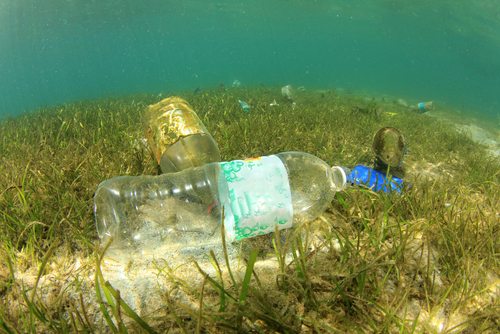
Should California consider whether packaging contributes to marine debris when formulating mandatory policies for its collection and recycling? Your answer likely depends on whether you represent the business community or environmental interests.

The California Department of Resources Recycling and Recovery (CalRecycle) recently sought public input on criteria department officials will use to help develop mandatory policies for increasing the recycling of packaging.

CalRecycle sees a mandatory diversion approach to packaging as important to helping California achieve its goal of a 75 percent recycling rate by 2020.

Officials continue to emphasize no decisions have been made, but the department has mentioned extended producer responsibility (EPR) and minimum-recycled-content requirements as tools under consideration. A particularly controversial approach, EPR requires producers to finance the collection and recycling of the products they sell into the marketplace. No U.S. state has EPR for packaging, but Canadian provinces have begun implementing the approach for their residential paper and packaging streams.

Some industry observers maintain that bottle bills are a form of EPR, especially in a state such as Oregon, where the beverage industry manages the details of the deposit program. Possible mandatory policies in California, however, would extend beyond the beverage container realm and affect a wide range of product packaging.

CalRecycle sought feedback and suggestions on screening criteria they could use to determine which packaging types should be prioritized for analysis relative to different mandatory policy approaches. Nearly two dozen responses were submitted, and CalRecycle posted them online.

One question CalRecycle asked was whether it should consider whether different types of packaging end up as waterway and marine debris. Following are the responses dealing directly with that question:

American Chemistry Council:
“Marine debris is not a function of the packaging material, but rather is a litter issue that is tied to the waste infrastructure and consumer behavior.”

American Forest & Paper Association:
“The Department should not consider marine debris as part of the screening criteria. Marine debris is a problem with littering and not with material use. It can be addressed with access to collection and participation by consumers.”

California Ocean Protection Council:
“OPC staff supports CalRecycle’s inclusion of waterway and marine debris as a criterion to prioritize packaging. With an estimated eight million metric tons of trash annually entering the world’s oceans, our marine ecosystems are essentially acting as an unregulated landfill for solid waste. Given that 8 of the top 10 types of items found on California Coastal Cleanup Day fall under the category of packaging, packaging reform can make a significant contribution towards preventing and reducing marine debris in the future.”

Foodservice Packaging institute:

“While decreasing waterway and marine debris is important, it is not directly related to California’s statewide policy goal of not less than 75 percent of solid waste generated be source reduced, recycled, or composted by the year 2020. Reducing litter and marine debris does not mean increased recovery and may therefore distract from the specific task at hand. Given that both commonly and less commonly recycled items are on ‘top littered items’ lists, this does not provide valuable criterion for CalRecycle. Should the state see a decrease in these littered items, there is little chance that CalRecycle could determine whether these items ended up in the recycling stream (and be counted toward the state’s recovery goal) or in landfill.

Grocery Manufacturers Association:
“Marine debris should not be considered. Debris in water is a litter challenge, not a material selection issue. While decreasing waterway and marine debris is important, it is not directly related to California’s statewide waste reduction policy goals. Reducing litter and marine debris does not equate to increased recovery and may distract from the specific task at hand.”

Sonoco:
“Marine debris – while a significant issue – marine debris is a function of activities unrelated to packaging; e.g., consumer littering behavior; number/placement of municipal trash receptacles near beaches and waterways; how frequently they are emptied; covers on haulers; and others. We believe including marine debris as a criterion to justify targeting certain types of packaging sidesteps the real issue of implementation and enforcement of much stronger litter control programs at our beaches, parks and waterways.”

Waste Management:
“WM recognizes waterway marine debris as a serious global and domestic environmental issue. As a U.S. based environmental services company, our well-developed solid waste systems and infrastructure provide waste systems solutions for cities across the country. We work closely with our customers to ensure that their containers and collection frequency is adequate and convenient for effective collection services, thus minimizing the litter that causes waterway and marine debris in the U.S. Education on litter reduction is effective and will always be important.”

 

Plexus

Tags: CaliforniaDataEPRIndustry Groups
TweetShare
Jared Paben

Jared Paben

Related Posts

EPR fees are a market signal. Here’s what they’re telling you.

EPR fees are a market signal. Here’s what they’re telling you.

byChristine Yeager
April 10, 2026

EPR is not asking companies to be perfect, but rather to be honest about what their packaging costs the system,...

Bill to update New Jersey e-scrap program heads to governor

New Jersey recyclers talk EPR

byBrian Clark Howard
April 9, 2026

At the Association of New Jersey Recyclers’ spring meeting industry representatives discussed the state and future of the sector.

AF&PA states disappointment over Oregon EPR decision

byStefanie Valentic
April 8, 2026

The American Forest & Paper Association is responding after a federal judge blocked the trade group's bid to intervene in...

End markets, policy key to RPET viability

End markets, policy key to RPET viability

byAntoinette Smith
April 8, 2026

Longer-term actions support domestic RPET markets and can help prevent the loss of public trust in recycling systems, industry experts...

MRF equipment firm Machinex wins patent fight with rival

Judge blocks four groups from joining Oregon Recycling Act injunction

byStefanie Valentic
April 7, 2026

A judge has shut the door on four industry groups seeking to join NAW's Oregon EPR injunction and clarified who's...

UBC stakeholders report on recycling progress

Trump’s Section 232 tariff overhaul provides mixed results for recycling industry

byStefanie Valentic
April 7, 2026

A sweeping overhaul of the Section 232 steel and aluminum derivatives tariff program took effect April 6, slashing duty rates...

Load More
Next Post

Major U.S. fiber consumer says China's ban could increase quality

More Posts

Wineries help create model for film recycling

Wineries help create model for film recycling

April 7, 2026
With RPET in crisis, focus turns to solutions

With RPET in crisis, focus turns to solutions

April 2, 2026
PCA closing Richmond plant

PCA closing Richmond plant

April 2, 2026

Trafigura signs $1.1b deal for recycled battery metals

April 8, 2026
End markets, policy key to RPET viability

End markets, policy key to RPET viability

April 8, 2026
Oregon’s Recycling Modernization Act faces injunction

Why EPR’s biggest obstacle might not be legislation

April 6, 2026

Apparel retailer organization challenges SB 707 textile PRO selection

April 2, 2026
WM rolling out curbside acceptance of PP cups 

APR releases first semiannual Design Guide update

April 3, 2026

Independents complement primary PRO in state EPR

April 6, 2026
Solarcycle starts up Georgia recycling plant

S3399 signals a shift in how states are tackling solar panel waste

April 6, 2026
Load More

About & Publications

About Us

Staff

Archive

Magazine

Work With Us

Advertise
Jobs
Contact
Terms and Privacy

Newsletter

Get the latest recycling news and analysis delivered to your inbox every week. Stay ahead on industry trends, policy updates, and insights from programs, processors, and innovators.

Subscribe

Welcome Back!

Login to your account below

Forgotten Password?

Retrieve your password

Please enter your username or email address to reset your password.

Log In

Add New Playlist

No Result
View All Result
  • The Latest
  • Analysis
  • Recycling
  • E-Scrap
  • Plastics
  • Policy Now
  • Conferences
    • E-Scrap Conference
    • Plastics Recycling Conference
    • Resource Recycling Conference
    • Textiles Recovery Summit
  • Magazine
  • About Us
  • Advertise
  • Archive
  • Jobs
  • Staff
Subscribe
This website uses cookies. By continuing to use this website you are giving consent to cookies being used. Visit our Privacy and Cookie Policy.