Resource Recycling
  • The Latest
  • Analysis
    • All
    • Certification Scorecard
    • Industry Announcements
    • Opinion

    Certification scorecard for the week of March 2, 2026

    Industry announcements for January 2026

    Industry Announcements for March 2026

    HP receives ocean plastics certification

    HP Inc. earnings point to memory inflation challenge

    Certification scorecard for the week of Feb. 23, 2026

    Umicore highlights strength in recycling, catalysis

    Apto, Tusaar partner on rare earths recovery

    Apto, Tusaar partner on rare earths recovery

    Certification scorecard for the week of Feb. 16, 2026

    Sims Lifecycle leverages hyperscale decommissioning

    Sims Lifecycle leverages hyperscale decommissioning

    The electronics recycling industry is undergoing a transformation from labor-intensive manual operations to highly automated, AI-driven facilities that use advanced robotics, cleaner chemistry and digital tracking systems to extract critical materials.

    The cyber-physical MRF: AI and robotics reshape e-waste recovery

  • Conferences
  • Publications

    Other Topics

    Textiles
    Organics
    Packaging
    Glass
    Brand Owners

    Metals
    Technology
    Research
    Markets
    Grant Watch

    All Topics

Subscribe
No Result
View All Result
Resource Recycling
  • The Latest
  • Analysis
    • All
    • Certification Scorecard
    • Industry Announcements
    • Opinion

    Certification scorecard for the week of March 2, 2026

    Industry announcements for January 2026

    Industry Announcements for March 2026

    HP receives ocean plastics certification

    HP Inc. earnings point to memory inflation challenge

    Certification scorecard for the week of Feb. 23, 2026

    Umicore highlights strength in recycling, catalysis

    Apto, Tusaar partner on rare earths recovery

    Apto, Tusaar partner on rare earths recovery

    Certification scorecard for the week of Feb. 16, 2026

    Sims Lifecycle leverages hyperscale decommissioning

    Sims Lifecycle leverages hyperscale decommissioning

    The electronics recycling industry is undergoing a transformation from labor-intensive manual operations to highly automated, AI-driven facilities that use advanced robotics, cleaner chemistry and digital tracking systems to extract critical materials.

    The cyber-physical MRF: AI and robotics reshape e-waste recovery

  • Conferences
  • Publications

    Other Topics

    Textiles
    Organics
    Packaging
    Glass
    Brand Owners

    Metals
    Technology
    Research
    Markets
    Grant Watch

    All Topics

Subscribe
No Result
View All Result
Resource Recycling
No Result
View All Result
Home Recycling

Experts recap rise of glass-processing effort

byJared Paben
October 27, 2015
in Recycling

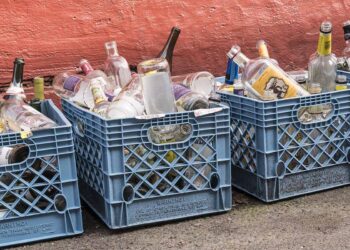
The creation of a major glass-processing program in the nation’s heartland started with a frank conversation at a beer tasting. Now it’s arguably the most successful venture of its kind.

Owens Corning staff members were tasting beers at Kansas City’s Boulevard Brewing and started talking with management about the dearth of glass recycling in the area.

Boulevard Brewing was concerned because most of the 10 million bottles it sold each year were destined for landfills. Owens Corning wanted recovered glass for use in its residential and commercial building insulation.

“We both said, ‘Yeah, let’s stop treating this like garbage and let’s get it out of the landfill,'” recalled Scott Colangelo, senior technical staff member at Owens Corning.

That talk led to the 2009 creation of Ripple Glass by a team including Boulevard Brewing. Ripple soon inked a deal with Owens Corning and today sends the majority of its processed material to the local Owens Corning facility, 10 miles away.

Colangelo was one of three speakers participating in a Container Recycling Institute webinar about Ripple Glass’ formation and how its creation can inform glass programs elsewhere. Colangelo was joined by Matt Riggs, outreach coordinator for the Mid-America Regional Council (MARC), and Michelle Goth, regional business manager at Ripple Glass. They explored topics including best practices for glass collection, processing technologies and end users.

Birthed by a brewery

Started by Boulevard Brewing with the support of businesses, private investors and government grants, Kansas City-based Ripple Glass processes about 35,000 tons of glass per year, Goth said.

Riggs’ regional planning body, MARC, provided money to help get glass recycling off the ground. It provided multiple grants over the years totaling about $450,000. The money went to study the feasibility of a glass-recycling program and to fund outreach and the purchase of dozens of roll-off containers for use as collection points, Riggs said.

About 5 percent of what Ripple Glass needed to get off the ground was from the government grants, Goth said. The feasibility study, in particular, may have been particularly difficult to fund otherwise.

“When it comes to funding itself, we were successful in getting quite a bit of private investment, so it was a smaller portion of what we needed,” she said.

With a population of around 2 million people, the Kansas City metro area lies in both Kansas and Missouri, neither of which has a container deposit system.

Much discussion in the webinar revolved about the best collection approaches for glass.

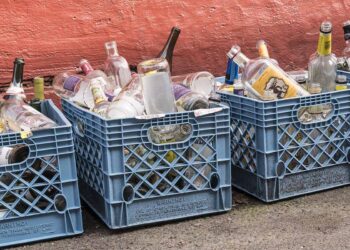
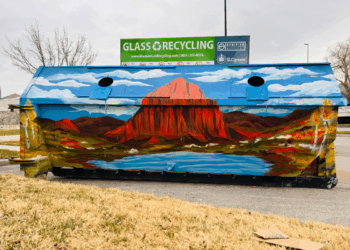
Today, Ripple Glass owns roughly 100 roll-off containers through the Kansas City area. It’s a collection approach that generates a clean stream, although “some people joke with me that our drop-off programs are old fashioned,” Goth said.

The company contracts with hauler Deffenbaugh Industries to transport material to the East Kansas City processing center. To fill containers regularly, Ripple Glass needs one of its depots for every 20,000 residents, Goth said, and the company utilizes retail store parking lots, particularly grocery and liquor stores. Containers fill more often in areas with higher incomes and education levels, but Ripple Glass aims to ensure no Kansas City resident has to drive more than five minutes to reach a depot, she said.

The company also collects material from outside the metro area. To avoid the high cost of trucking roll-off containers long distances, the material is stored at local bunkers.

Curbside future?

Local depot collections have plateaued, with about one in five Kansas City residents participating, so Ripple Glass is interested in increasing curbside collections, Goth said.

Riggs noted that a few small companies have begun providing curbside collection services, but they serve relatively few customers in mostly high-income neighborhoods.

“Although it’s a good thing and it’s a workable business model, I think the scale is going to be somewhat limited,” he said.

In 1996, Deffenbaugh Industries switched to single-stream recycling and halted curbside glass collection, which had been plagued by high contamination levels and high transportation costs, Riggs said. That left the metro area with only a handful of drop-off locations and a roughly 5 percent recovery rate.

In the next few months, Deffenbaugh plans to start a curbside pilot program using glass-only carts, Goth said.

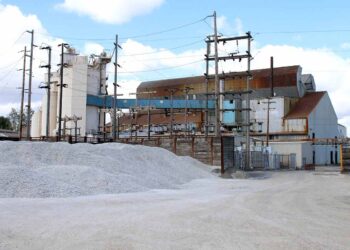
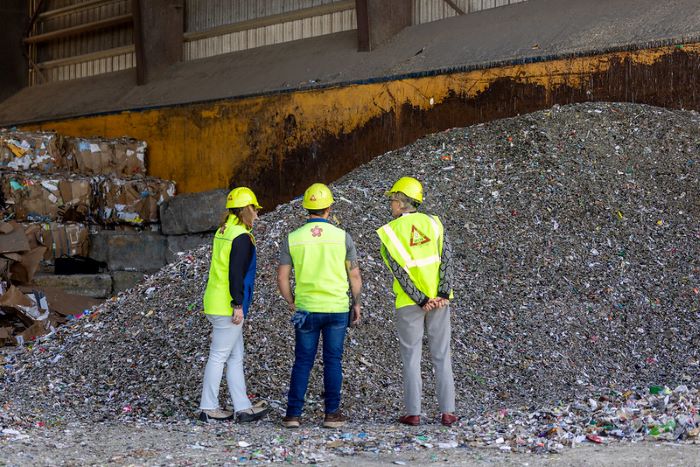
On the processing end, Ripple Glass’s $5 million facility uses magnets, vacuums, manual separation and optical sortation to sort and clean the stream before generating cullet for manufacturers. About 10 percent of the cullet is sent to Ardagh Group facilities to be made into beer bottles, and the remainder goes to Owens Corning for use in insulation, Goth said.

“Because of its relatively low market value, it has to be handled regionally,” she said.

Having a local supply of glass lowers Owens Corning’s transportation costs, Colangelo said, and using cullet means lower energy costs.

Glass recycling is “a low-margin endeavor” but Ripple Glass positioned itself to be “in a good place” financially, Goth said. The company’s threshold for generating enough revenue to pay expenses without having to dip into cash reserves was somewhere in the mid-20,000-tons range, Goth said.
Tags: Glass
TweetShare
Jared Paben

Jared Paben

Related Posts

Recycled glass end users lose federal grant funding

Cullet Glass breaks into Midwest with Repeat Glass deal

byStefanie Valentic
March 3, 2026

Cullet LLC has secured its first operational glass recycling platform with the acquisition of Cleveland,Ohio-based Repeat Glass.

Diversion Dynamics: Recycling partnerships are an art form, but crucial for progress

Diversion Dynamics: Recycling partnerships are an art form, but crucial for progress

byStefanie Valentic
January 8, 2026

Whether you're operating a MRF, managing municipal contracts or navigating supplier relationships, the daily pressures pile up: financial constraints, shifting...

Major glass end user shuts down Oregon bottling plant

byColin Staub
August 5, 2025

A Portland, Oregon glass bottling operation that uses high levels of recycled glass cullet will shut down as part of...

Washington glass challenges ease, driven by rail upgrade

byColin Staub
July 1, 2025

Several months after the primary end user for Seattle-area curbside glass pulled out of the area and disrupted regional glass...

Recycled glass end users lose federal grant funding

byColin Staub
June 10, 2025

Cullet end users Gallo Glass and O-I were among the Department of Energy grant funding recipients who had their awards...

E-scrap sector continues solar processing push

E-scrap sector continues solar processing push

byColin Staub
May 22, 2025

Electronics processors are increasingly adding solar panel recycling capacity, in some cases processing them similarly to declining streams like CRT...

Load More
Next Post

Research: Mixed-waste MRFs recover more plastics

More Posts

Rising containerboard demand comes as OCC prices taper

November 5, 2024

Paper giants foresee continuing rise in OCC prices

August 28, 2023

North American paper mills discuss demand, OCC pricing

May 15, 2023
Recycled plastic lumber firms report diverging results

Trex CEO to retire after 23-year run

February 25, 2026
Chinese processing group details goals for US visit

AMP lays out vision of next-generation, AI-driven MRFs

July 24, 2024
PET bales stacked for recycling.

Evergreen closing RPET plants in Ohio, New York

February 24, 2026

California selects Landbell USA as PRO for textile EPR

March 2, 2026
Fireside Chat at PRC features CAA chief

Fireside Chat at PRC features CAA chief

March 4, 2026
PureCycle sees easing headwinds to R-PP adoption

PureCycle sees easing headwinds to R-PP adoption

March 3, 2026
HP receives ocean plastics certification

HP Inc. earnings point to memory inflation challenge

February 27, 2026
Load More

About & Publications

About Us

Staff

Archive

Magazine

Work With Us

Advertise
Jobs
Contact
Terms and Privacy

Newsletter

Get the latest recycling news and analysis delivered to your inbox every week. Stay ahead on industry trends, policy updates, and insights from programs, processors, and innovators.

Subscribe

Welcome Back!

Login to your account below

Forgotten Password?

Retrieve your password

Please enter your username or email address to reset your password.

Log In

Add New Playlist

No Result
View All Result
  • The Latest
  • Analysis
  • Recycling
  • E-Scrap
  • Plastics
  • Policy Now
  • Conferences
    • E-Scrap Conference
    • Plastics Recycling Conference
    • Resource Recycling Conference
    • Textiles Recovery Summit
  • Magazine
  • About Us
  • Advertise
  • Archive
  • Jobs
  • Staff
Subscribe
This website uses cookies. By continuing to use this website you are giving consent to cookies being used. Visit our Privacy and Cookie Policy.