







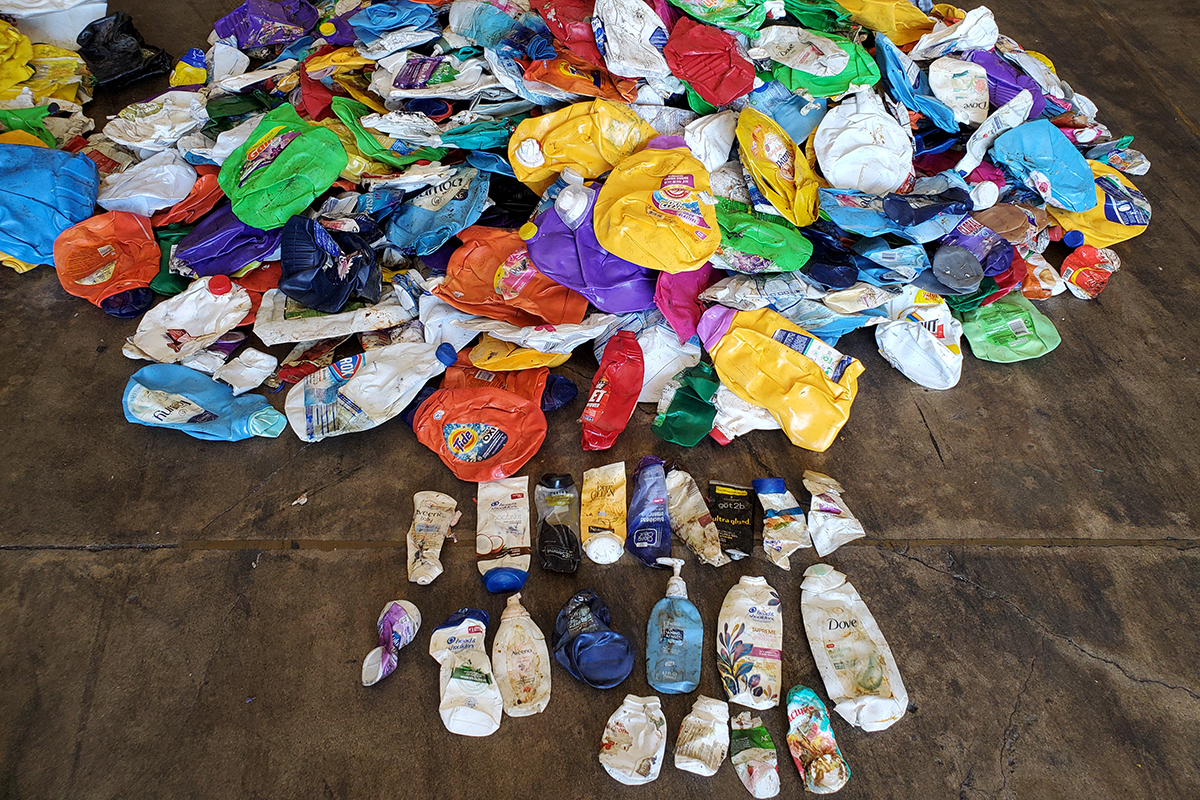
Face scrub. Body wash. Shampoo and conditioner. Lotion. Minced garlic. Toothpaste. These are some of the everyday products packaged in plastic squeeze tubes, many of which are in my house. The companies producing tubes and the brands using them have been working for years to innovate tubes that are not only functional but also compatible with recycling streams. Collaboration has been essential for progress.
A package or product being recyclable is one important piece of what’s needed for successful recycling. Other pieces essential for a robust recycling system are a stable supply of recyclable items and steady demand for recycled feedstock made from those items. This balance of supply and demand is driven by the actions of consumers, recyclers, and producers of products and packaging to “close the loop” and keep the recycling system going.
Where recyclable and recycling meet
As is true for most packaging formats on the market, no one company has been able to convert a majority of tubes to recyclable designs on its own. In 2015, Stina, a mission-based research and technology company providing guidance in the movement toward circularity, convened a group of brands, tube manufacturers, and other stakeholders to start the US Tube Project to maximize recycling of valuable material and minimize contamination to the system.
At its inception, this project harnessed collaborative efforts to gather the data and information needed to understand the barriers and formulate solutions to make plastic squeeze tubes – as a packaging format – accepted for recycling. The initial US Tube Project work focused on whether reclaimers could recycle tubes with an existing stream and if there were concerns to overcome.
In 2020, a complementary European project was started. Component makers and tube converters produced recycling-compatible laminates, closures, and tube bodies. Manufacturers adjusted equipment to run the new recyclable laminates, and brands put the new designs on the shelves. In 2024, the US and European projects were combined into one Tube Recycling Project focused on North America, and supporting Europe as needed. The Project work to date confirms that collaboration is essential to achieve progress in making more recyclable packages.
Roadmap to standards development
How did we know what was needed? A roadmap of steps allowed us to document what processes and resources were already available and where there were gaps in need of industry inputs and alignment.
In 2020, a decision tree was created to outline the questions to be answered for packaging formats and products, including tubes, to move towards recyclability. Through 2023, the Tube Project work centered on collecting data and engaging recycling industry stakeholders to answer those questions. Concurrently, brands and tube manufacturers were making the conversion to compatible designs across product lines. By the end of 2023, the vast majority of plastic squeeze tubes on the market were designs compatible for recycling and that percentage has continued to grow.
The project focus shifted to sharing information with reclaimers to accept them in bales they purchase. Today, the focus is on increasing the acceptance of tubes by materials recovery facilities (MRF) and communities. Polyethylene (PE) squeeze tubes were added as a fully accepted item to the Association of Plastic Recyclers (APR)/Recycling Manufacturing Association (ReMA) HDPE Color Bottles & Select Containers bale specification in a 2025 update. Polypropylene (PP) tubes have been accepted as part of the PP Small Rigid Plastics spec for years.
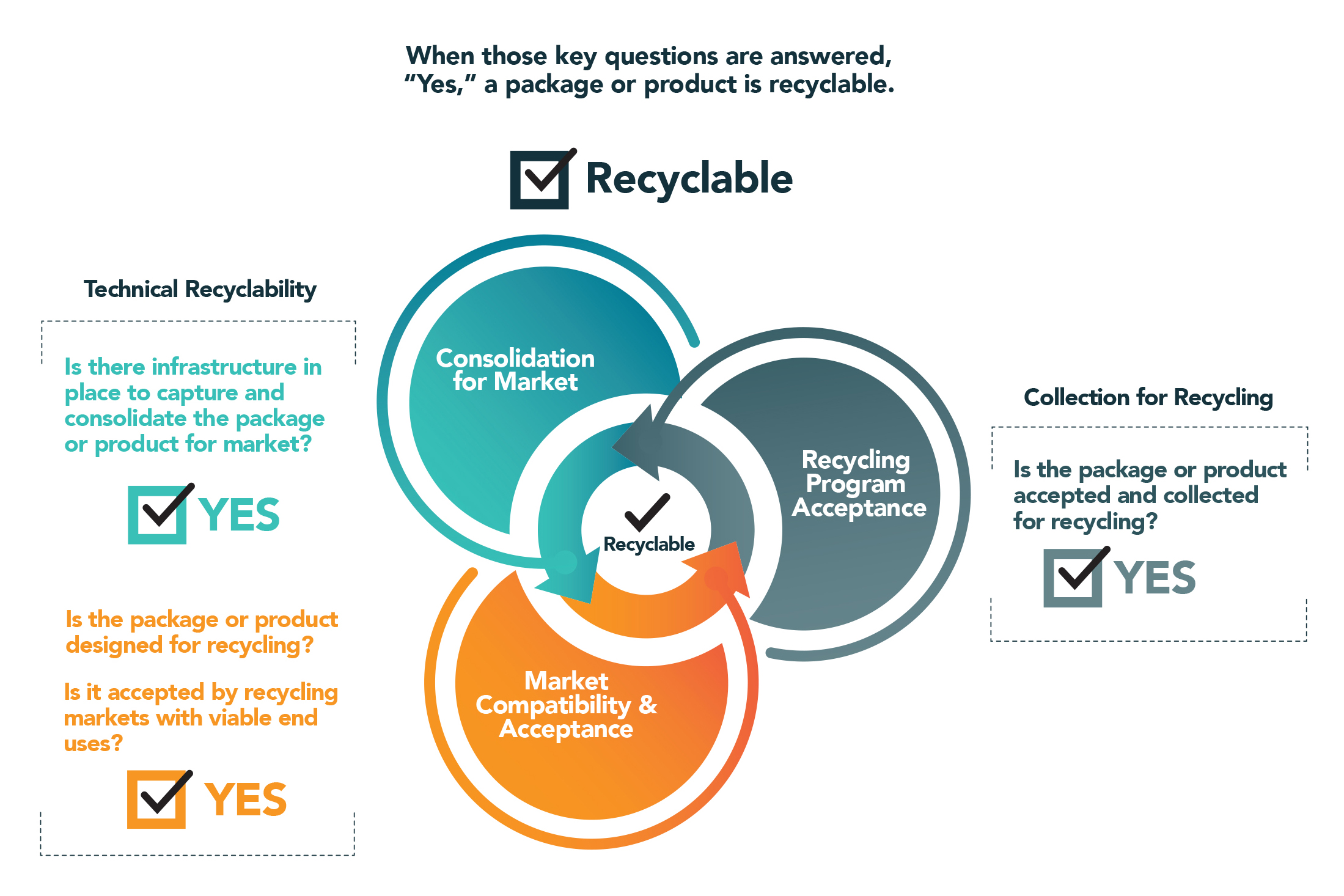
Elements of recyclability
To help guide the Project work, Stina distilled the decision tree into the Elements of Recyclability that tubes (and any format) need in order to be considered recyclable (Figure 1, above).
Market Compatibility & Acceptance: Designed for recycling so they are compatible and accepted by recycling markets with viable end uses that can process them into recycled feedstock
Consolidation for Market: Able to be captured by infrastructure that can consolidate them into a recycling stream that can be delivered to recycling markets
Recycling Program Acceptance: Accepted and collected for recycling by programs
We know that most of the packaging format or product on the market needs to be compatible to avoid contamination in the recycling system. The Elements of Recyclability enabled the Tube Project to create a detailed checklist of key steps that brands, packaging manufacturers and others need to check off to reach full recyclability.
Some of the steps can happen concurrently, while others need previous steps to be completed before moving forward. For a package or product that is not considered generally accepted today, these steps encompass details from the Elements of Recyclability, listed in a relatively chronological order below. Companies will work on their individual packages or products, but the emphasis is on details needed for acceptance of an entire format.
Steps on the checklist are:
Initial Data Collection: The more you know about the format from the beginning, the more efficiently you can navigate the steps. For example:
What is the format made of and how many are produced?
Are there design challenges?
What recycling pathway will the format likely take? Into an existing or new recycling stream? Via curbside collection and sorted at a MRF? Or other collection systems?
Design Guidance: Is there sufficient guidance to design the packaging format for recycling? If so, follow it. If no design guidance exists, work with an industry organization, like APR for plastics, to develop guidance. Understand the testing needed, including for recycling compatibility and sortability.
Design for Recycling: Individual companies design for recycling so that a significant percentage of the packaging format on the market is compatible with recycling.
Market Acceptance: Are multiple markets (buyers) willing to accept the packaging format in the recycling commodities they purchase?
Bale Specification Inclusion: Is the package format included in a published bale specification for a commodity(ies) actively traded in the marketplace? This happens once end markets are comfortable that enough of the package or product is compatible and that many within the marketplace are willing and able to accept and recycle it.
Sortability at the MRF: Can the format be sorted at a MRF to the desired commodity(ies) if collected curbside? Testing the format to confirm sortability is important. Companies can use protocols like those from APR to see how an individual item sorts.
Consolidation Infrastructure: Is there infrastructure to consolidate the items at MRFs or through alternative collection?
Recycling Program Acceptance: Do consumers have access to recycling collection programs for the format? Confirmation comes when recycling programs include the package or product on their acceptance lists, specifically or as part of a general category that includes it.
Labeling: On-package labeling is a tool to help consumers understand which packages or products can be recycled (or not).
Navigating the journey
After working on this Tube Project for a decade, we can see that what is needed next is a collaborative process that brings together key recycling organizations and leaders to create a harmonized and coordinated mechanism that helps formats, across material types, move from one completed checkbox to the next.
The collaboration within the plastic squeeze tube sector has shown that real change can happen when companies work toward a shared goal. We suggest the following as important starting points to consider. Alignment and cooperation will be key:
Clear and comprehensive design guidance across materials including paper, plastic, glass, metals for the most prevalent types of consumer packages and products to help brands and converters design recyclable items that are valuable to the recycling system.
Format should be crafted with support from MRF operators to show which formats can reasonably be considered sortable. For example, RecyClass has a Sorting Evaluation Protocol for Europe that outlines factors like the number of items needed for testing, and the key testing points within facilities (near-infrared, trommel and screens, etc.). The results show how well a package or product is expected to sort in a typical European facility.
Aligned and accessible details on the recyclability status of common consumer packages across materials. This industry-aligned public list could provide stakeholders clarity on how packages fare against recyclability criteria. It would outline which formats best meet or fall short of recyclability criteria with status of formats that are making progress. And if no recycling pathway exists, it would encourage companies to redesign or work to build a market for the item.
Support for communicating progress and industry changes. There is a need for communication mechanisms to help convey the industry-aligned public list and key format innovations, market shifts, and sortability results to MRFs and communities for their consideration.
Now is the time to provide industry support to recover more valuable materials, limit contamination, and foster innovation by companies trying to do the right thing. It behooves us to work toward a transparent and efficient process that provides a clear path for becoming recyclable so that companies that are working to produce and use recyclable packages and products can feel confident their items will eventually be accepted by the recycling system. But we also need more focus by companies to use recycled content, which is what ultimately makes “being recyclable” possible.
Tonya Randell is the Public/Private Engagement Manager at Stina Inc. More detail on the Tube Recycling Project can be found at PlasticTubeRecycling.org or StinaInc.com/view/tubesstory