













This article appeared in the June 2024 issue of Resource Recycling. Subscribe today for access to all print content.
In the last half of 2023 the U.S. Food and Drug Administration gave their “Letter of No Objection” to 14 companies in North America, Asia and Europe to use their recycled resin products for food-contact packaging. Yet to date there is no information or publicity on applications of recycled food-grade polypropylene resin being used in food-contact packaging.
One of the key reasons for this is that PP is at the beginning of its recyclability journey. If we consider the most widely recycled polymers to date, PET and HDPE, their recycling journey was not an immediate overnight success, either. I recall when we were first producing food-grade RPET in the U.K., there was considerable reluctance to using it in food-contact packaging, and it required extensive trialing before it was adopted for standard production. Now this is an everyday occurrence.
PP is currently going through the exact same phase.
PP’s slow recycling journey
Yet PP accounts for more than 20% of global plastics production, with food packaging being one of its primary products. In fact, some 75% of PP rigid packaging in the EU is food-contact, equivalent to around 10% of total PP demand.
One of the key reasons recycled food-grade PP resin is not yet being used in food packaging, even with an LNO, has to do with a reticence towards this new resin’s ensured safety. The hesitation comes from a lack of experience that this food-grade recycled material is safe to use in consumer food-contact packaging.
The challenge with RPP is that up until now it has not been possible to accurately differentiate between PP packaging that once contained non-food products from those that contained food. As a consequence, current food-grade recycled PP has been limited to closed-loop recycling, hand-sorting or advanced recycling technology processes based on mass balance, which is not yet recognized as recycling in the European Union.
Characterizing residual contamination levels in rPP
Progress is rapidly catching up however, thanks to NextLooPP’s ongoing science-driven exploration to close the loop on post-consumer food-grade PP.
Achieving this has meant addressing each and every roadblock along the way and deep-diving into the specific sorting and decontamination requirements for the recycling processes for PP.
This led to NextLooPP’s science-based investigation to determine the residual contamination levels of post-consumer PP packaging, which up until now have never been characterized.
The lack of data showing the misuse/mis-selection rate within PP feedstocks had meant there was no reliable way of defining the residual levels that could potentially migrate into food as well as understanding which molecules to target via decontamination processes.
NextLooPP’s study aimed to identify substances that might cause samples of RPP to be outliers from the expected input stream that could represent challenges to the final safety of the recycled plastics. The key issue was to check whether the substances observed could potentially be genotoxic.
This is a critical criterion for food safety evaluations, given that the substances could be derived from the mis-selection of an item of non-food PP packaging, which is not necessarily a case of misuse.
All in the shape of the pack
Being olefinic, the packaging format of consumer PP packaging reduces the chances of it being in a consumer-misuse scenario. A large proportion of PET packaging is relatively durable with a tight closure, making it a container of choice when used for the storage of hazardous materials. Likewise, HDPE packaging is also in bottle form with a closure, meaning it, too, may be used in such a scenario. PP food containers, on the other hand, are less likely to come in bottle form and much more likely to be pots, tubs, or trays with limited closure capability, making it a less likely candidate for consumer misuse.
Characterizing the residues in post-consumer packaging that have been sorted into mono-polymer fractions was done by analyzing and testing multiple batches of food and non-food samples to see what molecules are present and if there are any areas of concern.
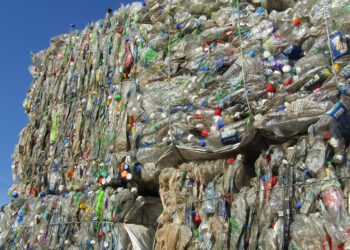
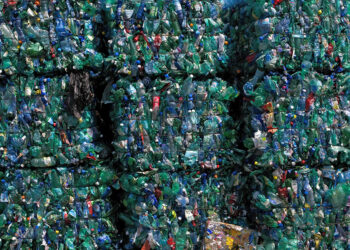
To achieve this our team of scientists worked on 20-ton batches of PP bales sourced from a U.K.-based materials recovery facility. Using automatic optical sorters to separate color fractions of natural, white and colored articles, each color fraction was hand-sorted into articles from food applications and articles from non-food applications.
The analytical study involved 700 tests, representing approximately 17,500 different PP packs based on 25 significantly sized flakes per test. This was estimated to be a cross-sectional representation of 7% of the packs from the combination of batches of 260,000 packs.
Following this contamination study, NextLooPP characterized the contamination levels in PP and concluded that they are in the order of 10 times less than what we expect in HDPE milk bottles and 100 times less than expected in PET. This is not surprising given the applications that select PP as the packaging material.
Food-grade rPP resin confidence
Understanding the sorting and decontamination requirements needed to enhance the recycling processes further validates Nextek’s global multi-participant project, NextLooPP, that launches imminently in the Americas.
This data is essential to allow food-grade PP packaging to be recycled into high-value recyclates that can safely be used in new food-contact packaging, and we are confident the performance standards we have now developed will enable us to help organizations reach a high level of technical performance as well as commercial and legal confidence in the food-grade RPP they can include in food-contact packaging.
By deploying NextLooPP’s expertise and technical backup, NextLooPP aims to license the NextLooPP technology to ensure that the resin standards can be fast-tracked into U.S.-produced RPP food-grade packaging.
Finding validated local solutions for the end of life of post-consumer food-grade PP packaging has been the driving force behind NextLooPP’s 53 participants, who are actively producing and trialing a range of unique grades of high-quality food-grade recycled PP resins produced using Nextek’s patented PPristine decontamination technology.
Proof in the commercialized trials
Eighteen of NextLooPP’s brand and converter participants have now finalized 55 commercialization trials using five PPristine resin grades: natural food-grade IM, natural food-grade, white food-grade, mixed-color food-grade and non-food grade mixed-color INRT, and the results have been outstanding. As an example, trials using 30% of NextLooPP’s PPristine resins in both extrusion and thermoforming trays achieved product quality that is comparable with the virgin products with no changes in processing conditions.
Transforming sorting
While the multi-participant project now fine-tunes the resin quality standards that are poised to become standard for food-grade recycled PP, recent trials conducted by NextLooPP together with Tomra have confirmed a major breakthrough in the automatic sorting of food-grade PP packaging.
These sorting trials held in February, which combined Tomra’s near-infrared, visual spectrometry with the company’s latest deep-learning technology GAINnext, achieved food-grade purity levels exceeding 95% in packaging applications.
This exciting development is an invaluable boost to the NextLooPP project, as GAINnext has the potential to be rolled out to all PP packaging sorting facilities and will help produce valuable food-grade PP PCR streams.
By providing a sorted food-grade PP PCR stream, GAINnext will enable the NextLooPP decontamination process to be carried out in many more recycling operations globally.
Close to the finish line
After close to four years of intense collaboration, the NextLooPP participants are now breaking down the final barriers to producing food-grade recycled PP from post-consumer packaging into new circular economy products, and the NextLooPP team is looking forward to launching the NextLooPP Americas project to achieve similar outstanding results.
Boosting the production of recycled food-grade PP resin is a major step towards stimulating growth in the sector and creating a market where sustainable solutions will become competitive with and a replacement for virgin polymers.
Edward Kosior has worked in the plastics recycling sector for 48 years, including 22 years as an academic and 26 years working in recycling and sustainable solutions. He’s the founder of the consulting organization Nextek Ltd.; of NextLooPP, a global project working to close the loop on post-consumer polypropylene; and of COtooCLEAN, which uses a unique super-critical CO2 technology to decontaminate, de-ink and delaminate soft plastic films back to food-grade compliance.
The views and opinions expressed are those of the author and do not imply endorsement by Resource Recycling, Inc. If you have a subject you wish to cover in an op-ed, please send a short proposal to [email protected] for consideration.