










This article appeared in the September 2022 issue of Resource Recycling. Subscribe today for access to all print content.
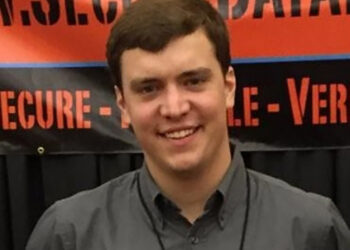
Mike Ledieff, division manager for Fresno, Calif.-based Cedar Avenue Recycling and Transfer Station, is a big fan of robots. So when he heard about the opportunity to add robotics to the Caglia Environmental-owned MRF he helps run, he jumped at the chance.
CARTS was a recent funding recipient of The Recycling Partnership’s Polypropylene Recycling Coalition grant program, which allowed the facility to obtain a robot to pick polypropylene plastic.
Ledieff spoke with Resource Recycling about the grant process and why the company decided to purchase even more robots after winning the grant.
Resource Recycling: Give me some history about your MRF. Why did you choose to upgrade?
Mike Ledieff: CARTS has been in businesses for a little over 20 years now. There’s a closed landfill on property, and once that landfill closed, the Cagila family decided to open a transfer station and a commercial MRF.
Fast-forward about 20 years. The family decided it was time to upgrade the MRF, so we selected CP Manufacturing for an upgrade that brought our MRF to today’s standards. We purchased two disc screens, four opticals, an auger screen and an eddy current and really upped our recovery substantially, reduced a portion of our labor and got to the point where we were processing quite a bit more tons than we were before. We went from, I’d say, 10 to 12 tons an hour to anywhere between 25 to 35 tons an hour based on the actual composition of the material.
That initial retrofit took place in 2020. What challenges did that bring?
Let’s just say building a MRF during COVID was probably one of the most unique professional experiences I’ve ever encountered, especially being relatively new in that type of role, so it was baptism by fire and COVID. But it was a great experience. Our partnership with CP Manufacturing was fantastic through that process and we commissioned a little over a year ago. It was a year ago in February we restarted running and saw a great increase in our throughput as well as in our recovery. And that was when we were made aware of the Recycling Partnership grant for the polypropylene collection.
Actually, one of our commodity buyers said, “Hey, you guys should really look at this. Polypropylene is on a big push in California right now, and there’s money out there to fund new technology.” I’m the tech guy on the operation side for our company and I said, “Robots? That sounds great. Let’s vet this out, what’s the efficacy, what’s the viability, what’s the additional cost?”
So we started working with The Recycling Partnership through that grant process. It was a relatively challenging process at the beginning, trying to understand everything that The Recycling Partnership wanted to substantiate issuing that grant. So we came in second round and were not awarded second round or third round but it was fourth round we were awarded. We started to understand polypropylene and how it impacts not just our region but within the United States and how many pieces of No. 5 plastics are out there.
Why did you choose AMP Robotics?
We were in talks with a few different generators of polypropylene and that’s when we started talking with AMP. I vetted the other technologies at the time and found AMP to be the most viable for our application and spent a lot of time visiting facilities and meeting up with their team to make sure we found the right robots. I traveled to Denver, L.A., Napa and Austin to look at AMP installs. That’s one thing the Caglia family really finds valuable – kicking the tires on new technology before buying. Fast-forward to being awarded the grant, we started talking seriously with AMP. AMP wanted to partner with Cagila on a long-term basis, so we looked at additional robots.
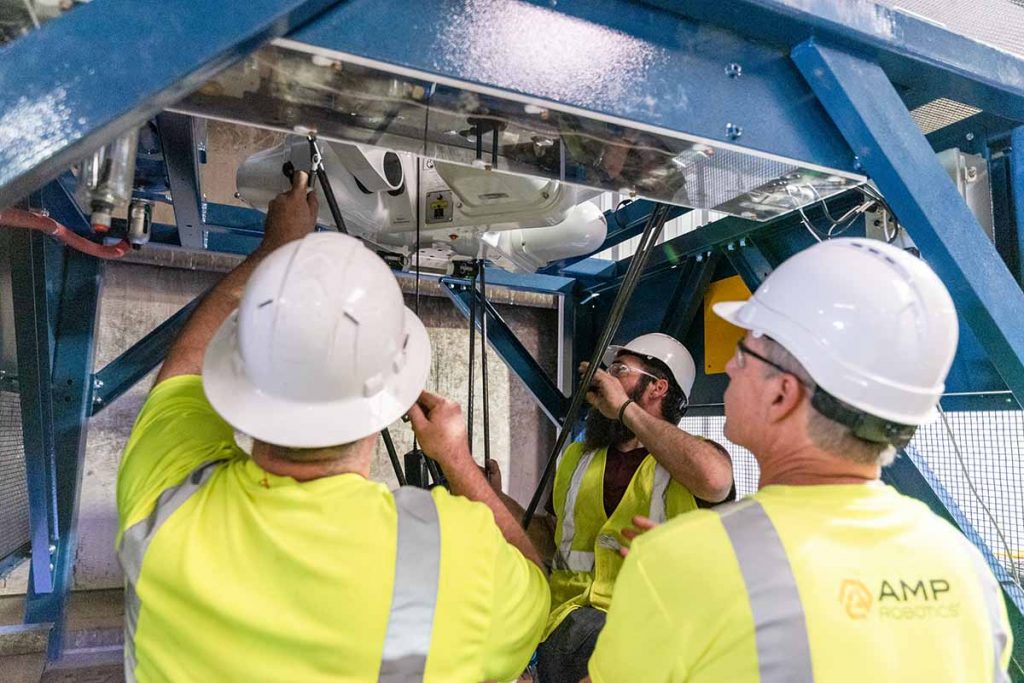
Not only did we purchase the grant-funded polypropylene single-arm [machine], but we have a tandem robot [meaning it has two arms] that is positively picking HDPE natural, HDPE color and some PET and some film on our last chance line. Our last chance line goes into an eddy current so that robot is grabbing PET off and … grabbing natural off and throwing color across to the [other arm of the tandem machine]. Then we also purchased a [single-arm] robot to QC our aluminum can line as well. So I think we’re one of the most AI-driven facilities in California currently, having four optical sorters and four robotic arms. It’s worked out really well … When it comes to AI, it’s all about material display on the belt, so having the MSS opticals right before the robots has been very successful. Those belts are a little slower, so the vision system is able to identify material quicker and it gives that robot a really good chance at grabbing that material.
What have the upgrades meant for CARTS?
The best success story is the polypropylene robot. To QC polypropylene with a human is really challenging because No. 5 comes in all shapes and sizes. Being able to train that, especially in a challenging job market, that in itself is a full-time job. A portion of our labor is temporary labor and unfortunately, with the economy, it’s a very dynamic workforce. So having that robot with that vision system and neural network to QC that material has been very valuable. We’re able to make a cleaner No. 5 as opposed to a 3 through 7 mix. And on our UBCs, we’re making sure we’re making very clean bales and trying to get the best value for those very clean bales. Also, the last chance line is hard. And I think that’s one of the keys, that was the last position we would be able to staff. That’s why it’s called last chance, if you have somebody you put them there. But now we have someone permanently at last chance so that is really cool, grabbing those nickels as they go across, and they add up.
I don’t have numbers on the additional recovery since it’s still relatively new, but I’m confident that we will be able to see an increase in our recovery, which is what it’s all about. It’s about recovery and diversion from the landfill. And another point, to take a step back, there was never an intent to remove labor. The goal was to become more intelligent and increase diversion as well as to supplement labor because we couldn’t get enough through the pandemic and that’s continued. Like I said, that last chance line, we never had anybody on last chance. My fiber QC lines are now fully staffed, my paper reclaim lines I have someone there, and those are areas when it was a good day when we had those staffed. It’s really cool to see we’re at full staff.
How have some of the new and changing laws on recycling in California affected you over the last few years?
We’ve really tried to stay ahead of the curve, using domestic end markets as much as possible as well as making the purest bales we possibly can. We really just try to stay ahead of industry standards and regulatory standards as much as possible.
Looking forward, do you think more AI is where the industry is going?
I think so. I have a lot of friends in the industry that see that viability and the technology is only going to get better, and it’s pretty great as it is right now. I know there are partnerships and hybrids of different types of technologies coming out and I’m looking forward to seeing what the industry brings and what else we can implement within our facility that can help us increase diversion and decrease landfill.
What’s the next stage for CARTS? Where do you upgrade next?
You know, that’s a great question. I’d like to say more opticals and more robots. Without saying too much, there are definitely vendors who are sharing that hybrid is coming soon and I’m really looking forward to seeing what they have. We remodeled the facility so it wasn’t an evergreen facility, which is always challenging. So the spots we have to put new technologies in, we’re space-limited. Those technologies that can do that are going to be what we look at. Smaller, faster, more efficient. I’d love to see one day robots on pre-sort. I don’t see that happening any time soon, that’s a very challenging position but to be able to have safer environments for our employees – presort being one of the more challenging positions in a MRF – to have some form of AI available that is effective to increase safety to our employees would be very beneficial.
Like what we’re seeing with folks using AI to flag potentially explosive batteries or canisters?
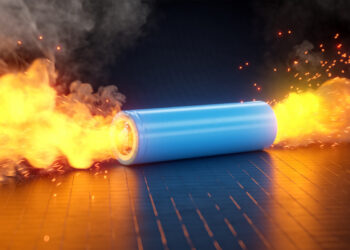
Yeah, I can say we are working with our current vendors on that exact application. With vision systems and notifications, that’s something I’m striving to do. Let’s talk about the 800-pound gorilla in the room: lithium-ion batteries. I want to know when a lithium hits my line. I want to be able to stop that line and remove that before it creates an unsafe environment for my employees and damage to my equipment.
Anything else you want to add?
Our partnerships with both The Recycling Partnership and AMP have been great and we look forward to continuing those. I will echo that robots to us were not a solution to reduce labor, it was a solution to redistribute resources we already had.
Marissa Heffernan is the staff reporter for Resource Recycling and can be contacted at [email protected].
This article appeared in the September 2022 issue of Resource Recycling. Subscribe today for access to all print content.